


Why Does My Weight Fluctuate Every Day? 9 Normal Reasons (It’s Usually Water, Not Fat)
Quick answer
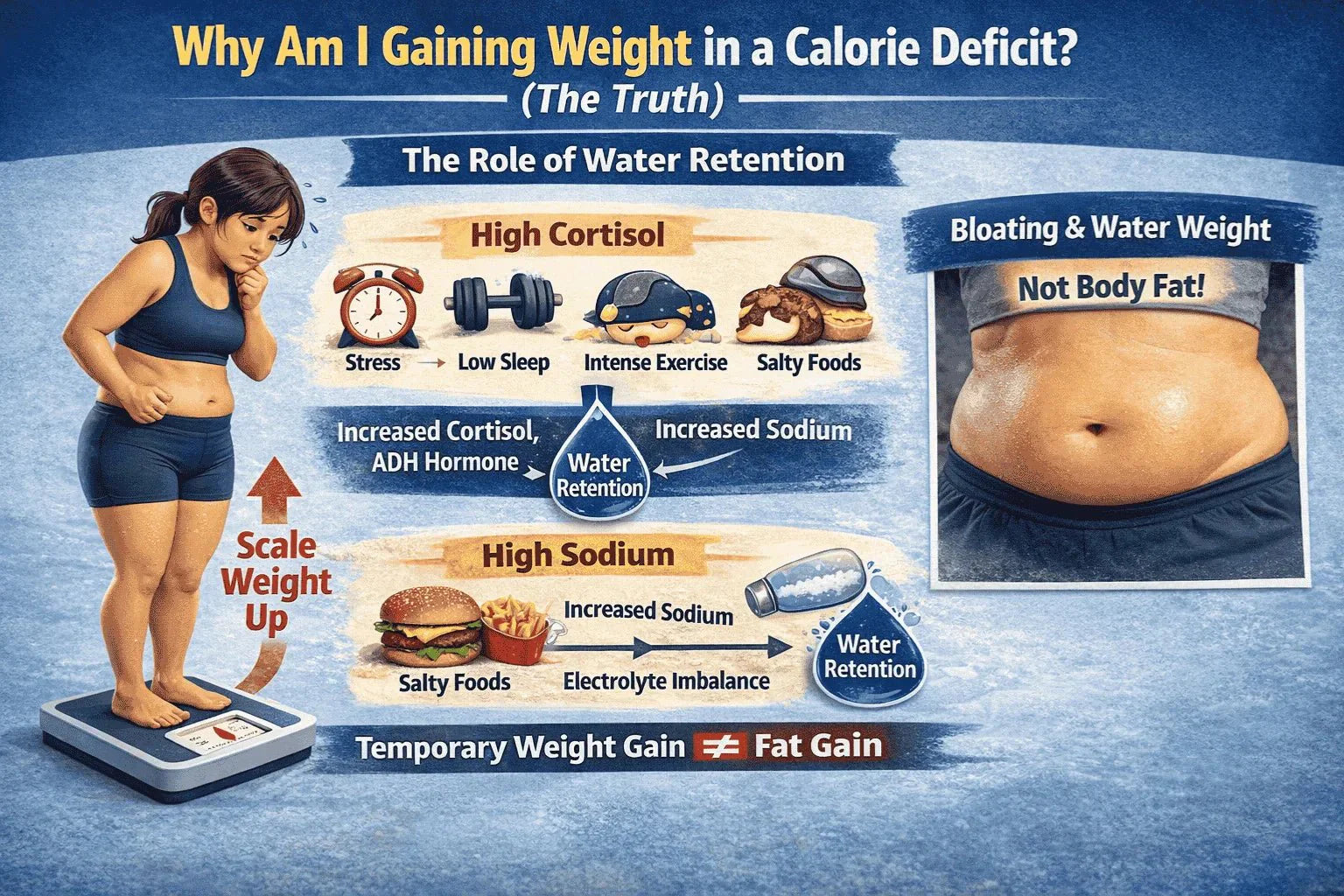
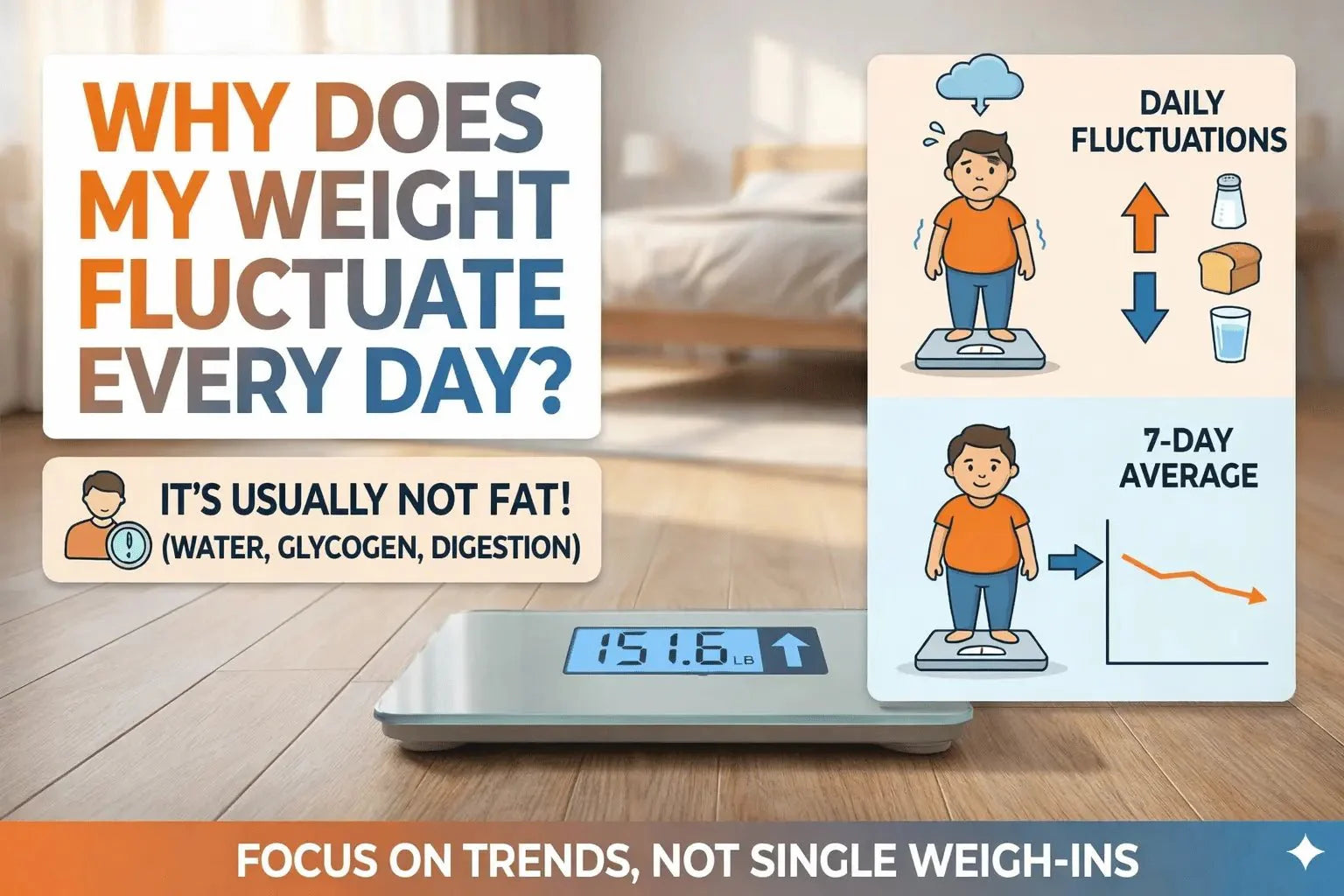
Daily weight fluctuations are usually caused by water shifts, glycogen (carbs stored with water), and food/waste in your gut—not overnight fat gain. Salt, carbs, hormones, workouts, constipation, stress, and sleep can move the scale about 1–5+ lb (0.5–2.5+ kg) even when calories stay similar. Track progress using a 7-day average, not a single weigh-in.
Cleveland Clinic notes that day-to-day fluctuations of several pounds can be normal—often within about a 5–6 lb daily window for many people.
Key takeaways
-
You didn’t gain fat overnight—fast jumps are usually water + digestion/gut contents.
-
Carbs can raise scale weight quickly because glycogen is stored with water.
-
Hormones can increase water retention, especially around the menstrual cycle.
-
Hard training can temporarily raise scale weight from inflammation + glycogen restoration.
-
Get medical advice if you have rapid unexplained gain with swelling or breathlessness (possible fluid retention).
“Why is the scale up today?” Diagnosis checklist
If the scale is up today, ask:
-
Ate out / salty foods yesterday? → water retention (24–72 hours)
-
More carbs than usual? (rice, bread, sweets, sports drinks) → glycogen + water (1–4 days)
-
Hard workout / new training / soreness? → inflammation + glycogen refill (2–7 days)
-
Late dinner / bigger meal / more fiber / constipated? → food/waste in gut (often 1–3 days, until resolved)
-
Poor sleep or high stress? → digestion + water shifts (1–3 days)
-
PMS/period timing? → hormonal water retention (several days, varies)
-
New meds/supplements? (creatine, steroids, some hormonal meds, NSAIDs for some people) → fluid/gut changes (variable)
-
Could it be the scale? (different spot, carpet, low battery) → measurement noise (instant)
Rule: Don’t “fix” one weigh-in. Check your 7-day average.
If you have struck, then book a consultation for sustainable weight loss.
What “weight fluctuation” actually means
Your scale measures total body mass at that moment, including:
-
water (inside and outside cells)
-
glycogen (and the water stored with it)
-
food and fluid still being digested
-
waste in your gut
-
clothing, time of day, and scale placement/battery
So when people ask “Why is my weight changing every day?” they’re usually seeing normal biology + normal life, not sudden fat gain.
How much can weight fluctuate in a day?
For many people, 1–5 lb (0.5–2.5 kg) day-to-day changes are common—and some days can swing more with salty meals, constipation, hard workouts, or cycle-related water retention. Cleveland Clinic describes an “average fluctuation” window of about 5–6 pounds per day for many people.
Important: The goal isn’t to stop fluctuations—it’s to track the trend.
The big reasons your weight goes up and down (and what to do)
1) Salt and water retention (restaurant meals, snacks, travel, heat)
One-sentence answer: Sodium affects how much water your body holds, so a salty day can push the scale up fast.
Common triggers
-
restaurant food / packaged snacks
-
travel (long flights/drives)
-
hot weather + changing sweat/hydration patterns
What to do
-
keep sodium more consistent for 1–3 days
-
drink normally (avoid extreme “flushes”)
-
give it 24–72 hours before judging the trend
2) Carbs, glycogen, and “water weight”
One-sentence answer: When you store more carbs as glycogen, you store more water too—so weight can rise quickly without fat gain.
What’s going on (simple version)
Studies commonly note that each gram of glycogen is associated with multiple grams of water (often cited in the ~2.7–4.0 g water per 1 g glycogen range).
Real-life translation
-
low-carb week → scale drops fast (often mostly water/glycogen)
-
higher-carb day/refeed → scale rises fast (water returns)
What to do
-
expect it (this is normal)
-
compare weekly averages, not yesterday’s number
3) Food volume, digestion, and bathroom timing (gut contents)
One-sentence answer: The scale includes what’s still inside you—food, fluid, and waste.
Common causes
-
late dinner or large meal
-
more fiber than usual (healthy, but bulkier)
-
constipation
-
new foods that cause bloating
What to do
-
check your bowel routine before assuming fat gain
-
aim for consistency (fiber + hydration), not extremes
-
light movement (walks often help)
4) Hormones (especially menstrual cycle)
One-sentence answer: Hormone shifts can cause temporary water retention and bloating, often in the days before a period.
Mayo Clinic notes premenstrual water retention is likely due to hormone level changes, and diet (like salt) can play a role.
What to do
-
track your weight by cycle phase
-
use 7-day averages so water swings don’t mess with your head
5) Hard workouts (inflammation + glycogen restoration)
One-sentence answer: New or intense training can temporarily increase scale weight while your muscles repair and refill glycogen.
This is a common reason people feel like they “gained weight after working out,” along with short-term fluid retention from muscle repair.
What to do
-
keep training consistently
-
judge progress by weeks, not days
-
add waist measurements (weekly) if the scale stresses you out
6) Sleep and stress
One-sentence answer: Poor sleep and high stress can change routines (meal timing, hydration), digestion, and water balance—moving the scale even with similar calories.
What to do
-
stabilize basics: bedtime, hydration, meal timing
-
avoid making big diet changes based on one weigh-in
7) Medications and supplements (often overlooked)
One-sentence answer: Some meds and supplements can cause fluid retention or gut changes that move the scale.
Examples (not medical advice): corticosteroids, some hormonal medications, NSAIDs (in some people), and creatine (often increases water stored in muscle early on).
What to do
If a new medication/supplement lines up with sudden changes, ask a clinician or pharmacist.
8) Scale and measurement error (the boring but real reason)
One-sentence answer: Small differences in conditions can create “fake fluctuations.”
Fix it
-
weigh on a hard, flat surface (not carpet)
-
same spot on the floor
-
same time daily
-
check batteries
-
don’t compare across different scales
Why your weight is different in the morning vs night
Morning weight is usually lower because you’ve typically:
-
gone hours without eating/drinking
-
lost some water through breathing overnight
-
(often) used the bathroom
Night weight is usually higher because you’ve added food/fluid and you’re mid-digestion.
Best practice: If you’re tracking, weigh under the same conditions: morning, after bathroom, before food/drink.
Can you gain fat overnight?
It’s extremely unlikely. True fat gain requires a sustained calorie surplus over time. A sudden jump is usually water + glycogen + gut contents.
Quick reference table
|
Cause |
What it changes |
How fast it happens |
How long it lasts (often) |
|
Salty meals / sodium swings |
water retention |
hours–1 day |
1–3 days |
|
Higher carbs |
glycogen + water storage |
1–2 days |
1–4 days |
|
Constipation / gut contents |
food/waste volume |
1–3 days |
until resolved |
|
Hard workouts |
inflammation + glycogen refill |
1–2 days |
2–7 days |
|
Menstrual cycle |
water retention |
days |
varies |
|
Poor sleep/stress |
routine + digestion + fluid |
1–3 days |
depends |
|
Scale conditions |
measurement noise |
immediate |
until fixed |
Myth vs fact
Myth: “I gained 3 pounds overnight, so I gained fat.”
Fact: That’s almost always water + digestion/gut contents. Fat gain doesn’t happen that fast for most people.
Myth: “If I eat the same meals, my weight should be identical daily.”
Fact: Even with similar calories, sodium, carbs, hydration, hormones, constipation, and workout recovery can change scale weight.
How to track progress when your weight fluctuates
Best weigh-in routine
-
weigh once per day
-
same time (ideally morning)
-
after bathroom, before eating/drinking
-
minimal clothing
-
same scale, same hard surface, same spot
Best way to read the scale: trends
Choose one:
-
7-day rolling average (best for most people)
-
weekly average (weigh daily, compare weekly means)
Optional but helpful:
-
waist/hips measurement 1×/week
-
progress photos every 2–4 weeks
When to worry (medical red flags)
Daily fluctuations are usually normal, but get medical advice if you have:
-
rapid, unexplained weight gain (especially with swelling)
-
swelling in ankles/legs/abdomen, shortness of breath, unusual fatigue (possible fluid retention)
-
weight changes that keep climbing for weeks despite a stable routine
If you have (or are at risk for) heart failure, some guidance flags 2–3 lb in a day or 5 lb in a week as a reason to contact a clinician.
FAQ
Why does my weight fluctuate every day?
Because daily body weight includes water, glycogen + water, and gut contents—which change with sodium, carbs, hydration, hormones, exercise recovery, sleep/stress, and digestion.
Why does my weight change overnight?
Usually from water retention (salt/carbs/alcohol), late digestion, constipation, or normal hormone shifts—not fat gain.
Why is my weight different in the morning and night?
Morning weight is lower due to overnight fasting and bathroom timing; night weight is higher because you’ve eaten/drunk and you’re mid-digestion.
Why does my weight change even when I eat the same?
“The same calories” doesn’t guarantee the same sodium, carbs, hydration, fiber/gut bulk, sleep, stress, cycle phase, or workout recovery.
Why did I gain weight after a workout?
Hard training can temporarily increase scale weight due to inflammation and glycogen restoration during muscle repair.
Is it normal to fluctuate 5 pounds?
It can be—especially with salty meals, higher carbs, constipation, cycle-related water retention, or hard workouts. Cleveland Clinic describes a daily fluctuation window around 5–6 pounds for many people.
We rely on peer-reviewed studies and reputable medical journals.