

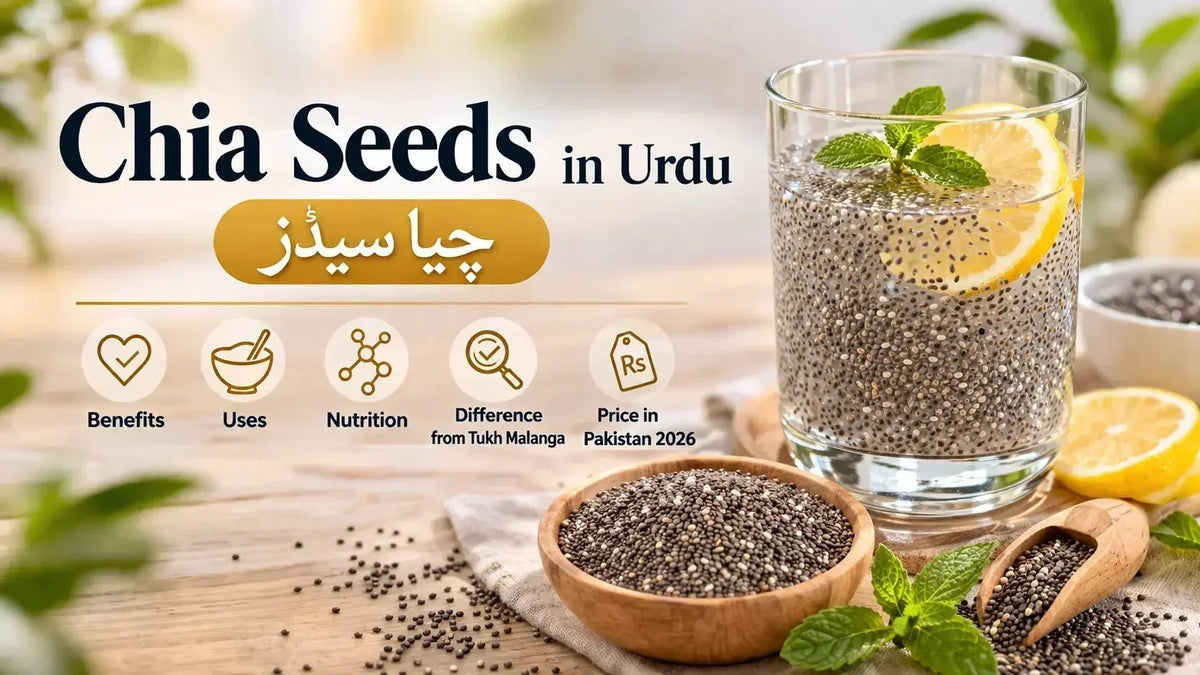
Chia Seeds in Urdu (چیا سیڈز): Meaning, Benefits, Uses, Nutrition & Tukh Malanga Difference
Chia seeds (چیا سیڈز) are a nutrient-dense superfood rich in fiber, omega-3, and protein, offering benefits for weight loss, digestion, blood sugar control, and heart health while being clearly different from Tukh Malanga.
Quick Answer
Chia seeds (چیا سیڈز) are edible seeds from the plant Salvia hispanica. They are naturally rich in dietary fiber, plant-based omega-3 (ALA), protein and minerals such as calcium and magnesium.
In Urdu, chia seeds are commonly written as چیا سیڈز or described as چیا کے بیج.
Chia seeds are not the same as Tukh Malanga (تخم ملنگا / basil seeds):
- Chia seeds: Salvia hispanica
- Tukh Malanga / basil seeds: Ocimum basilicum
Both form a gel-like coating when soaked, but they come from different plants.
Key Benefits at a Glance
As part of a balanced diet, chia seeds may help:
- Increase dietary fiber intake
- Support digestive health
- Add fullness to meals
- Provide plant-based omega-3 (ALA)
- Provide plant protein and important minerals
Chia seeds are a nutritious food, not a treatment for any disease.
What Are Chia Seeds?
Chia seeds are small black, grey and white edible seeds from Salvia hispanica, a flowering plant in the mint family (Lamiaceae).
They have a mild taste and naturally absorb liquid, forming a soft gel-like coating when hydrated.
Chia seeds are commonly added to:
- Water
- Yogurt
- Oats
- Smoothies
- Chia pudding
- Breakfast foods
Their nutritional value comes mainly from their high fiber content, plant-based omega-3 fatty acids (ALA), plant protein and minerals.
Chia Seeds Urdu Name & Meaning (چیا سیڈز)
In Urdu, chia seeds are commonly written as:
چیا سیڈز
They may also be described as:
چیا کے بیج — Chia ke Beej
The scientific name of true chia seeds is:
Salvia hispanica
Chia seeds do not have a widely established traditional Urdu name because the plant is not native to South Asia. This is why the English name “chia seeds” is commonly written phonetically in Urdu as چیا سیڈز.
Chia Seeds Ko Urdu Mein Kya Kehte Hain?
Chia seeds ko Urdu mein “چیا سیڈز” ya “چیا کے بیج” kaha jata hai.
Are Chia Seeds Tukh Malanga?
No. Chia seeds and Tukh Malanga are different seeds.
| Name | Scientific Identity |
|---|---|
| Chia Seeds | Salvia hispanica |
| Tukh Malanga / Basil Seeds | Ocimum basilicum |
They may look similar after soaking, but they come from different plants.
Simple identification rule: Genuine chia seeds are Salvia hispanica.
Chia Seeds Nutrition & Nutritional Value
Chia seeds provide fiber, plant protein, healthy fats and several minerals. Approximate nutritional values per 100g are shown below.
| Nutrient | Amount (per 100g) | Function |
|---|---|---|
| Fiber | 34g | Digestion support |
| Protein | 16g | Muscle repair |
| Fat | 30g | Omega-3 source |
| Calcium | 631 mg | Bone health |
| Iron | 7.7 mg | Blood health |
| Magnesium | 335 mg | Nerve function |
Looking for MNT Chia Seeds? For current pack sizes, pricing and availability, see our MNT Chia Seeds
Evidence-Based Health Benefits of Chia Seeds
Chia seeds provide dietary fiber, plant-based omega-3 (ALA), plant protein and several minerals. These nutrients can make chia seeds a useful part of a balanced diet.
1. May Support Fullness and Weight Management
Chia seeds are high in fiber and absorb liquid, which can increase the volume and texture of foods and drinks.
This may help meals feel more filling.
Chia seeds do not directly burn body fat. Weight management still depends mainly on overall calorie intake, diet quality, physical activity and other lifestyle factors.
For a detailed guide, read our Chia Seeds for Weight Loss article.
2. Supports Dietary Fiber Intake
Chia seeds are naturally high in dietary fiber.
Adequate dietary fiber supports normal digestive function and bowel regularity.
If you are not used to high-fiber foods, begin with a small amount and increase gradually while drinking enough fluids.
3. May Support Healthy Blood Sugar Responses
The fiber in chia seeds can slow digestion when they are eaten as part of a meal, which may help moderate post-meal blood glucose responses.
However, chia seeds are not a treatment for diabetes and should not replace medication, medical care or an individualized eating plan.
For more detail, read our Chia Seeds for Diabetes guide.
4. Provides Plant-Based Omega-3
Chia seeds are naturally rich in alpha-linolenic acid (ALA), a plant-based omega-3 fatty acid.
They can help increase the amount of plant-based unsaturated fats in the diet.
5. Provides Plant Protein and Minerals
Chia seeds provide plant protein and naturally contain minerals including:
- Calcium
- Magnesium
- Phosphorus
- Iron
These nutrients contribute to normal body functions as part of an overall balanced diet.
Chia Seeds vs Tukh Malanga: Are They the Same?
No. Chia seeds and Tukh Malanga are different seeds.
| Feature | Chia Seeds | Tukh Malanga / Basil Seeds |
|---|---|---|
| Scientific Name | Salvia hispanica | Ocimum basilicum |
| Plant | Chia plant | Basil plant |
| Appearance | Usually black, grey and white | Often darker and more uniform |
| After Soaking | Forms a soft gel coating | Swells rapidly |
| Common Uses | Water, yogurt, oats, pudding, smoothies | Drinks, falooda and traditional beverages |
Both seeds can be part of a balanced diet, but they have different botanical identities and nutritional profiles.
The most reliable way to identify genuine chia seeds is to check the scientific name:
Chia Seeds = Salvia hispanica
For a detailed comparison, read our Chia Seeds vs Tukhm-e-Sharbati guide.
How to Use Chia Seeds (چیا سیڈز)
Chia seeds can be added easily to everyday foods and drinks.
Common ways to use chia seeds include:
- Chia water
- Yogurt
- Oats
- Smoothies
- Chia pudding
- Breakfast bowls
How to Use Chia Seeds in Water
Mix:
1 tablespoon chia seeds + 1 glass of water
Stir well and allow the seeds to hydrate for around 10–15 minutes.
They will begin developing their characteristic gel-like coating.
With Yogurt or Oats
Add 1–2 teaspoons of chia seeds to yogurt, porridge or overnight oats.
In Smoothies
Add 1–2 teaspoons before blending or sprinkle chia seeds over the finished smoothie.
Chia Seeds Kaise Use Karein?
چیا سیڈز کو پانی، دہی، اوٹس یا اسموتھی میں شامل کیا جا سکتا ہے۔ اگر پانی میں استعمال کریں تو تقریباً ایک کھانے کا چمچ چیا سیڈز ایک گلاس پانی میں ڈال کر 10 سے 15 منٹ کے لیے چھوڑ دیں۔
If you are new to high-fiber foods, start with a smaller amount and increase gradually.
How Much Chia Seeds Should You Eat Per Day?
Many adults include around 1–2 tablespoons (approximately 15–30g) of chia seeds per day as part of their normal diet.
If you are new to chia seeds or other high-fiber foods:
- Start with a smaller amount.
- Increase gradually.
- Drink enough water.
- Reduce the amount if you experience digestive discomfort.
There is no single “best time” to eat chia seeds. They can be included whenever they fit naturally into your meals or snacks.
Chia Seeds Side Effects & Precautions
Chia seeds are generally well tolerated, but eating a large amount—especially if your normal diet is low in fiber—may cause digestive discomfort.
Possible effects include:
- Bloating
- Gas
- Abdominal discomfort
- Changes in bowel habits
Chia seeds do not always need to be soaked separately. They can be mixed directly into moist foods such as yogurt, oats and smoothies.
However, avoid swallowing large spoonfuls of completely dry chia seeds because they absorb liquid and expand.
Speak with a qualified healthcare professional before regularly consuming large amounts if you:
- Have difficulty swallowing
- Have a known seed allergy
- Take blood-thinning medication
- Take medication for low blood pressure
- Follow a medically restricted diet
- Have been advised to limit dietary fiber
FAQs
Chia seeds ko Urdu mein kya kehte hain?
Chia seeds ko Urdu mein “چیا سیڈز” ya “چیا کے بیج” kaha jata hai. Their scientific name is Salvia hispanica.
What is the Urdu name of chia seeds?
The most common Urdu representation of chia seeds is چیا سیڈز. They may also be called چیا کے بیج.
What are chia seeds in Urdu?
Chia seeds are called “چیا سیڈز” (chia seeds) in Urdu. They do not have an original traditional Urdu name because they are not native to South Asia. In Pakistan, they are commonly referred to as chia seeds or sometimes “chia ke beej.”
Are chia seeds and Tukh Malanga the same?
Chia seeds and Tukh Malanga are NOT the same.
They come from different plants and have different nutritional properties.
Chia seeds come from Salvia hispanica and are high in omega-3 fatty acids, protein, and fiber.
Tukh Malanga comes from basil seeds (Ocimum basilicum) and is mainly used for cooling effects and hydration.
They may look similar after soaking but are biologically and nutritionally different.
Are chia seeds and Tukhm-e-Sharbati the same?
Chia seeds are often incorrectly called Tukhm-e-Sharbati in South Asia, but they are not the same.
Chia seeds are imported from Central America and belong to Salvia hispanica. Tukhm-e-Sharbati is a different seed used traditionally in herbal drinks.
The confusion exists because both form a gel when soaked in water.
What are the benefits of chia seeds?
Chia seeds provide multiple health benefits due to their high fiber, omega-3 fatty acids, protein, and micronutrients.
They support:
- digestion and gut health
- weight management through increased satiety
- heart health by reducing inflammation
- blood sugar control by slowing carbohydrate absorption
- sustained energy release
Do chia seeds help in weight loss?
Chia seeds may support weight loss by increasing fullness and reducing appetite. When soaked, they expand and form a gel, which slows digestion and helps reduce calorie intake.
Chia seeds do not directly burn fat but help control hunger and overall calorie consumption.
Do chia seeds control blood sugar?
Chia seeds can help stabilize blood sugar levels. Their high soluble fiber slows down digestion and reduces glucose spikes after meals. This makes them useful for people managing insulin resistance or type 2 diabetes.
How should chia seeds be eaten?
Chia seeds can be soaked in water or mixed directly into moist foods such as yogurt, oats, smoothies and pudding. For chia water, allow the seeds to hydrate for around 10–15 minutes before drinking. Avoid swallowing large spoonfuls of completely dry seeds.
Can chia seeds be eaten daily?
Chia seeds can be eaten daily in moderation. A safe intake is 1 to 2 tablespoons per day for most adults.
Excess consumption may cause bloating or digestive discomfort due to high fiber content.
What are the side effects of chia seeds?
Chia seeds are generally safe, but possible side effects include:
- bloating
- gas
- constipation (if not properly hydrated)
- choking risk if eaten dry
People on blood-thinning medication should consult a doctor before regular use due to omega-3 content.
What is the nutritional value of chia seeds?
Chia seeds are nutrient-dense and contain:
- high fiber
- plant protein
- omega-3 fatty acids (ALA)
- calcium, magnesium, and iron
They are considered a functional food due to their dense micronutrient profile.
How long should chia seeds be soaked?
Chia seeds should be soaked for 20 to 30 minutes before eating. This allows them to absorb water and form a gel-like texture, improving digestion and safety.
Can chia seeds be eaten dry?
Chia seeds do not always need to be pre-soaked when they are mixed into moist foods such as yogurt, oats or smoothies. However, avoid swallowing large spoonfuls of completely dry chia seeds because they absorb liquid and expand.
Are chia seeds better than Tukh Malanga?
Chia seeds are nutritionally richer than Tukh Malanga because they contain higher levels of omega-3 fatty acids, protein, and overall micronutrients. However, both are healthy and serve different dietary purposes.
Need Personalized Nutrition Guidance?
If you have diabetes, digestive concerns, weight-management goals, or questions about how chia seeds fit your diet, MNT’s dietitians can help you build an individualized nutrition plan.
Book an Online Dietitian ConsultationLooking for MNT Chia Seeds? For current pack sizes, prices and availability, visit the MNT Chia Seeds product page.
We rely on peer-reviewed studies and reputable medical journals.