


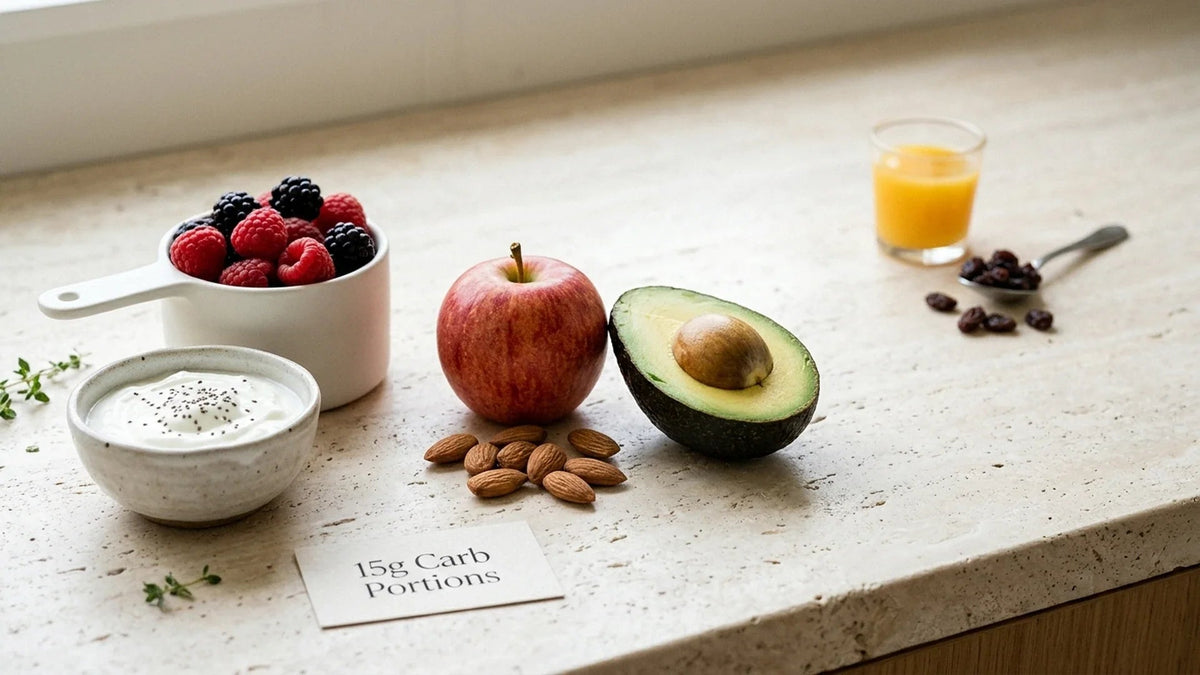
Best Fruits for Diabetes: Healthy Portions, Glycemic Chart, and Fruits to Limit
People with diabetes can safely enjoy whole fruit daily by choosing low-glycemic options, sticking to a 15-gram carbohydrate portion, and pairing fruit with protein or healthy fat. Use our 25-fruit Glycemic Load chart, visual portion...
Key Clinical Takeaways
- Whole fruit is safe and beneficial for diabetes: Eating whole, skin-on fruit does not cause sharp blood sugar spikes when you control portion sizes and pair fruit with protein or healthy fat.
- Follow the 15-gram carbohydrate rule: In clinical diabetes meal planning, one standard fruit serving equals 15 grams of total carbohydrates. This matches 1 small tennis-ball-sized apple (4 oz), 1 cup of raspberries, 12 fresh cherries, or half a medium banana.
- Choose high-fiber, low-glycemic fruits first: Berries, tart cherries, plums, grapefruit, guava, apples, pears, oranges, kiwi, and avocados have the gentlest impact on blood glucose because their soluble fiber slows digestion.
- Prioritize Glycemic Load (GL) over Glycemic Index (GI): While GI measures how fast a carbohydrate turns into blood glucose, Glycemic Load measures the total blood sugar impact of an actual serving size. Aim for a GL of 10 or under.
- Avoid liquid and concentrated sugars: Fruit juices, fruits canned in heavy syrup, and large servings of dried or overripe tropical fruit strip away or overwhelm protective fiber, raising blood glucose rapidly.
Quick Answer: What Are the Best and Worst Fruits for Diabetes?
The best fruits for diabetes are whole, skin-on fruits with a Glycemic Index (GI) of 55 or under and a Glycemic Load (GL) of 10 or under, including blackberries, raspberries, strawberries, tart cherries, plums, grapefruit, guava, apples, pears, oranges, kiwi, and avocados. The fruits to limit or avoid are 100% fruit juices, fruits canned in heavy syrup, sweetened dried fruit, and oversized portions of ripe bananas, mangoes, or pineapple.
Living with type 1 diabetes, type 2 diabetes, prediabetes, or gestational diabetes does not require giving up fruit. Whole fruits provide water, essential micronutrients, polyphenols, and viscous dietary fiber that slow gastric emptying and glucose absorption. Large observational studies and clinical trials show that regular whole fruit intake is associated with better long-term glycemic control (HbA1c) and a lower risk of cardiovascular complications. Safe blood sugar management comes down to selecting fiber-rich whole fruits, measuring a 15-gram carbohydrate portion, and pairing fruit with protein or healthy fat rather than eating it alone on an empty stomach.
Master Reference Chart: Glycemic Index, Glycemic Load, Fiber & 15g Carb Portions
To keep post-meal blood glucose steady, prioritize fruits with a Glycemic Index (GI) of 55 or less and a Glycemic Load (GL) of 10 or less per serving. Every portion listed in the chart below is standardized to approximately 15 grams of total carbohydrates—the American Diabetes Association (ADA) standard for one fruit exchange (except avocado, which is ultra-low in carbohydrates).
| Fruit (Whole, Fresh) | Exact Portion for ~15g Total Carbs | Glycemic Index (GI) | Glycemic Load (GL) | Dietary Fiber (g) | Clinical Verdict |
|---|---|---|---|---|---|
| Avocado | 1 cup cubed or 1 small whole (150g) | 15 | 1 | 10.0g | Eat Freely (Ultra-low carb, high healthy fat) |
| Blackberries | 1 cup raw (144g) | 25 | 2 | 7.6g | Best Choice (Highest fiber-to-carb ratio) |
| Raspberries | 1 cup raw (123g) | 25 | 2 | 8.0g | Best Choice (Highest fiber-to-carb ratio) |
| Guava | 1.5 medium fruits, with rind/seeds (135g) | 12–24 | 2–4 | 7.3g | Best Choice (Exceptionally high soluble fiber) |
| Tart Cherries | 1 cup whole pitted (140g) | 22 | 3 | 2.9g | Best Choice (Lowest-GI stone fruit) |
| Grapefruit | 1/2 large fruit (166g) | 25 | 3 | 2.5g | Best Choice (Check statin/BP drug interactions) |
| Strawberries | 1.25 cups whole (180g) | 40 | 4 | 3.6g | Best Choice (High volume, low calorie density) |
| Pear (with skin) | 1 small fruit or 1/2 large (120g) | 38 | 4 | 3.7g | Best Choice (Rich in gel-forming pectin) |
| Plums | 2 small fruits (132g) | 40 | 5 | 1.9g | Best Choice (High water content, low GL) |
| Apricots (Fresh) | 4 small fresh apricots (140g) | 34 | 5 | 2.8g | Best Choice (Low glycemic impact when fresh) |
| Apple (with skin) | 1 small tennis-ball-sized fruit (115g) | 36 | 5 | 2.8g | Best Choice (Eat peel intact for pectin and polyphenols) |
| Orange | 1 medium fruit (131g) | 43 | 5 | 3.1g | Best Choice (Keep white pith attached; do not juice) |
| Peach or Nectarine | 1 medium fruit (150g) | 42 | 6 | 2.3g | Best Choice (Safe fresh or unsweetened frozen) |
| Blueberries | 3/4 cup raw (110g) | 53 | 6 | 2.7g | Best Choice (Rich in insulin-sensitizing anthocyanins) |
| Kiwi | 1.5 medium fruits (115g) | 50 | 6 | 3.4g | Good Choice (High water-holding soluble fiber) |
| Pomegranate Arils | 1/2 cup fresh seeds (87g) | 35 | 6 | 3.5g | Good Choice (Chew whole seeds for insoluble fiber) |
| Banana (Slightly Green) | 1/2 medium firm fruit, 4 inches (60g) | 42–51 | 6 | 1.8g | Portion Strictly (Choose firm peel for resistant starch) |
| Grapes | 15 to 17 small grapes (85g) | 46–53 | 7 | 0.8g | Portion Strictly (Count individual grapes; easy to overeat) |
| Cantaloupe | 1 cup diced cubes (160g) | 65 | 8 | 1.4g | Portion Strictly (Pair with cottage cheese or nuts) |
| Watermelon | 1.25 cups diced cubes (190g) | 72–76 | 8 | 0.8g | Portion Strictly (High GI, but high water keeps GL low) |
| Mango | 1/2 cup diced (83g) | 51 | 8 | 1.3g | Portion Strictly (High sugar density; eat after protein) |
| Papaya | 1 cup cubed (145g) | 60 | 9 | 2.5g | Moderate (Pair with Greek yogurt or seeds) |
| Pineapple | 3/4 cup fresh chunks (125g) | 59 | 9 | 1.7g | Portion Strictly (Faster absorption; avoid canned in syrup) |
| Raisins (Unsweetened) | 2 level tablespoons (18g) | 64 | 10 | 0.7g | Limit (Concentrated sugar in a tiny volume) |
| 100% Orange or Apple Juice | 1/2 cup / 4 fl oz (120 mL) | 50–66 | 9–12 | 0.0g | Avoid (Reserve exclusively for low blood sugar <70 mg/dL) |
The Top Low-Glycemic Fruits for Diabetes (And Why They Work)
The safest everyday fruits for blood sugar management combine viscous soluble fiber with bioactive plant compounds called polyphenols. Inside the digestive tract, soluble fiber absorbs water to form a protective gel that slows carbohydrate breakdown, while polyphenols support insulin signaling and glucose uptake.
1. Berries (Blackberries, Raspberries, Strawberries, Blueberries)
Berries rank among the lowest-glycemic, highest-fiber fruits available for diabetes meal planning. One full cup of raw raspberries (123g) or blackberries (144g) delivers 7.6 to 8 grams of dietary fiber—nearly one-third of the daily recommended fiber intake—leaving only 6 to 7 grams of net (digestible) carbohydrates.
- Why they work: Berries owe their deep red, blue, and purple pigments to flavonoid antioxidants called anthocyanins. Clinical studies indicate that anthocyanins inhibit digestive enzymes that break down starch and encourage muscle and fat cells to move more glucose transporters (GLUT4) to their cell surfaces, helping clear glucose from the bloodstream after meals.
- Smart 15g carb serving: 1 cup of blackberries or raspberries, 1.25 cups of whole strawberries, or 3/4 cup of blueberries.
2. Tart Cherries and Stone Fruits (Plums, Peaches, Nectarines, Apricots)
Fresh stone fruits (drupes) are 85% to 89% water by weight, which keeps their carbohydrate density low. Tart cherries have one of the lowest Glycemic Index scores of any fruit (GI 22, GL 3), while fresh apricots, plums, peaches, and nectarines maintain low Glycemic Loads between 4 and 6 per 15-gram carb serving.
- Why they work: Stone fruits are rich in chlorogenic acid and catechins—phenolic compounds that slow down alpha-glucosidase, the intestinal enzyme responsible for splitting complex carbohydrates into absorbable glucose. Polyphenols in tart and sweet cherries also help reduce vascular inflammation associated with elevated blood glucose.
- Smart 15g carb serving: 1 cup of pitted tart cherries, 12 large sweet cherries, 2 small plums, 1 medium peach or nectarine, or 4 small fresh apricots.
3. Pome Fruits and Guava (Apples, Pears, Guava)
Whole apples (GI 36, GL 5) and pears (GI 38, GL 4) are reliable staples for steady blood sugar, provided you eat the skin. Guava—a staple in South Asian and tropical diets—is an even stronger performer, offering a GI of 12 to 24 and 7.3 grams of fiber per 1.5 medium fruits.
- Why they work: Up to half of an apple or pear's dietary fiber and blood-sugar-modulating antioxidants (such as quercetin and phloridzin) reside directly in the peel. Both pome fruits and guava are packed with pectin, a soluble fiber that swells into a viscous gel in the stomach, delaying gastric emptying and blunting post-meal glucose peaks.
- Smart 15g carb serving: 1 small tennis-ball-sized apple (115g), 1 small pear (120g), or 1.5 medium whole guavas eaten with the rind and seeds intact.
4. Whole Citrus Fruits (Grapefruit, Oranges, Clementines)
Many people with diabetes avoid oranges because they associate orange juice with rapid blood sugar spikes. However, eating a whole medium orange (GI 43, GL 5) or half a large grapefruit (GI 25, GL 3) produces a gentle, controlled rise in blood glucose.
- Why they work: When peeling an orange or grapefruit, leave the thin, white spongy layer (pith or albedo) attached to the segments. The citrus pith contains high concentrations of soluble pectin alongside two citrus flavanones—naringenin and hesperidin—which research links to improved hepatic insulin sensitivity.
- Smart 15g carb serving: 1 medium orange, 2 small clementines, or 1/2 large grapefruit. (See Medical Safety Warnings below regarding grapefruit and prescription medications.)
5. Low-Carbohydrate Botanical Fruits (Avocados, Tomatoes, Olives)
Botanically classified as single-seeded berries, avocados contain less than 1.5 grams of net carbohydrates and 10 grams of dietary fiber per cubed cup (150g), giving them a Glycemic Load of just 1.
- Why they work: Avocados cause a negligible rise in blood glucose. Their abundant monounsaturated fatty acids (MUFAs) and fiber slow the digestion of other carbohydrates eaten in the same meal while supporting healthy HDL cholesterol and triglyceride levels.
- Smart serving: 1/2 medium avocado (75g–100g) added to salads, eggs, or whole-grain toast.
6. High-Fiber Moderate Fruits (Kiwi, Pomegranate Arils, Papaya)
Whole kiwis (GI 50, GL 6), fresh pomegranate arils/seeds (GI 35, GL 6), and cubed papaya (GI 60, GL 9) fit comfortably into a diabetes meal plan when portioned accurately.
- Why they work: Kiwi fiber has a remarkably high water-holding capacity—absorbing up to four times its weight in water to increase gut viscosity—and contains actinidin, a natural enzyme that aids protein digestion. Pomegranate arils provide crunchy insoluble cellulose inside the seed kernel plus punicalagins, antioxidants that help protect blood vessels from oxidative stress.
- Smart 15g carb serving: 1.5 medium kiwis, 1/2 cup of fresh pomegranate arils (chew the seeds; avoid bottled pomegranate juice), or 1 cup of cubed papaya paired with protein.
Fruits to Limit, Portion Strictly, or Avoid With Diabetes
No whole, unprocessed fruit is strictly off-limits for people with diabetes, but tropical fruits, overripe fruits, and dried fruits concentrate more digestible sugars into smaller volumes. Meanwhile, liquid fruit juices and fruits canned in syrup lack an intact fiber barrier and should be avoided during routine meals.
High-Sugar Tropical Fruits (Mango, Pineapple, Lychee, Sapodilla/Chikoo)
Tropical fruits contain higher ratios of sucrose and free glucose relative to dietary fiber than berries or pome fruits. For example, 1 full cup of diced mango contains roughly 25 grams of carbohydrates—nearly two diabetic fruit exchanges—while sapodilla (chikoo) and lychees are similarly carbohydrate-dense.
- How to eat them safely: Measure a strict 15-gram carbohydrate serving—such as 1/2 cup of diced mango (83g) or 3/4 cup of fresh pineapple chunks (125g)—and eat them immediately after a meal rich in protein, non-starchy vegetables, and healthy fats rather than as a standalone snack.
Can People With Diabetes Eat Bananas? The Ripeness Factor Explained
Yes, people with diabetes can eat bananas safely by choosing firm, barely ripe (slightly green-tipped) bananas and limiting the portion to half of a medium banana (about 4 inches long, or 60g). As a banana ripens on the counter, internal enzymes progressively convert its resistant starch into rapidly absorbed simple sugars:
| Banana Ripeness Stage | Primary Carbohydrate Structure | Glycemic Index (GI) | Blood Sugar Impact |
|---|---|---|---|
| Firm, Barely Ripe (Yellow with green tips) | High in Type 2 Resistant Starch and intact pectin | 42–51 (Low) | Resistant starch resists breakdown in the small intestine, acting like prebiotic dietary fiber and producing a flatter glucose curve. |
| Overripe, Soft (Brown-spotted peel) | Resistant starch has converted into free glucose, sucrose, and fructose | 62–70+ (Medium–High) | Pre-broken simple sugars absorb rapidly across the intestinal wall, causing a faster, higher post-meal glucose peak. |
Can People With Diabetes Eat Watermelon? Solving the "Watermelon Paradox"
Watermelon often confuses patients because it carries a high Glycemic Index of 72 to 76, yet clinical dietitians allow it in controlled portions. This difference highlights why Glycemic Load is more practical than Glycemic Index alone:
- Why GI is high while GL is low: Glycemic Index testing measures the blood sugar response to 50 grams of digestible carbohydrate from a given food. Because fresh watermelon is 92% water by weight, you would need to eat more than 4.5 cups of diced watermelon in one sitting to consume 50 grams of carbohydrates.
- The real-world serving: A standard 1-cup serving of diced watermelon (152g) contains only 11 grams of carbohydrates, yielding a low Glycemic Load of 5 (and 1.25 cups equals 15g of carbs with a GL of 8). Stopping at 1 to 1.25 cups and pairing watermelon with 1 ounce of feta cheese, cottage cheese, or pistachios prevents a post-meal glucose spike.
Worst Fruit Forms for Daily Meals: Juice, Heavy Syrup, and Sweetened Dried Fruit
When fruit is mechanically juiced, cooked and puréed, canned in heavy syrup, or dehydrated with added sugars, its cellular structure is disrupted or concentrated:
| Fruit Form | Typical Serving | Total Carbs | Dietary Fiber | Glycemic Impact & Clinical Verdict |
|---|---|---|---|---|
| Whole Small Apple | 1 small apple (115g) | 15g | 2.8g | Slow & Steady (GL 5): Requires chewing; intact plant cell walls and pectin release sugar gradually over 2 hours. |
| Unsweetened Applesauce | 1/2 cup (122g) | 14g | 1.3g | Moderate (GL 7): Cooking and puréeing fracture plant cell walls, allowing digestive enzymes to access sugars faster than in whole fruit. |
| 100% Pure Apple Juice | 1 cup / 8 fl oz (240 mL) | 28g | 0.0g | Rapid Spike (GL 15+): Presses the sugar of ~3 apples into one glass with zero fiber; raises blood glucose within 10 to 15 minutes. |
| Sweetened Dried Cranberries or Raisins | 1/2 cup (75g) | 60g | 3.0g | Very High Spike (GL 35+): Dehydration shrinks fruit volume; 1/2 cup equals the carbohydrate load of 4 whole apples at once. |
- Buying rule for canned fruit: If you rely on shelf-stable canned fruit (such as peaches, pears, or mandarin oranges), avoid products labeled "in heavy syrup" or "in light syrup." Only buy cans labeled "packed in water" or "in 100% own juice, no sugar added," and drain the liquid completely before measuring your 1/2-cup serving.
- Clinical rule for dried fruit: If you eat unsweetened dried fruit, cap your portion at 2 level tablespoons of raisins (18g), 1 to 2 small Medjool dates, or 3 medium prunes (dried plums). Note that prunes have a significantly lower Glycemic Index (GI ~29) than raisins or dates due to their natural sorbitol and soluble fiber content, making them a gentler option when paired with nuts.
The Science of Fruit and Blood Sugar: GI, GL, and the Food Matrix
Whole fruit does not behave like refined table sugar or soda inside the human digestive tract because its sugars are encased within a fibrous cellular architecture known as the food matrix.
Glycemic Index (GI) vs. Glycemic Load (GL): The Clinical Formula
Relying solely on the Glycemic Index can cause you to needlessly avoid high-water fruits like melon while overeating low-GI foods in large quantities.
- Glycemic Index (GI) ranks how rapidly 50 grams of carbohydrate from a food raises blood glucose on a scale from 0 to 100.
- Glycemic Load (GL) accounts for both the speed of absorption (GI) and the actual amount of digestible carbohydrate in a real-world serving:
- Low GL: 10 or less (Safest for everyday diabetes meal planning)
- Medium GL: 11 to 19 (Portion strictly and pair with protein/fat)
- High GL: 20 or higher (Triggers sharp post-meal blood glucose spikes)
Important note on Total Carbs vs. Net Carbs: While the Glycemic Load formula uses Net Carbohydrates (Total Carbohydrates − Dietary Fiber), standard ADA meal planning uses 15 grams of Total Carbohydrates per fruit serving. However, if you take mealtime bolus insulin (via injections or an insulin pump) and eat ultra-high-fiber fruits containing more than 5 grams of fiber per serving (such as raspberries, blackberries, guava, or avocado), ask your endocrinologist or Certified Diabetes Care and Education Specialist (CDCES) whether you should subtract half of the dietary fiber from total carbohydrates when calculating your insulin dose.
The Intact Cellular Matrix: Whole Fruit vs. Smoothies vs. Juices
In fresh whole fruit, fructose, sucrose, and glucose are trapped inside thousands of microscopic plant cells bounded by rigid cellulose and pectin walls. Because chewing and stomach acid cannot rupture every cell simultaneously, sugars are released slowly along the length of the small intestine.
- What happens in a juicer: Juicing discards virtually 100% of the insoluble and soluble fiber matrix, extracting free liquid sugars that empty from the stomach almost as fast as regular soda.
- What happens in a blender (Smoothies): Although blending retains the whole fruit inside the cup, high-speed blender blades mechanically shear long strands of insoluble fiber into tiny fragments. This cell-wall disruption speeds up gastric emptying compared to chewing whole fruit—especially with starchy fruits like bananas or mangoes.
- How to build a blood-sugar-friendly smoothie: Use 1/2 to 3/4 cup of low-GI frozen berries as the only fruit, choose unsweetened almond milk, soy milk, or water as the liquid base (never fruit juice), and blend in 20–25g of protein (plain Greek yogurt or unsweetened protein powder) plus 1 tablespoon of chia seeds or ground flaxseeds to restore viscous gel thickness.
Whole-Fruit Fructose vs. Industrial High-Fructose Corn Syrup (HFCS)
You may have read that fructose drives non-alcoholic fatty liver disease (MASLD) and hepatic insulin resistance. Clinical metabolic studies confirm that this risk applies to large boluses of industrial liquid fructose (such as high-fructose corn syrup in sodas and sweetened beverages), not whole fruit.
Drinking a 12-ounce regular soda floods the portal vein with 20 to 30+ grams of rapidly absorbed free fructose, overwhelming the small intestine and forcing the liver to convert excess fructose into liver fat (de novo lipogenesis). By contrast, a small apple or cup of berries delivers only 4 to 7 grams of fructose bound tightly to fiber. Isotope-tracing research demonstrates that the human small intestine metabolizes and clears small, slow-moving doses of whole-fruit fructose locally before significant amounts ever reach the liver.
How to Eat Fruit Without Spiking Blood Sugar (5 Clinical Rules)
How you portion, pair, and time your fruit intake can reduce your post-meal glucose excursion by 20% to 40%.
1. Measure an Exact 15-Gram Carb Portion (Watch Out for Oversized Supermarket Fruit)
Modern grocery store apples, pears, and peaches are selectively bred to be extra-large, often weighing 8 to 9 ounces (225g–250g). Eating one giant supermarket apple delivers 30 grams of carbohydrates—two full diabetic fruit exchanges in a single sitting. Cut large store-bought pome or stone fruits in half and save the rest for another meal, or use a digital kitchen scale and these visual hand cues:
- 1 small apple, pear, peach, or orange (4 oz / 115g): Size of a tennis ball
- 1 cup raspberries or blackberries (125g–144g): Size of a baseball or one generous fist
- 1.25 cups whole strawberries (180g): Both hands cupped together
- 3/4 cup blueberries or pineapple chunks (110g–125g): One cupped handful
- 1 cup diced cantaloupe or watermelon (150g–160g): Size of a closed fist
- 2 small plums or 1.5 medium kiwis: Size of two golf balls
- 1/2 medium firm banana (60g): About 4 inches long (index finger length)
- 2 tablespoons unsweetened dried fruit (18g): Size of one small golf ball
2. Never Eat "Naked Carbs" (The Protein and Healthy Fat Pairing Chart)
Eating fruit completely by itself on an empty stomach is known clinically as eating a "naked carb." Without protein or fat present, carbohydrates empty from the stomach rapidly. Pairing your 15-gram fruit serving with protein and healthy fat delays gastric emptying and stimulates gut L-cells to secrete GLP-1 (glucagon-like peptide-1), an incretin hormone that supports smooth, glucose-dependent insulin release:
| 15g Carb Fruit Portion | Protein / Healthy Fat Partner | Why This Combination Works |
|---|---|---|
| 1 small apple (115g), sliced | 1 tablespoon unsweetened peanut or almond butter | Monounsaturated fats and plant protein slow stomach emptying, stretching glucose absorption over 2 to 3 hours. |
| 1 cup blackberries or raspberries | 3/4 cup plain Greek yogurt + 1 tsp chia seeds | Greek yogurt adds 15–18g of slow-digesting casein and whey protein; chia seeds add extra viscous soluble fiber. |
| 1 medium orange, segmented | 10 to 12 raw almonds or walnut halves | Chewing whole nuts alongside fibrous citrus segments blunts the post-meal glycemic peak in the small intestine. |
| 1 small pear (120g), sliced | 1 ounce (1 slice or stick) cheddar or mozzarella cheese | Zero-carb dairy fat and casein protein significantly blunt the glucose curve of pome fruits. |
| 1/2 cup fresh pomegranate arils | 1/2 cup low-sodium cottage cheese + a pinch of cinnamon | High protein density paired with crunchy seed fiber keeps afternoon blood glucose stable. |
| 1 cup diced watermelon or cantaloupe | 1 ounce feta cheese or a small handful of pistachios | Pairing high-GI, low-GL melon with savory protein and fat prevents a rapid early glucose rise. |
3. Time Your Fruit Around the Morning "Dawn Phenomenon"
Many people with type 1 and type 2 diabetes experience the Dawn Phenomenon—a natural circadian surge of counter-regulatory hormones (cortisol, growth hormone, and glucagon) between 4:00 AM and 8:00 AM that stimulates hepatic glucose release and temporarily increases morning insulin resistance.
- What to avoid: Eating fruit alone first thing in the morning or pairing fruit with refined breakfast starches (like white toast, cereal, or oatmeal without added protein).
- Optimal timing: Enjoy your 15-gram fruit serving immediately after a protein- and vegetable-rich lunch or dinner as dessert, or as a paired mid-afternoon snack. When fruit enters a stomach already digesting fibrous vegetables, eggs, fish, poultry, tofu, or legumes, carbohydrate absorption slows substantially.
4. Space 2 to 3 Servings Across the Day
For most adults with diabetes, clinical nutrition guidelines allow 2 to 3 servings of whole fruit per day (30 to 45 grams of total fruit carbohydrates daily), depending on individual calorie and carbohydrate targets. Never combine multiple servings into a single large fruit bowl; space your 15-gram portions at least 3 to 4 hours apart so your pancreas or mealtime insulin only manages one carbohydrate load at a time.
5. Verify Your Personal Response With a Glucometer or CGM
Individual blood glucose responses to specific fruits vary based on gut microbiome composition, insulin sensitivity, and medication regimens. Use your blood glucose meter or Continuous Glucose Monitor (CGM) to test how a fruit works for your body:
- Check your baseline blood glucose immediately before eating your paired 15g fruit serving.
- Check again at 1 hour (when fast-acting fruit sugars typically peak) and 2 hours after eating.
- Under standard American Diabetes Association (ADA) targets for non-pregnant adults, post-meal blood glucose should remain below 180 mg/dL at 1 to 2 hours, and ideally rise by no more than 30 to 40 mg/dL above your pre-snack baseline.
Medical Safety Warnings: Drug Interactions, Kidney Health & Low Blood Sugar
While low-glycemic whole fruits are safe for general diabetes care, specific prescription medications and diabetes-related complications require targeted adjustments.
1. Grapefruit and Prescription Medication Interactions (CYP3A4 Inhibition)
Grapefruit—along with pomelos, Seville oranges, and tangelos—is an excellent low-glycemic fruit (GL 3), but it can interact dangerously with several common cardiovascular medications prescribed to people with diabetes.
- The mechanism: Grapefruit contains natural organic compounds called furanocoumarins, which irreversibly inhibit an intestinal enzyme called CYP3A4. Normally, CYP3A4 breaks down a portion of oral medications in the gut wall before they enter systemic circulation.
- Medications at risk: Blocking CYP3A4 causes abnormally high levels of certain drugs to accumulate in the bloodstream, increasing the risk of muscle toxicity or dangerously low blood pressure. Consult your physician or pharmacist before eating grapefruit if you take HMG-CoA reductase inhibitors (statins)—specifically simvastatin, lovastatin, or atorvastatin—or calcium channel blockers such as amlodipine, nifedipine, or felodipine. Sweet navel oranges, clementines, lemons, and berries do not inhibit CYP3A4 and are safe alternatives.
2. Diabetic Kidney Disease (CKD) and High-Potassium Fruits
Long-standing elevated blood glucose can damage the filtering blood vessels of the kidneys, leading to diabetic nephropathy (Chronic Kidney Disease / CKD). In moderate-to-advanced CKD (typically Stages 3b–5), the kidneys lose their ability to excrete excess dietary potassium. Elevated blood potassium (hyperkalemia) can trigger serious cardiac arrhythmias.
If your nephrologist or renal dietitian has prescribed a potassium-restricted diet, several low-glycemic fruits must be limited due to their high potassium content:
- High-Potassium Fruits to Limit in Advanced CKD: Avocados (~485 mg potassium per 100g), bananas (~358 mg/100g), oranges and orange juice, cantaloupe, honeydew melon, kiwis, prunes, raisins, and dried apricots.
- Kidney-Friendly Low-Potassium Fruits to Choose: Blueberries, blackberries, raspberries, strawberries, apples, pears, plums, cranberries, fresh peaches, and portion-controlled grapes or pineapple.
3. When Fruit Juice Is Medically Necessary: The 15-15 Rule for Hypoglycemia
There is one critical medical emergency where high-fiber whole fruit is the wrong choice and fruit juice is essential: acute hypoglycemia (low blood glucose below 70 mg/dL).
If you take exogenous insulin or insulin-secretagogue medications—such as sulfonylureas (glimepiride, glipizide, glyburide) or meglitinides (repaglinide)—and your blood glucose drops below 70 mg/dL (causing shakiness, cold sweats, rapid heartbeat, dizziness, or confusion), do not eat whole berries, apples, or nuts. Dietary fiber, fat, and protein delay stomach emptying when your brain requires immediate glucose. Instead, follow the ADA 15-15 Rule:
- Consume 15 grams of fast-acting carbohydrate—such as 4 ounces (1/2 cup) of 100% orange or apple juice, 3 to 4 glucose tablets, or 1 tablespoon of sugar/honey.
- Wait 15 minutes and recheck your blood glucose. If it remains below 70 mg/dL, repeat another 15-gram dose of fast-acting carbohydrate.
- Once your blood glucose returns safely above 70 mg/dL, eat a balanced snack containing protein and complex carbohydrate (such as cheese with whole-grain crackers or half a sandwich) to prevent a recurrent drop.
Frequently Asked Questions (FAQs)
Which fruit causes the smallest rise in blood sugar?
Botanical fruits rich in healthy fats—specifically avocados (GL 1), tomatoes, and olives—cause virtually no measurable rise in blood glucose because they contain less than 1.5 grams of net carbohydrates per serving. Among sweet culinary fruits, blackberries (GL 2), raspberries (GL 2), tart cherries (GL 3), grapefruit (GL 3), strawberries (GL 4), pears (GL 4), and plums (GL 5) produce the smallest rise in blood sugar thanks to their high soluble fiber and water content.
Can people with diabetes eat fruit at night?
Yes, you can eat fruit in the evening if you stick to a small low-glycemic portion (such as 1/2 to 3/4 cup of berries or half a small apple) paired with protein or fat (such as plain Greek yogurt, cottage cheese, or a small handful of almonds) at least 2 hours before bedtime. Avoid large bowls of sweet tropical fruit, grapes, or melon late at night, as natural peripheral insulin sensitivity declines in the evening.
Is frozen fruit as healthy as fresh fruit for diabetes?
Yes, unsweetened frozen fruit is nutritionally equivalent to fresh fruit and carries the same low glycemic impact. Commercial berries, tart cherries, and peaches are flash-frozen shortly after harvest, preserving their intact dietary fiber, vitamin C, and anthocyanin antioxidants. Always check the ingredient list on the package to confirm it contains 100% fruit with 0 grams of added sugar or syrup.
Does eating whole fruit cause type 2 diabetes?
No—eating whole fruit does not cause type 2 diabetes and is associated with a lower risk of developing the condition. In a landmark prospective cohort analysis from the Harvard T.H. Chan School of Public Health published in the BMJ (tracking more than 187,000 adults across three major longitudinal cohorts), greater consumption of specific whole fruits—particularly blueberries, grapes, and apples (at least 3 servings per week)—was significantly associated with up to a 23% lower risk of developing type 2 diabetes. Conversely, replacing whole fruit with daily 100% fruit juice was associated with up to a 21% higher risk of type 2 diabetes.
How much fruit should a person with diabetes eat per day?
Most clinical diabetes care plans and the American Diabetes Association recommend 2 to 3 servings of whole fruit per day, where each serving equals 15 grams of total carbohydrates. Spread these servings across separate meals or paired snacks rather than eating them together at one sitting.
The Bottom Line
People with diabetes do not need to fear the produce aisle. Whole, skin-on fruits—led by berries, tart cherries, plums, grapefruit, guava, apples, pears, oranges, kiwi, and avocados—deliver soluble fiber and polyphenols that support long-term glycemic and cardiovascular health. By keeping each serving to a 15-gram carbohydrate portion, prioritizing fruits with a Glycemic Load of 10 or below, cutting oversized supermarket fruit in half, and always pairing fruit with protein or healthy fat, you can enjoy fruit daily while keeping your post-meal blood glucose steady.
We rely on peer-reviewed studies and reputable medical journals.