


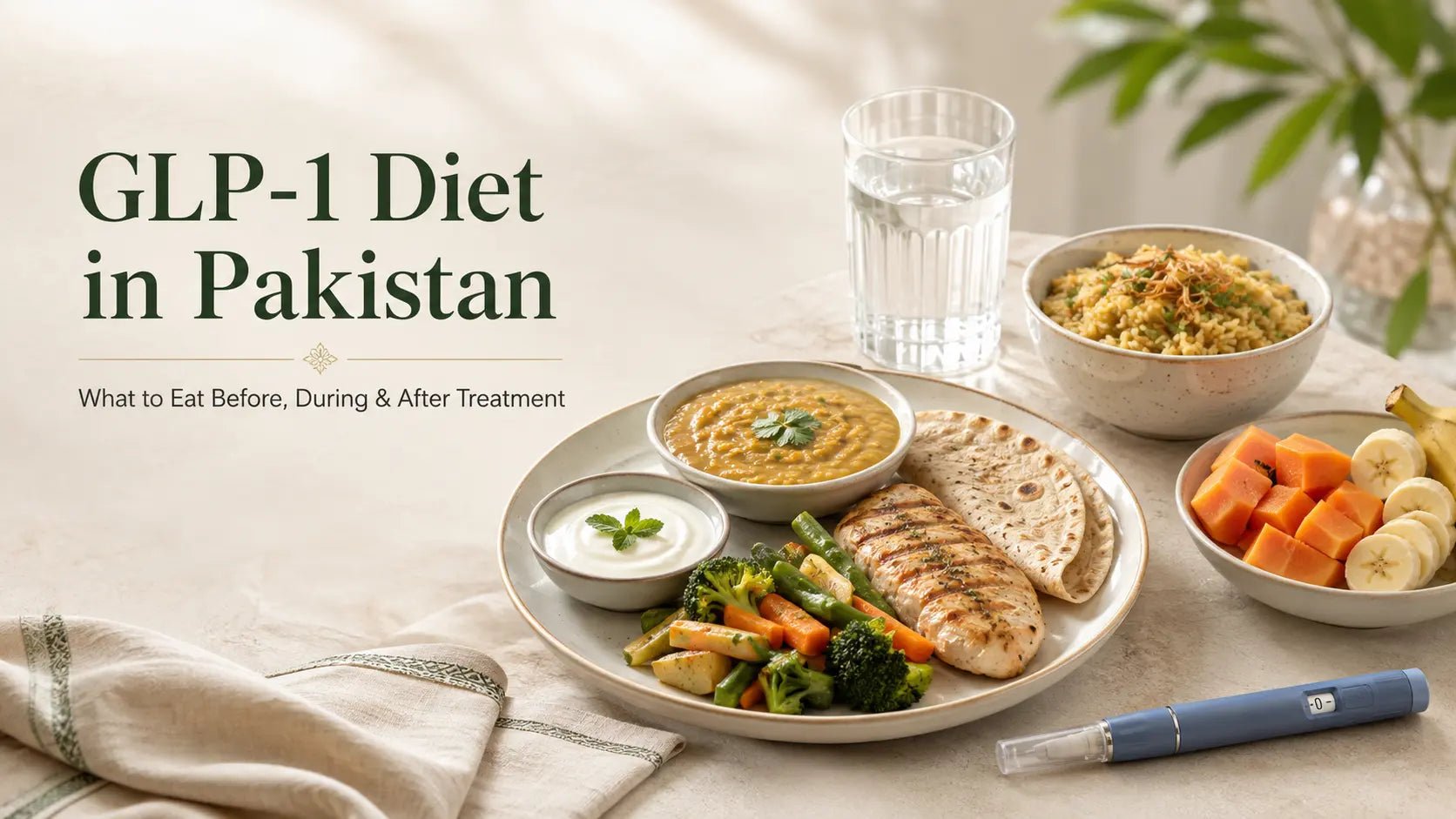
GLP-1 Weight Loss Diet in Pakistan: What to Eat Before, During and After Treatment
A practical GLP-1 diet guide for Pakistan covering what to eat before, during, and after treatment. Includes Pakistani meals, injection-day foods, side-effect tips, and weight-maintenance guidance.
A good GLP-1 weight loss diet in Pakistan is built around small, balanced meals containing protein, vegetables or fruit, pulses and controlled portions of roti, rice or other carbohydrates.
Before treatment, improve your meal routine, fluid intake, protein intake and bowel habits. During treatment, eat smaller portions, start meals with protein, eat slowly and stop when comfortably full. If nausea, constipation, diarrhoea or reflux develops, adjust the size, fat content, fibre and texture of your meals rather than following an extreme diet.
After treatment, continue the same meal structure because appetite can increase again and weight regain is common after GLP-1 medicines are stopped.
You do not need imported diet foods, a zero-carbohydrate diet or a special “Ozempic diet.” Pakistani foods such as eggs, chicken, fish, daal, chana, lobia, dahi, sabzi, fruit, roti, rice and khichri can all fit into a GLP-1 eating plan.
The main nutrition goals are to:
- get enough protein and nutrients while eating less;
- protect muscle during weight loss;
- stay hydrated;
- prevent or manage digestive side effects;
- maintain a realistic eating pattern you can continue long term.
Current expert guidance emphasizes nutrition assessment, nutrient-dense foods, adequate protein, hydration, management of gastrointestinal symptoms and resistance exercise alongside GLP-1 treatment.
GLP-1 Diet at a Glance
| Treatment stage | Main goal | Pakistani food examples |
|---|---|---|
| Before treatment | Build regular meals, improve protein and hydration | Eggs, daal, chicken, fish, dahi, fruit, vegetables, water |
| First week | Learn your new portion tolerance | Egg with roti, daal with rice, grilled chicken, dahi, khichri |
| During treatment | Prioritize nutrients in smaller meals | Chicken + sabzi, daal + rice, fish + roti, dahi + fruit |
| Injection day | Keep meals familiar and moderate | Egg and roti, chicken soup, daal, plain dahi, khichri |
| After a dose increase | Reduce foods that worsen symptoms | Rice, toast, banana, dahi, soup, soft vegetables |
| During nausea | Use small, mild, lower-fat meals | Khichri, banana, toast, plain rice, dahi, yakhni |
| During constipation | Add fluids and fibre gradually | Oats, fruit, vegetables, daal, whole-wheat roti |
| After treatment | Manage returning hunger | Protein, vegetables, pulses, fruit, planned roti/rice portions |
What Is a GLP-1 Weight Loss Diet?
A GLP-1 diet is not a separate medical diet or a list of foods that make the medicine work.
It is an eating pattern designed to support people using medicines that affect GLP-1 pathways.
These include medicines containing:
- semaglutide;
- liraglutide;
- tirzepatide.
Semaglutide is used in products such as Ozempic and Wegovy in various markets. Tirzepatide is sold under brands including Mounjaro and Zepbound in some countries. Tirzepatide acts on both GIP and GLP-1 receptors, although it is commonly grouped with GLP-1 medicines in everyday discussion.
Brand indications and regulatory status differ by country and can change. Do not assume that every brand is approved for weight management in Pakistan simply because it is used for weight loss elsewhere.
GLP-1-based medicines can:
- reduce appetite;
- increase feelings of fullness;
- reduce food intake;
- slow gastric emptying to varying degrees;
- improve blood-glucose regulation.
These effects can make weight loss easier, but they can also make it harder to eat enough protein, vitamins, minerals, fibre and fluids.
Common gastrointestinal side effects can include nausea, vomiting, diarrhoea, constipation, abdominal discomfort, indigestion, bloating, burping and reflux. Current semaglutide and tirzepatide prescribing information also warns about less common but more serious complications that require medical assessment.
The 6 Most Important GLP-1 Diet Rules
For most people, these principles matter more than following a complicated meal plan.
1. Eat protein first
When appetite is low, do not fill up on tea, juice, biscuits or a large serving of rice before eating protein.
Start with:
- egg;
- chicken;
- fish;
- lean meat;
- daal;
- chana;
- lobia;
- dahi;
- milk;
- paneer or tofu where suitable.
2. Reduce portion size before removing food groups
You usually do not need to eliminate roti, rice or fruit.
Smaller portions often work better than extreme restriction.
3. Eat slowly
Large amounts of food eaten quickly can cause uncomfortable fullness, nausea or reflux.
Take small bites and stop when you feel comfortably satisfied.
4. Drink regularly
Reduced appetite can also reduce thirst or the desire to drink.
Vomiting and diarrhoea can increase dehydration risk.
5. Adjust fibre gradually
Fibre can help constipation, but suddenly adding large amounts of bran, seeds, beans or fibre supplements may worsen gas and bloating.
6. Protect your muscle
Weight loss is not always 100% body fat. Research with tirzepatide has shown reductions in both fat mass and lean mass during substantial weight loss.
Protein and resistance exercise therefore deserve special attention.
What to Eat Before Starting GLP-1 Treatment
Do not wait until nausea or poor appetite begins before improving your diet.
The days before treatment are a good time to create habits that will be easier to maintain once your appetite changes.
1. Review your medical and nutrition risks
Before starting semaglutide, tirzepatide or another GLP-1-based medicine, tell your clinician about your health conditions and all medicines and supplements you use.
Individual medical advice is especially important if you:
- use insulin;
- use a sulfonylurea or another medicine that can cause low blood sugar;
- have kidney disease;
- have liver disease;
- have gallbladder problems;
- have had pancreatitis;
- have severe reflux;
- have severe constipation;
- have delayed stomach emptying or severe gastroparesis;
- frequently vomit;
- have chronic diarrhoea;
- have had bariatric surgery;
- have a current or previous eating disorder;
- are pregnant or planning pregnancy;
- are breastfeeding;
- have an upcoming procedure requiring anaesthesia or deep sedation.
GLP-1 medicines combined with insulin or an insulin secretagogue can increase hypoglycaemia risk, particularly if food intake falls. Current medicine labels also advise patients to tell healthcare professionals about GLP-1 use before planned procedures involving anaesthesia or deep sedation.
2. Do You Need to Fast Before Your First GLP-1 Injection?
Usually, no.
Current prescribing information for injectable Wegovy and Zepbound states that weekly injections can be administered with or without meals.
You therefore do not need to deliberately skip breakfast or dinner before a weekly injection unless your own medicine instructions or clinician tell you otherwise.
Oral semaglutide is different.
Some oral semaglutide formulations must be taken in the morning on an empty stomach with a limited amount of plain water, followed by a waiting period before food, drinks or other oral medicines. Current US Wegovy tablet instructions, for example, specify up to four ounces of water and at least a 30-minute wait.
Follow the instructions for your exact product. Do not apply tablet instructions to an injection or injection instructions to a tablet.
3. Do Not Have a “Last Feast”
There is no benefit to eating a very large meal because you are about to start treatment.
A rich meal containing large amounts of:
- biryani;
- karahi;
- nihari;
- fried chicken;
- paratha;
- mithai;
- restaurant desserts
may simply leave you feeling uncomfortable if appetite and digestion change soon afterwards.
Eat a normal balanced meal instead.
For example:
- grilled chicken + sabzi + one small roti;
- daal + vegetables + moderate rice;
- fish + vegetables;
- khichri + plain dahi.
4. Establish Protein-Rich Meals
Reduced appetite can make protein harder to obtain once treatment begins.
Start including a protein food at every main meal.
Affordable Pakistani protein options
- eggs;
- chicken;
- local fish;
- lean beef or mutton;
- moong daal;
- masoor daal;
- chana;
- lobia;
- milk;
- plain dahi;
- paneer;
- tofu or soy foods where available.
A simple pattern could be:
Breakfast: egg + small roti
Lunch: daal or chicken + sabzi
Dinner: fish, chicken, chana or lobia + vegetables
How much protein do you need?
There is no single protein number that is correct for every GLP-1 user.
The 2025 joint nutrition advisory notes that higher intakes such as 1.2–1.6 g/kg/day have been proposed during active weight loss, but it also points out that using actual body weight in people with obesity can overestimate requirements and that there is no universal agreement on the best method of calculation.
Your target should therefore be individualized based on:
- body size;
- age;
- lean mass;
- activity level;
- rate of weight loss;
- kidney function;
- liver health;
- total food intake.
Do not start a very high-protein diet simply because you are using GLP-1 medication.
5. Improve Hydration Before Treatment
Start drinking regularly before your first dose.
This is particularly important during hot Pakistani weather.
Suitable drinks include:
- water;
- unsweetened tea;
- lemon water without excess sugar;
- soup or yakhni;
- plain or unsweetened lassi, if tolerated;
- milk, if appropriate for you.
Try not to rely heavily on:
- soft drinks;
- energy drinks;
- packaged juice;
- sweet lassi;
- milkshakes;
- several cups of heavily sweetened chai.
People with kidney disease, heart failure or prescribed fluid restrictions should follow their clinician's advice rather than increasing fluids independently.
6. Address Constipation Before It Gets Worse
If you are already constipated before treatment, look at:
- fluid intake;
- vegetable intake;
- fruit;
- whole grains;
- pulses;
- activity level.
Useful fibre foods include:
- oats;
- dalia;
- daal;
- chana;
- lobia;
- vegetables;
- whole fruit;
- whole-wheat roti;
- nuts and seeds in modest amounts.
Increase fibre slowly.
Adding large amounts of bran, chia, flaxseed or ispaghol without enough fluid can make bloating or constipation worse.
7. Prepare “Low-Appetite Foods”
Keep easy foods available before starting treatment so you do not have to cook a full meal when appetite is low.
Useful options include:
- eggs;
- plain dahi;
- bananas;
- papaya;
- milk;
- chicken soup;
- daal soup;
- khichri;
- oats;
- plain rice;
- toast;
- boiled potato;
- cooked vegetables.
What to Eat During GLP-1 Treatment in Pakistan
During treatment, think about nutrition per bite.
If your usual meal becomes half its previous size, the first half of the plate matters more than before.
Use a Pakistani GLP-1 Plate
When appetite is normal enough for a full balanced meal, a simple plate can contain:
½ plate: vegetables
¼ plate: protein
¼ plate: roti, rice, potato or another carbohydrate
Small amount: cooking oil or another fat
You do not have to finish the entire plate.
When appetite is low, change the eating order:
1. Protein first
Eat:
- chicken;
- fish;
- eggs;
- lean qeema;
- daal;
- chana;
- lobia;
- dahi.
2. Vegetables or fruit second
Choose raw or cooked vegetables depending on what your stomach tolerates.
3. Roti or rice third
Use a moderate amount rather than eliminating carbohydrates.
Best Pakistani Protein Foods for GLP-1 Users
| Protein | Better option | Limit if symptoms occur |
|---|---|---|
| Chicken | Grilled, baked, boiled, lightly cooked curry | Deep-fried chicken, oily karahi |
| Fish | Grilled, baked or lightly cooked | Deep-fried fish |
| Eggs | Boiled, poached, omelette with little oil | Eggs fried in excess ghee |
| Daal | Well-cooked, moderate tarka | Very oily tarka or huge servings when bloated |
| Chana/lobia | Well cooked, moderate portions | Large portions during severe gas |
| Dahi | Plain and unsweetened | Highly sweetened yoghurt |
| Qeema | Lean meat with vegetables | Fatty qeema with excess oil |
| Milk | Plain, if tolerated | Sugary milkshakes |
| Paneer/tofu | Moderate portions with vegetables | Deep-fried versions |
Can You Eat Roti on Ozempic, Wegovy or Mounjaro?
Yes.
Roti does not have to be removed from a GLP-1 diet.
What matters more is:
- roti size;
- how many you eat;
- whether ghee or butter is added;
- the rest of the meal;
- your overall calorie and carbohydrate needs;
- blood-glucose management if you have diabetes.
A practical meal could be:
Chicken + sabzi + one small roti
or:
Daal + cooked vegetables + one small roti
Whole-wheat roti can provide more fibre, but it is not compulsory at every meal.
During significant nausea, diarrhoea or bloating, a softer and lower-fibre carbohydrate may temporarily be easier to tolerate.
Paratha, puri and heavily buttered naan are more likely than plain roti to feel heavy because they contain more fat.
Can You Eat Rice on a GLP-1 Diet?
Yes.
You do not need a zero-rice diet.
Pair a moderate serving of rice with:
- chicken;
- fish;
- daal;
- beans;
- dahi;
- vegetables.
Plain rice is often lighter than a large serving of oily biryani or pulao.
During nausea or diarrhoea, soft rice or khichri may be easier to tolerate than a high-fibre or highly spiced meal.
Brown rice contains more fibre, but that does not automatically make it the best choice during digestive symptoms. For more detail on portions and meal balance, see MNT's guide on rice and weight loss.
What Fruits Are Best on a GLP-1 Diet?
Most whole fruits can fit.
Common Pakistani options include:
- apple;
- guava;
- kinnow;
- orange;
- banana;
- papaya;
- melon;
- pear;
- berries where available.
Whole fruit is usually preferable to fruit juice because it provides fibre and is harder to consume in very large amounts quickly.
During nausea, try gentler options such as:
- banana;
- papaya;
- peeled apple;
- melon.
What Vegetables Can You Eat?
Suitable choices include:
- lauki;
- tori;
- tinda;
- bhindi;
- palak;
- carrots;
- pumpkin;
- cucumber;
- cauliflower;
- cabbage;
- mixed vegetables.
A giant raw salad is not automatically better.
If raw vegetables cause bloating, temporarily switch to:
- cooked sabzi;
- vegetable soup;
- softer vegetables.
How Much Oil Should You Use?
You do not need to eat a fat-free diet.
The problem is often that Pakistani curries can contain much more oil than is obvious from the serving size.
Useful changes include:
- measure oil instead of pouring freely;
- use leaner cuts of meat;
- remove obvious excess oil from curry;
- grill, bake, steam or air-fry;
- use dahi instead of cream where suitable;
- increase vegetables in curries;
- serve less oily gravy.
High-fat meals may worsen fullness, nausea or reflux in some people taking GLP-1 medicines.
Fibre on a GLP-1 Diet
Fibre can support bowel regularity, but more is not always better.
Start with:
- oats;
- cooked vegetables;
- soft fruit;
- moong daal;
- masoor daal;
- whole-wheat roti;
- modest portions of pulses.
Increase more slowly with foods that cause gas for you, such as:
- chana;
- lobia;
- rajma;
- large raw salads;
- bran;
- large quantities of seeds.
A useful sequence is:
- Improve fluid intake.
- Add one fibre-rich food.
- Start with a modest portion.
- Watch how your stomach responds.
- Increase gradually.
Foods to Limit on Semaglutide or Tirzepatide
There is no universal list of banned GLP-1 foods.
However, large, fatty or heavily spiced meals may worsen nausea, reflux, diarrhoea, bloating or early fullness.
Common examples include:
- samosa;
- pakora;
- puri;
- oily paratha;
- deep-fried chicken;
- fries;
- large biryani portions;
- oily pulao;
- nihari;
- paya;
- very oily karahi;
- fatty meat curries;
- creamy gravies;
- mithai;
- halwa;
- cakes;
- large milkshakes;
- sugary drinks;
- large restaurant meals;
- very spicy chutneys or curries;
- fizzy drinks.
You may tolerate some of these foods in small amounts.
The aim is not to create fear around food. Pay attention to portion size and symptoms.
What to Eat When Your Appetite Is Very Low
Do not force yourself to finish a normal-sized plate.
Instead, choose a smaller protein-containing option.
Examples:
- boiled egg + toast;
- plain dahi + fruit;
- small bowl of daal;
- milk + small banana;
- chicken soup;
- daal soup;
- soft khichri + dahi;
- small serving of grilled chicken;
- fish + a few bites of vegetables.
If needed, eat another small meal later.
Persistent inability to eat enough is different from simply having a smaller appetite and should be discussed with your healthcare team. MNT also explains why eating too little while trying to lose weight can work against long-term nutrition and weight-management goals.
What to Eat on GLP-1 Injection Day
There is no compulsory GLP-1 injection-day diet.
For commonly used weekly semaglutide and tirzepatide injections, current prescribing information allows dosing with or without meals.
Before your injection
Eat a normal meal if you are hungry.
Examples:
- egg + small roti;
- chicken + sabzi;
- daal + modest rice;
- fish + vegetables;
- plain dahi + fruit;
- khichri.
Do not deliberately overeat because you expect your appetite to fall.
After your injection
If you feel well, continue your normal balanced diet.
If you often develop symptoms:
- start with a smaller serving;
- eat slowly;
- sip fluids;
- choose less oily food;
- avoid lying flat immediately after a large meal.
What to Eat After a GLP-1 Dose Increase
Digestive symptoms can become more noticeable during dose escalation.
For the first day or two after an increase, if your stomach feels unsettled, use foods such as:
- khichri;
- plain rice;
- toast;
- banana;
- plain dahi;
- oats;
- light soup;
- grilled chicken;
- boiled egg;
- soft-cooked vegetables.
Continue a protein source if possible.
Do not increase your dose faster than prescribed simply to speed up weight loss.
If the new dose prevents you from eating or drinking normally, contact the clinician managing your medication.
What to Eat During Your First Week on GLP-1 Treatment
You do not normally need a liquid diet for your first week.
Start with familiar balanced foods, but expect your comfortable portion size to change.
Breakfast options
- egg + small roti;
- vegetable omelette;
- plain dahi + oats;
- milk + banana;
- daal + small roti.
Lunch options
- chicken + cooked vegetables;
- moong daal + modest rice;
- fish + small roti;
- khichri + dahi;
- chana + vegetables.
Optional snack
Use only if hungry or your main meals are very small:
- fruit;
- plain dahi;
- roasted chana;
- milk;
- boiled egg.
Dinner options
- chicken soup;
- daal + vegetables;
- grilled fish;
- light chicken curry + small roti;
- soft khichri.
Managing GLP-1 Side Effects With Food
| Symptom | What may help | What to limit |
|---|---|---|
| Nausea | Small meals, toast, banana, rice, khichri, dahi, soup, slow eating | Fried, greasy, very spicy or large meals |
| Vomiting | Small sips of fluid, gradual return to bland food | Large drinks or meals taken quickly |
| Constipation | Fluids, oats, fruit, vegetables, daal, gradual fibre | Sudden large fibre increases without fluid |
| Diarrhoea | Fluids, rice, banana, toast, oats, dahi if tolerated | Fried food, chilli, excess caffeine |
| Reflux | Smaller meals, earlier dinner, remain upright | Large late meals, excess fat, fizzy drinks |
| Bloating | Small portions, cooked foods, slow eating | Huge bean portions, raw salad, carbonated drinks |
Expert consensus supports dietary and behavioural adjustments to help manage common gastrointestinal effects, particularly during dose escalation.
What to Eat When GLP-1 Causes Nausea
When nauseated, eating a little may feel better than forcing a full meal.
Try:
- plain khichri;
- toast;
- plain crackers;
- banana;
- rice;
- chicken soup;
- yakhni;
- plain dahi;
- boiled potato;
- boiled egg;
- oats.
Some people find ginger tea helpful, although it should not replace medical care for significant symptoms.
Other useful habits:
- avoid strong cooking smells;
- keep portions small;
- eat slowly;
- avoid greasy meals;
- sip rather than gulp water.
What to Eat for GLP-1 Constipation
For mild constipation:
- drink enough fluid if medically allowed;
- eat fruit regularly;
- add cooked vegetables;
- include oats or dalia;
- use daal and pulses as tolerated;
- increase whole grains gradually;
- remain physically active.
Do not continue adding more fibre if you develop:
- severe abdominal pain;
- repeated vomiting;
- severe swelling;
- inability to pass stool or gas.
Those symptoms need medical assessment. For more context on digestion and scale changes, read MNT's guide on constipation and weight loss.
What to Eat for GLP-1 Diarrhoea
Prioritize fluids.
Temporary meal options include:
- banana;
- rice;
- toast;
- oats;
- boiled potato;
- plain dahi if tolerated;
- light soup.
Temporarily reduce:
- fried food;
- oily curry;
- heavy chilli;
- large amounts of caffeine;
- foods that clearly worsen your symptoms.
People with kidney, heart or other conditions affecting fluid or electrolyte needs should ask their clinician before frequently using electrolyte drinks.
What to Eat for Reflux or Heartburn
Try:
- smaller meals;
- earlier dinner;
- less oil;
- slower eating;
- staying upright after food.
Reduce foods that trigger symptoms for you, particularly:
- oily curry;
- fried meals;
- large late-night meals;
- fizzy drinks;
- excessive tea or coffee;
- very spicy food.
Seven-Day Pakistani GLP-1 Meal Plan
This Pakistani GLP-1 meal plan is an example of meal structure, not a prescription for calories or portions.
Your needs depend on body size, medical conditions, appetite and treatment goals.
| Day | Breakfast | Lunch | Snack if needed | Dinner |
|---|---|---|---|---|
| 1 | Egg + small whole-wheat roti | Light chicken curry + sabzi + small roti | Plain dahi | Moong daal + modest rice |
| 2 | Oats with milk + fruit | Grilled fish + vegetables + small roti | Apple/guava | Khichri + dahi |
| 3 | Vegetable omelette | Masoor daal + bhindi + roti | Roasted chana | Chicken soup + toast |
| 4 | Dahi + oats + papaya | Lean beef/mutton + vegetables + small roti | Milk | Grilled chicken + lauki |
| 5 | Boiled egg + toast | Fish curry + modest rice | Fruit | Moong daal + palak + roti |
| 6 | Besan chilla + dahi | Chicken tikka + vegetables + roti | Unsweetened lassi | Vegetable khichri + dahi |
| 7 | Scrambled egg + tomatoes + roti | Chana + cucumber raita + small roti | Papaya/orange | Fish/chicken + mixed vegetables |
Low-appetite swaps
Use one of these if a full meal feels too large:
- chicken soup + dahi;
- boiled egg + toast;
- half bowl of khichri;
- daal soup;
- dahi + fruit;
- milk + banana;
- small portion of fish or chicken.
Vegetarian swaps
Use:
- daal;
- chana;
- lobia;
- paneer;
- tofu;
- dahi;
- milk;
- eggs, if included in your diet.
Budget-Friendly GLP-1 Foods in Pakistan
A GLP-1 diet does not require salmon, avocado, protein bars or imported “diet food.”
Affordable options include:
- eggs;
- moong daal;
- masoor daal;
- chana;
- lobia;
- seasonal sabzi;
- seasonal fruit;
- plain dahi;
- milk;
- whole-wheat atta;
- oats or dalia;
- chicken in planned portions;
- locally available fish;
- homemade soup;
- homemade khichri.
Food quality matters more than whether the product is marketed as a “weight-loss food.”
Can You Drink Chai or Coffee?
Usually yes, unless your clinician has told you otherwise.
However, caffeine can worsen:
- reflux;
- nausea;
- poor sleep;
- palpitations in susceptible people.
Also consider what comes with the tea.
Several cups of chai with sugar and biscuits can contribute considerable energy while providing little protein or fibre.
Try:
- less sugar;
- smaller cups;
- fewer biscuits;
- tea after food if it causes nausea on an empty stomach.
Can You Drink Lassi?
Yes, if you tolerate dairy.
Choose:
- plain lassi;
- lightly salted lassi;
- unsweetened lassi;
- modest portions.
Large sweet lassi servings may contain substantial sugar and calories.
Temporarily avoid it if dairy worsens diarrhoea or bloating.
Eating Out While Taking a GLP-1 Medicine
Choose simple dishes where you can roughly judge the amount of oil.
Options may include:
- chicken tikka;
- fish tikka;
- grilled boti;
- daal;
- raita;
- vegetables;
- one plain roti;
- a modest amount of rice.
Ask for less oil where possible.
Avoid arriving extremely hungry because you may eat quickly before noticing fullness.
What About Pakistani Weddings?
You do not need to skip social events.
A simple strategy is:
- Do not starve yourself all day.
- Start with protein.
- Choose a small serving.
- Take roti or a modest amount of rice rather than large servings of both.
- Eat slowly.
- Wait before taking seconds.
- Choose a small dessert portion if desired.
- Stop when comfortably full.
A single wedding meal does not determine your weight-loss outcome.
GLP-1 Treatment During Ramadan
Fasting while taking a GLP-1 medicine requires individual medical planning, especially if you have diabetes.
Speak with your clinician before Ramadan if you:
- use insulin;
- use sulfonylureas;
- have kidney disease;
- experience frequent vomiting;
- become dehydrated easily;
- recently increased your dose;
- are pregnant.
Do not independently move, skip or change medication doses.
A balanced suhoor
Include:
- egg, dahi, milk, daal or another protein;
- small roti, oats or another carbohydrate;
- fruit or vegetables;
- adequate fluids.
Avoid an extremely salty meal that increases thirst.
A balanced iftar
Rather than beginning with a very large fried meal, consider:
- water;
- an appropriate amount of fruit or dates;
- soup or dahi;
- protein;
- modest roti or rice;
- vegetables.
Drink gradually between iftar and suhoor.
People with diabetes require individualized guidance about glucose monitoring, medication and when fasting should be broken.
How to Prevent Muscle Loss on a GLP-1 Medicine
Protecting muscle is one of the most important parts of a good GLP-1 plan.
In a SURMOUNT-1 body-composition substudy, both fat and lean mass fell during tirzepatide-associated weight loss; about three-quarters of the weight lost was fat mass and about one-quarter lean mass in the analyzed participants.
To support lean tissue:
Eat protein regularly
Spread protein foods across meals instead of leaving nearly all of your protein for dinner.
Do resistance exercise
Depending on your health and ability, this may include:
- chair squats;
- wall push-ups;
- resistance bands;
- light weights;
- gym machines;
- body-weight exercises.
The 2025 multidisciplinary GLP-1 nutrition advisory specifically emphasizes both adequate protein and strength training to help preserve lean mass.
Avoid extreme restriction
Signs you may be eating too little include:
- persistent weakness;
- dizziness;
- major loss of strength;
- difficulty completing daily activities;
- repeatedly skipping meals;
- very low protein intake;
- persistent vomiting.
Discuss these symptoms with your healthcare team.
Do You Need Protein Powder on Ozempic or Mounjaro?
Not necessarily.
Food can provide enough protein for many people.
A protein supplement may be useful when:
- appetite is extremely low;
- solid protein foods are difficult to eat;
- meal preparation is difficult;
- your dietitian identifies a protein gap.
Choose products based on:
- protein content;
- added sugar;
- calories;
- allergens;
- manufacturing quality;
- suitability for kidney or liver disease.
Avoid products marketed as “natural Ozempic.”
A supplement should not be assumed to reproduce the effects of prescription GLP-1 treatment.
Do You Need Vitamins While Taking GLP-1 Medicines?
Not automatically.
A vitamin or mineral supplement may be appropriate if:
- your food intake remains very low;
- blood tests show a deficiency;
- your diet excludes major food groups;
- you have a condition affecting absorption;
- your clinician recommends supplementation.
Do not take very high doses “just in case.”
The better first step is to assess whether your diet has become too limited.
What to Eat After Stopping GLP-1 Treatment
The best diet after stopping semaglutide or tirzepatide should begin before your final dose.
Do not wait for strong hunger or weight regain before creating a maintenance plan.
Do not stop treatment on your own
Obesity is increasingly treated as a chronic, relapsing condition, and WHO's 2025 guideline places GLP-1 therapies within long-term comprehensive care rather than treating them as a short-term diet aid.
Whether you continue, change or stop medication depends on your:
- medical condition;
- treatment response;
- side effects;
- goals;
- access and affordability.
There is no single do-it-yourself tapering schedule suitable for everyone.
Expect Appetite to Increase
Hunger may increase after treatment ends.
This should be anticipated rather than treated as a personal failure.
In the STEP 1 extension, people who stopped semaglutide 2.4 mg regained, on average, roughly two-thirds of their previous weight loss over the following year.
Withdrawal evidence with tirzepatide tells a similar story. In SURMOUNT-4, participants switched from tirzepatide to placebo regained substantial weight, whereas continued treatment maintained and extended the initial weight reduction.
That does not mean every person will regain the same amount.
It means that maintenance needs a plan.
Keep the Same Meal Structure After Treatment
Continue to:
- include protein at each main meal;
- eat vegetables and fruit;
- use regular meal times;
- keep roti and rice portions planned;
- use filling pulses and whole foods;
- plan snacks rather than grazing all day;
- continue resistance exercise;
- keep walking or doing other physical activity;
- monitor weight or waist trends;
- attend follow-up appointments.
For broader long-term strategies, see MNT's guide to sustainable weight loss.
What to Do if Hunger Starts Increasing
Use this order:
- Return to regular meals if you have started skipping them.
- Check whether breakfast contains protein.
- Include protein at lunch and dinner.
- Add vegetables, fruit or pulses for fibre.
- Review sugary drinks and liquid calories.
- Review restaurant meals and frequent snacks.
- Improve sleep where possible.
- Track hunger and eating patterns for one or two weeks.
- Discuss meaningful weight regain with your clinician.
Do not immediately respond with a crash diet.
Severe restriction can make hunger, poor nutrition and muscle loss worse.
Need a Personalized GLP-1 Diet Plan?
GLP-1 treatment can change appetite, portion tolerance, hydration needs and digestive symptoms differently for each person. MNT's online dietitian consultation can help you build a personalized Pakistani food-based plan around your treatment, routine, preferences, medical history and weight-management goals.
Book an MNT Dietitian ConsultationA Short Safety Note About Buying GLP-1 Medicines in Pakistan
Buy prescription medicines through legitimate, regulated sources.
DRAP has previously issued a specific alert concerning suspected falsified GLP-1 receptor agonists in Pakistan and warned about risky purchases from uncontrolled online sources.
Because registration and availability can change, check current information rather than relying on an old social-media post or seller claim.
Avoid:
- unverified social-media sellers;
- opened injection pens;
- products with unclear origin;
- products without proper packaging;
- suspiciously low prices;
- sharing injection pens.
If packaging or product information looks unusual, ask a licensed pharmacist or your clinician before using it.
When GLP-1 Side Effects Need Medical Review
Contact your prescribing clinician if you experience:
- persistent nausea;
- repeated vomiting;
- ongoing diarrhoea;
- significant constipation;
- difficulty eating enough;
- persistent reflux;
- symptoms of dehydration;
- repeated low blood sugar;
- major weakness;
- symptoms that become difficult to manage after a dose increase.
Current semaglutide and tirzepatide labels include warnings concerning severe gastrointestinal reactions, kidney injury related to volume depletion, gallbladder disease, pancreatitis and other serious adverse effects.
When to Seek Urgent Medical Care
Seek urgent medical assessment for symptoms such as:
- severe or persistent abdominal pain;
- severe pain that may spread toward the back;
- repeated vomiting;
- inability to keep fluids down;
- severe dehydration;
- very little urine;
- fainting or confusion;
- yellowing of the skin or eyes;
- severe abdominal swelling;
- inability to pass stool or gas with worsening symptoms;
- serious allergic symptoms such as difficulty breathing or swelling of the face, lips or tongue;
- severe symptoms of low blood sugar.
Do not try to manage severe symptoms only by changing your diet.
Frequently Asked Questions
What is the best GLP-1 diet in Pakistan?
A good Pakistani GLP-1 diet contains small, nutrient-rich meals with protein, vegetables, fruit, pulses and controlled portions of roti or rice. Keep fried and very oily foods limited if they worsen nausea, reflux or fullness. Drink regularly and adjust portions to your appetite.
What is the best Pakistani diet for semaglutide?
Use familiar foods such as eggs, chicken, fish, daal, chana, lobia, dahi, vegetables and fruit. Roti and rice can both be included in moderate portions. Start meals with protein and reduce heavy fried food when symptoms occur.
What should I eat before my first Ozempic or GLP-1 injection?
You usually do not need a special meal or a fast before a weekly injection. Eat a familiar balanced meal such as egg with roti, chicken with vegetables or daal with rice. Avoid deliberately eating a very large or oily “last meal.”
Should I take a GLP-1 injection on an empty stomach?
Weekly semaglutide and tirzepatide injections covered by current US Wegovy and Zepbound prescribing information can be taken with or without food. Oral formulations may have different instructions, so follow the directions for your exact medicine.
What should I eat after a semaglutide injection?
If you feel well, continue your normal balanced diet. If nausea occurs, try smaller portions of foods such as toast, banana, rice, khichri, dahi, soup or boiled egg.
Can I eat roti while taking Ozempic or Mounjaro?
Yes. Roti can be included. Pair it with protein and vegetables and keep the portion appropriate for your appetite and medical needs. Plain roti is generally lighter than oily paratha or puri.
Can I eat rice while taking Mounjaro or semaglutide?
Yes. A moderate rice serving can be eaten with chicken, fish, daal, dahi or vegetables. Plain rice or khichri may be easier to tolerate than oily biryani when you feel nauseated.
Do I need to stop eating carbohydrates on GLP-1 treatment?
No. GLP-1 medicines do not require a zero-carbohydrate or keto diet. Carbohydrates can be included in suitable portions as part of a balanced meal.
What should I eat when semaglutide causes nausea?
Use small, lower-fat meals such as toast, banana, rice, khichri, oats, dahi, soup, boiled egg or soft daal. Avoid forcing large meals and limit greasy or very spicy food until symptoms settle.
What should I eat for constipation on GLP-1 medication?
Drink enough fluid if medically allowed and gradually add fruit, vegetables, oats, daal and whole grains. Stay active. Avoid suddenly adding large quantities of fibre without enough water.
Should I skip meals if I am not hungry?
Do not force a full-sized meal, but repeated whole-day fasting can make it harder to obtain enough protein and nutrients. Try a small protein-containing food such as an egg, dahi, milk, daal or chicken soup and eat again later.
Can I drink tea while taking Ozempic?
Usually yes. Reduce sugar and biscuits, and limit tea if caffeine worsens nausea, reflux, palpitations or sleep.
Can I drink lassi?
Yes, if tolerated. Choose plain or unsweetened lassi in a moderate serving rather than a large sweet lassi.
Can I eat spicy food on Mounjaro?
You do not have to avoid spices automatically. Reduce chilli and heavy masala if they trigger nausea, reflux, diarrhoea or abdominal discomfort.
Do I need to completely stop sugar?
No food needs to be automatically banned, but sugary drinks, mithai, desserts and milkshakes can provide many calories without much protein or fibre. Keep them occasional and use smaller portions.
Can I follow keto while taking semaglutide?
A ketogenic diet is not required for semaglutide to work. Very restrictive diets may worsen poor intake or constipation for some people. Discuss major dietary restriction with a qualified dietitian or doctor.
How much protein should I eat while taking a GLP-1 medicine?
There is no universal target. Higher intakes such as 1.2–1.6 g/kg/day have been proposed during active weight reduction, but the appropriate body-weight measure and target vary, especially in obesity. Your age, lean mass, activity level and kidney or liver health should be considered.
Do I need protein powder?
Not necessarily. Eggs, dairy, chicken, fish, meat and pulses can provide protein. A supplement may be helpful when appetite is very poor or your dietitian identifies a gap.
How can I prevent muscle loss?
Eat adequate protein, avoid extreme calorie restriction and include resistance exercise appropriate for your fitness and health. Monitor strength and function as well as body weight.
Can I fast during Ramadan while using a GLP-1 medicine?
Some people may be able to fast safely, while others may have increased risk from dehydration, low blood sugar or gastrointestinal symptoms. People with diabetes or other medical conditions should make a fasting and medication plan with their clinician before Ramadan.
What should I eat after stopping semaglutide?
Continue structured meals containing protein, vegetables or fruit and planned portions of roti or rice. Expect that hunger may increase and plan meals before it becomes difficult to control.
Will I regain weight after stopping semaglutide or tirzepatide?
Weight regain is common but varies between people. Clinical withdrawal studies of both semaglutide and tirzepatide found substantial regain after treatment was stopped.
Key Takeaway
The best GLP-1 weight loss diet in Pakistan is not an expensive imported meal plan and does not require eliminating roti or rice.
The core strategy is simple:
Before treatment: build regular meals, improve protein intake, hydrate and address constipation.
During treatment: eat smaller meals, start with protein, eat slowly, use moderate portions of roti or rice and adjust fat, fibre and food texture according to symptoms.
On injection day or after dose increases: use familiar, lighter meals if your stomach becomes sensitive.
During side effects: protect hydration and nutrition rather than simply stopping food.
After treatment: keep the same structured meals and prepare for appetite to increase.
Most importantly, use GLP-1 medication as part of long-term medical, nutrition and lifestyle care, not as a replacement for it.
We rely on peer-reviewed studies and reputable medical journals.