

12 Diabetes-Friendly Pakistani Breakfast Ideas: The Complete Low-GI Nashta Guide
Control morning blood sugar spikes without giving up traditional desi flavors. This clinical guide breaks down 12 low-GI Pakistani breakfast ideas, exact chakki atta ratios, morning chai rules, and a 7-day nashta meal plan backed...
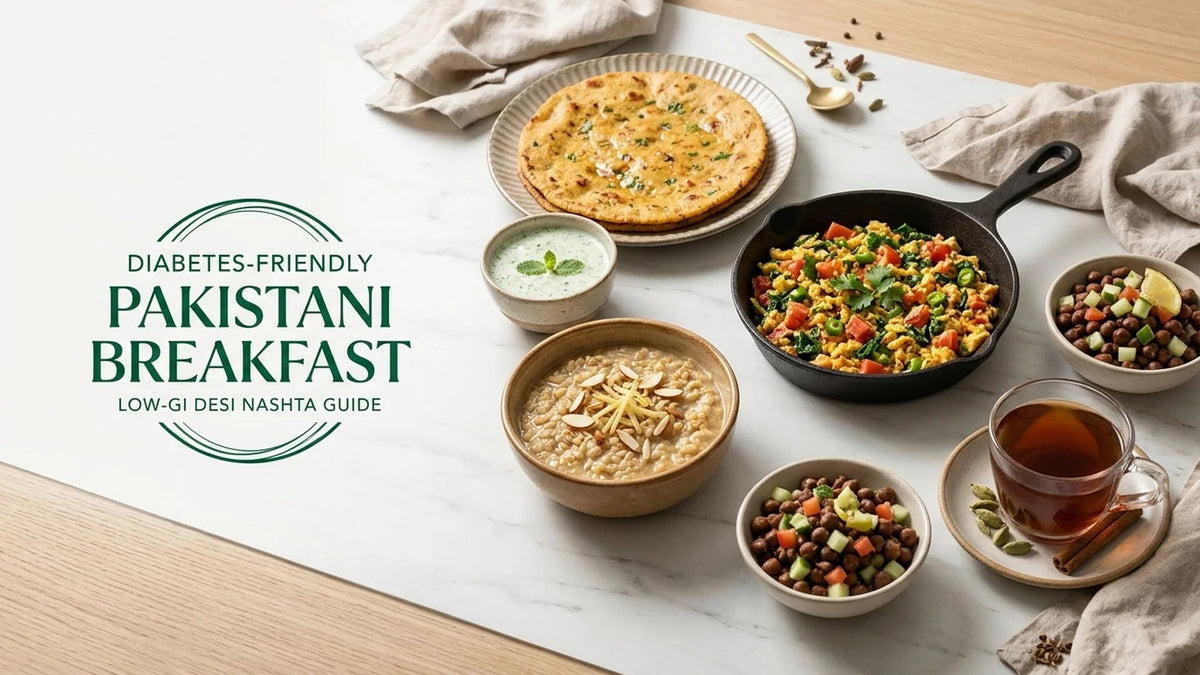
Quick Answer: The best diabetes-friendly Pakistani breakfasts replace white flour (maida) and fine wheat (atta) with high-protein, high-fiber traditional foods. Top choices include Besan ki Roti (chickpea flour flatbread) with mint raita, Khagina (spiced scrambled eggs) with half a barley (jau) roti, boiled Safaid Chana (white chickpeas) with lemon and onion, potato-free Anda Shami Kabab, and savory Jau ka Dalia (barley porridge). To prevent morning blood sugar spikes, every breakfast should have 15 to 20 grams of protein, at least 5 grams of fiber, and under 30 grams of slow-digesting carbs.
The best diabetes-friendly Pakistani breakfast combines 15 to 20 grams of protein with high-fiber, low-glycemic carbohydrates (under 30 grams of net carbs) to stop morning blood sugar spikes. Top choices include two eggs (anda) with one small besan or multigrain roti, savory gram flour pancakes (besan chilla) with plain yogurt (dahi), cracked barley porridge (jau ka dalia), and boiled black chickpeas (kala chana chaat). Avoid refined white flour (maida) parathas, bakery rusks (papay), white bread, and sweetened milk tea (doodh patti).
Key Takeaways for Fast Blood Sugar Control
- Change Your Flour: Swap regular white or fine wheat atta (Glycemic Index: 70) for Besan / Gram Flour (GI: 35) or Jau / Barley Atta (GI: 28).
- Eat Protein First: Eat your eggs (anda), shami kabab, or plain dahi before eating your roti. This simple habit slows down digestion and lowers sugar spikes.
- Stop Eating Rusks and Biscuits: Ditch cake rusk, papa, and bakery biscuits with morning chai. They are packed with white flour, sugar, and harmful trans fats.
- Avoid the "Gur" Trap: Brown sugar, gur (jaggery), and honey raise blood sugar just as fast as white sugar. Drink unsweetened elaichi chai or use a natural sweetener like stevia.
Quick Comparison: 7 Best Desi Breakfasts for Sugar Control
Use this reference table to pick a morning meal (nashta) that keeps your 2-hour post-meal blood sugar under 140 to 180 mg/dL.
| Pakistani Breakfast Option | Exact Portion Size | Net Carbs | Protein | Glycemic Index (GI) | Best For |
|---|---|---|---|---|---|
| 1. Besan Chilla with Dahi | 2 thin pancakes + ½ cup plain yogurt | 18g | 14g | Low (30–35) | High fasting sugar (above 130 mg/dL) |
| 2. Anda Khageena + Missi Roti | 2 whole eggs + 1 small 40g roti | 20g | 16g | Low (40–45) | Traditional anda-paratha lovers |
| 3. Savory Jau ka Dalia (Barley) | 1 medium bowl cooked with veggies | 24g | 8g | Low (28–35) | High cholesterol and Type 2 diabetes |
| 4. Boiled Kala Chana Chaat | ¾ cup black chickpeas + 1 boiled egg | 22g | 15g | Low (33) | Long-lasting morning fullness |
| 5. Vegetable Omelette + Bran Roti | 2 eggs with spinach + 1 small roti | 21g | 15g | Low (45) | Quick weekday family breakfast |
| 6. Moong Dal Chilla (Savory Crepe) | 2 medium chillas + mint chutney | 19g | 13g | Low (38) | Weight loss and easy digestion |
| 7. Methi (Fenugreek) Roti + Egg | 1 small fenugreek roti + 1 boiled egg | 21g | 12g | Low (42) | Improving natural insulin response |
Traditional Pakistani Nashta vs. Diabetic-Friendly Swaps
Making a diabetes-friendly Pakistani nashta does not mean eating bland food or expensive Western meals. You only need to upgrade the ingredients already sitting in your kitchen.
Here is how traditional Pakistani breakfasts compare to their blood-sugar-friendly upgrades:
| Traditional Pakistani Nashta | Blood Sugar Impact (GI) | The Diabetic-Friendly Upgrade | New GI Score | Why This Swap Works |
|---|---|---|---|---|
| Gandum Paratha + Omelette | High (GI 70–75) | Besan/Missi Roti (1 tsp Desi Ghee) + Khagina | Low (GI 35–40) | Chickpea flour (besan) has extra protein and fiber that digest slowly. |
| Sweet Wheat Dalia (With Sugar) | High (GI 70+) | Savory Jau ka Dalia (Barley + Veggies/Chicken) | Very Low (GI 28) | Barley (jau) contains beta-glucan fiber, which forms a gel in the gut and blocks fast sugar spikes. |
| Halwa Puri + Oily Chana | Extreme (GI 85+) | Boiled/Light Masala Safaid Chana + Boiled Egg | Low (GI 32) | Cuts out deep-fried white flour while keeping the filling protein and fiber of chickpeas. |
| Doodh Patti + 2 Cake Rusks | Extreme (GI 80+) | Unsweetened Elaichi Chai + 15g Almonds/Walnuts | Very Low (GI under 15) | Removes 35g of fast sugar and bad fats; nuts give healthy fats that help insulin work better. |
| Aloo Wala Paratha | High (GI 78) | Mooli, Palak, or Gobi Paratha (Multigrain Atta) | Low-Medium (GI 45) | Replaces high-starch potatoes with low-carb, fiber-rich vegetables like radish or spinach. |
Healthy Desi Nashta Swaps: What to Avoid vs. What to Eat
Many common Pakistani breakfast foods look light and harmless, but they act like liquid sugar inside the body. Make these simple swaps to flatten your morning blood sugar curve:
| Common Pakistani Breakfast (Avoid) | Why It Hurts Blood Sugar | Diabetic-Friendly Swap (Eat Instead) |
|---|---|---|
| Chai + 2 Cake Rusks or Papay | Made from refined maida, sugar, and trans fats (vanaspati). Spikes blood sugar by 80–100 mg/dL within 45 minutes. | Unsweetened chai + 6 to 8 raw almonds or walnuts + 1 boiled egg. |
| Fried Lachha Paratha | Heavy layers of maida or fine atta fried in vegetable ghee cause high blood sugar for 4 to 5 hours. | 1 thin Missi Roti brushed with ½ teaspoon of olive oil or pure desi ghee. |
| Weekend Halwa Puri & Chana | Deep-fried maida (puri) + sugar-soaked semolina (suji halwa) creates a massive sugar and triglyceride surge. | 2 Besan Chillas + low-oil kala chana masala curry. |
| Commercial "Brown" Bread | Most Pakistani bakery brown bread is regular white maida colored dark with caramel food dye and sugar syrup. | 100% High-Fiber Bran Bread (1 slice only) or homemade Multigrain Roti. |
| Aloo Wala Paratha (Potato) | Boiled mashed potatoes have a high GI (over 80). Combining potato inside wheat dough doubles the carb load. | Mooli (Radish), Gobhi (Cauliflower), or Methi Roti paired with plain dahi. |
| Fresh Orange or Mango Juice | Juicing removes all fruit fiber. A single glass of orange juice contains the liquid sugar of 4 to 5 oranges. | 1 whole Guava (Amrood) or ½ medium apple eaten with the skin on. |
The 3 Golden Rules of a Sugar-Control Pakistani Breakfast
To keep your blood sugar under 140 mg/dL two hours after eating, follow these three simple rules every morning.
1. Hit the "15g Protein + 5g Fiber" Target
Carbohydrates turn into blood sugar. Protein and fiber act like brakes on that process. Every morning plate should have at least 15 to 20 grams of protein (like 2 eggs, 2 shami kababs, or a bowl of chicken keema) and 5 grams of fiber (like besan, barley, chickpeas, or leafy greens).
2. Weigh Your Roti Dough (Portion Control)
Even healthy flour will raise your blood sugar if you eat too much of it. A standard restaurant naan or large homemade paratha uses 100 to 120 grams of dough—that is equal to eating four slices of bread at once! Keep your morning roti small: use 40 to 50 grams of dry flour (about half a small cup) to make one medium, thin roti.
3. Use the "Food Order" Trick
Never start your meal with a bite of plain roti. Eat a few cucumber slices, two spoons of plain dahi, or half of your omelette first. Eating protein, fat, and fiber before carbs coats your stomach lining and cuts your after-meal sugar spike by up to 40%.
12 Authentic Diabetes-Friendly Pakistani Breakfast Ideas
These 12 nashta ideas use everyday Pakistani ingredients. They are grouped by what you feel like eating in the morning.
1. Spicy Pakistani Khagina (Anda Bhurji) with Spinach
Eggs have a Glycemic Index of zero. They do not raise blood sugar at all.
How to make it: Cook 2 whole eggs in 1 teaspoon of desi ghee or olive oil with chopped onions, tomatoes, green chilies, ginger, turmeric (haldi), and a big handful of fresh spinach (palak) or coriander (dhania).
How to eat it: Pair it with half a besan roti or eat it with a spoon alongside sliced cucumbers.
2. Anda Shami Kabab (Potato-Free Recipe)
Shami kababs are one of the easiest make-ahead breakfasts for sugar patients in Pakistan—as long as you do not add potatoes (aloo) or bread crumbs as binders.
How to make it: Boil lean beef or chicken with split Bengal gram (chana daal), whole spices (garam masala), garlic, and ginger. Grind into patties, dip in beaten egg, and pan-fry on a flat tawa using just 1 teaspoon of oil.
How to eat it: Eat 2 shami kababs with 1 fried or boiled egg and mint-yogurt chutney (podina raita). You do not even need a roti with this meal!
3. Lean Keema Fry (Chicken, Beef, or Mutton Mince)
Leftover keema from dinner makes a powerhouse diabetic breakfast.
How to make it: Use lean, fat-trimmed mince. Cook it with tomatoes, green chilies, ginger, and fenugreek leaves (kasuri methi) in minimal oil. Add peas (matar) sparingly, or swap peas for diced bell peppers (shimla mirch) or spinach (palak keema) to keep carbs super low.
How to eat it: Serve 1 cup of keema with 1 small jau (barley) or multigrain roti.
4. Loaded Desi Vegetable Omelette
A plain egg omelette is good, but a vegetable-loaded omelette is much better for gut health and fullness.
How to make it: Whisk 2 eggs with chopped onions, tomatoes, mushrooms, shredded cabbage (band gobi), and green chilies. Sprinkle a pinch of black pepper and zeera (cumin). Cook in 1 teaspoon of desi ghee.
How to eat it: Wrap it inside a small missi roti for a filling breakfast roll on busy workdays.
5. Besan ki Roti (Missi Roti) with Podina Raita
If you cannot give up roti in the morning, Besan ki Roti is your best friend. Chickpea flour (besan) has a very low GI of 35, compared to 70 for regular wheat flour.
How to make it: Mix 60% besan (3 tablespoons) with 40% whole wheat chakki atta (2 tablespoons) so the dough rolls easily without breaking. Knead in chopped onions, green chilies, fresh coriander, 1/2 teaspoon zeera, 1/2 teaspoon ajwain (carom seeds), and 1 teaspoon crushed methi dana (fenugreek seeds). Cook on the tawa with 1/2 teaspoon of desi ghee.
How to eat it: Serve hot with half a bowl of plain unsweetened dahi mixed with mint, coriander, and garlic chutney.
6. Jau ki Roti (Barley Flatbread)
Prophetic medicine (Tibb-e-Nabawi) and modern science both praise barley (jau). It has one of the lowest blood sugar impacts of any grain on earth (GI: 28).
How to make it: Knead jau ka atta with warm water and a pinch of salt. Because barley has very little gluten, pat it gently between your palms or roll it between two sheets of plastic wrap, then cook on a hot tawa. Brush with a drop of desi ghee so it stays soft.
How to eat it: Pair 1 small jau roti with an omelette or leftover daal/sabzi.
7. Gobi, Mooli, or Palak Paratha (Diabetic Method)
Can a diabetic patient eat paratha? Yes—if you change the flour, the filling, and the fat. Never eat Aloo Paratha (potatoes spike sugar fast) or multi-layered white flour lachha paratha.
How to make it: Use a 50:50 mix of whole wheat chakki atta and besan. Stuff the dough generously with grated radish (mooli), cauliflower (gobi), or chopped spinach (palak). Cook on the tawa using only 1 teaspoon of pure desi ghee (never use Dalda/Vanaspati ghee).
How to eat it: Eat 1 medium vegetable paratha with a side of plain dahi and 1 boiled egg for protein balance.
8. Namkeen Jau ka Dalia (Savory Barley Porridge)
Many Pakistani families feed sweet wheat dalia with milk and sugar to diabetic elders. Stop doing this. Cracked wheat (gandum ka dalia) cooked with milk and sugar causes a massive morning blood sugar jump. Switch to savory barley porridge (Namkeen Jau ka Dalia).
How to make it: Pressure-cook 1/3 cup of cracked barley (jau ka dalia) in water and bone broth (yakhni) with shredded chicken, carrots, peas, beans, black pepper, and cumin until soft like haleem.
How to eat it: Top with fresh lemon juice, ginger strips (adrak), and green chilies. It tastes like light haleem and keeps your blood sugar flat for 4 hours.
9. Lahori Safaid Chana Bowl (No-Naan Method)
Chana (chickpeas) is a superfood for diabetes. It has a low GI of 28 to 35 and is rich in "resistant starch"—a special carb that feeds good gut bacteria instead of raising blood sugar. The problem in Pakistan is not the chana; it is the white naan and the cup of floating oil (tari) served with it.
How to make it: Boil white chickpeas (safaid chana) or black chickpeas (kala chana) until tender. Cook in a light onion-tomato-yogurt gravy with black pepper (kali mirch) and garam masala using just 1 teaspoon of oil.
How to eat it: Eat 1 bowl of warm chana topped with 1 sliced boiled egg, raw chopped onions, tomatoes, green chilies, and a big squeeze of lemon—with a spoon, like a soup or chaat, without naan.
10. Moong Daal Chilla (Savory Lentil Pancake)
Made from split yellow or green lentils (moong daal), this pancake takes 5 minutes to cook and requires zero wheat flour.
How to make it: Soak 1/2 cup of moong daal overnight. In the morning, blend it with a little water, green chili, ginger, cumin, and salt into a smooth batter. Pour onto a non-stick tawa like an omelette, sprinkle chopped onions and coriander on top, and cook with a few drops of oil until golden on both sides.
How to eat it: Serve 2 thin chillas with mint-yogurt chutney.
11. Probiotic Dahi Bowl with Tukh Malanga, Alsi & Walnuts
On hot summer mornings in Pakistan, or when you have no time to cook, this cold yogurt bowl takes 2 minutes to put together.
How to make it: Take 1 cup (200g) of thick, unsweetened homemade dahi (hung curd or Greek yogurt is even better). Stir in 1 tablespoon of soaked tukh malanga (basil seeds) or chia seeds, 1 teaspoon of roasted ground alsi (flaxseeds), 5 crushed walnuts (akhrot), and a pinch of cinnamon (daarchini) powder.
Optional Fruit: Add 3 to 4 diced strawberries or half a small chopped guava (amrood) or green apple.
12. Roasted Bhuna Chana & Badam Mix (On-the-Go Nashta)
If you are rushing to the office and usually grab bakery biscuits with tea, keep a jar of this dry mix on your desk instead.
How to make it: Mix 1/3 cup of roasted black gram (bhuna kala chana with skin on), 10 raw almonds (badam), 3 walnuts, and 1 tablespoon of roasted pumpkin or melon seeds (chaar maghaz).
How to eat it: Pair with 1 boiled egg and a cup of unsweetened elaichi chai. The skin of kala chana is pure fiber that blocks sugar spikes.
7 Low-GI Pakistani Breakfast Recipes (Step-by-Step)
A good diabetic breakfast slows down how fast food turns into sugar in your blood. Below are the seven best Pakistani breakfast options made with simple kitchen ingredients.
1. Besan Chilla (Gram Flour Pancake) with Plain Dahi
Besan (roasted chickpea flour) has a Glycemic Index of only 30. That is less than half the sugar impact of regular wheat flour. It is rich in plant protein and soluble fiber, which traps carbohydrates and slows down digestion.
Ingredients: ½ cup besan, 2 tablespoons finely chopped onion, 2 tablespoons chopped tomato, 1 chopped green chili, fresh coriander (dhania), ½ teaspoon cumin seeds (zeera), a pinch of carom seeds (ajwain), salt, and ½ teaspoon olive oil or pure desi ghee.
How to make it: Mix the besan, spices, vegetables, and water into a smooth, pourable batter. Heat a non-stick tawa (griddle), brush with ½ teaspoon of oil, and pour the batter to make two thin pancakes. Cook on medium heat until golden brown on both sides.
How to serve: Eat warm with ½ cup of plain, unsweetened homemade yogurt (dahi) and fresh mint-coriander chutney (podina chatni).
2. Two-Egg Khageena (Anda Bhurji) with One Missi Roti
Eggs have a Glycemic Index of zero. They do not raise blood sugar at all. Pairing two eggs with a Missi Roti (a flatbread made from half wheat flour and half chickpea flour) gives you the comfort of a traditional Pakistani anda-roti breakfast with half the carbs.
Ingredients: 2 whole eggs, ½ cup chopped tomatoes and onions, ½ teaspoon ginger-garlic paste, green chilies, turmeric (haldi), 1 teaspoon cooking oil, and 1 small Missi Roti (made from 20g whole wheat chakki atta mixed with 20g besan).
How to make it: Sauté onions, ginger-garlic, and tomatoes in 1 teaspoon of oil until soft. Whisk in the two eggs and scramble until cooked.
Blood Sugar Tip: Eat three to four bites of the egg khageena before taking your first bite of roti. Eating protein first coats your stomach and lowers your post-meal glucose spike by up to 30%.
3. Savory Jau ka Dalia (Cracked Barley Porridge)
Many Pakistani homes make wheat porridge (gandum ka dalia), but barley porridge (jau ka dalia) is far better for people with diabetes. Barley contains a special fiber called beta-glucan. It forms a thick gel in your stomach that blocks rapid sugar absorption and lowers bad LDL cholesterol.
Ingredients: ¼ cup dry cracked barley (jau ka dalia), ½ cup chopped mixed vegetables (spinach, carrots, green beans, or bottle gourd/lauki), ¼ teaspoon black pepper, salt, turmeric, and 6 crushed raw almonds.
How to make it: Roast the dry barley in a pan for 2 minutes. Add 1.5 cups of water, spices, and chopped vegetables. Cook in a pressure cooker or pot until soft and creamy. Top with crushed almonds for healthy fats.
What to avoid: Never make sweet dalia with milk and sugar, honey (shehad), or jaggery (gur). Sweetened porridge causes an immediate blood sugar surge.
4. Boiled Kala Chana (Black Chickpeas) and Egg Bowl
Black chickpeas (kala chana) are one of the best cheap superfoods in Pakistan for diabetes control. Unlike white chickpeas (safaid chana), black chickpeas have a thick dark skin packed with fiber and resistant starch. Your body cannot fully break down resistant starch, so very little sugar enters your blood.
Ingredients: ¾ cup boiled kala chana, 1 hard-boiled egg (sliced), ¼ cup diced cucumber (kheera), 2 tablespoons chopped tomato and onion, ½ lemon, and ½ teaspoon chaat masala.
How to make it: Toss the warm boiled kala chana with fresh chopped vegetables, lemon juice, and chaat masala. Place the sliced boiled egg on top.
Time-Saving Tip: Boil a large batch of kala chana on Sunday night and store it in the fridge for 4 days of quick breakfasts.
5. Spinach & Mushroom (or Tomato) Masala Omelette with Bran Roti
Adding green leafy vegetables like spinach (palak) or fenugreek (methi) directly into your morning omelette adds magnesium and fiber. Magnesium helps your body's natural insulin work better.
Ingredients: 2 whole eggs (or 1 whole egg + 2 egg whites), ½ cup finely chopped fresh spinach, 2 tablespoons tomato, 1 teaspoon olive oil, and 1 small whole-grain bran roti.
How to make it: Wilt the spinach in a hot pan for 1 minute. Pour the beaten eggs over the vegetables and cook on low heat until set. Serve with one thin, palm-sized bran roti.
6. Savory Moong Dal Chilla Stuffed with Paneer or Egg
Split yellow or green lentils (moong dal) digest very slowly and prevent mid-morning hunger pangs. Because this pancake uses zero wheat flour, it is ideal for diabetics who struggle with high sugar numbers after eating regular chapati.
Ingredients: ½ cup yellow moong dal (soaked overnight), ½ inch ginger, 1 green chili, cumin, salt, and 2 tablespoons grated homemade cottage cheese (paneer) or 1 scrambled egg.
How to make it: Blend the drained moong dal with ginger, chili, and a little water into a smooth paste. Spread thin on a greased tawa like a crepe. Cook both sides, place the grated paneer or egg in the center, fold, and serve with green chutney.
7. Diabetic Methi (Fenugreek) Roti with Leftover Dal or Dahi
Fresh fenugreek leaves (methi) and fenugreek seeds (methi dana) contain natural compounds that slow down carbohydrate absorption in the gut.
Ingredients: 30g whole wheat chakki atta, 10g besan, ½ cup finely chopped fresh methi leaves, ½ teaspoon crushed ajwain, salt, and ½ teaspoon desi ghee.
How to make it: Knead the fresh methi leaves and spices directly into the flour using warm water. Roll into a single thin flatbread and cook on a dry tawa. Brush lightly with ½ teaspoon of desi ghee after taking it off the stove (do not deep-fry like a heavy lachha paratha). Pair with ½ cup of plain dahi or a small bowl of leftover chana dal.
Which Atta (Flour) is Best for Diabetics in Pakistan?
The flour (atta) you use every morning makes the biggest difference to your HbA1c and daily sugar readings. Most commercial "white" or "fine" packet atta sold in Pakistan has had its fiber-rich outer shell (chokar/bran) removed. Without bran, wheat turns into blood sugar almost as fast as table sugar.
Glycemic Index Comparison of Pakistani Flours
| Type of Flour (Atta) | Glycemic Index (GI) | Diabetic Rating | How to Use It at Breakfast |
|---|---|---|---|
| Jau ka Atta (Barley Flour) | 28 – 35 | Best Choice | Mix 30% Jau with 70% Chakki Atta |
| Besan (Chickpea Flour) | 30 – 35 | Best Choice | Use 100% for Chilla or 40% in Missi Roti |
| Bajra Atta (Pearl Millet) | 50 – 55 | Great in Winter | Eat 1 small Bajra roti with saag or egg |
| Whole Grain Chakki Atta (With Chokar) | 60 – 65 | Moderate (Limit Portion) | Limit to 1 small thin roti (40g dry weight) |
| Commercial Fine / White Thaila Atta | 70 – 75 | Poor (Avoid) | Stripped of fiber; causes fast glucose spikes |
| Maida (All-Purpose White Flour) | 75 – 85 | Strictly Avoid | Found in naan, paratha, puri, and bakery rusks |
Homemade Diabetic Multigrain Atta Formula (Chakki Ratio)
Store-bought "diabetic flour" in Pakistan is often overpriced and mostly wheat. Instead, buy whole grains from your local grain market (mandi) and take them to your neighborhood chakki (flour mill) using this exact 10 kg Diabetic Atta Formula:
- Whole Wheat (Chakki Gandum): 4 kg (Base structure so the roti rolls easily)
- Black Chickpeas (Kala Chana with skin) or Chana Daal: 2.5 kg (High protein and soluble fiber)
- Whole Barley (Jau): 2.5 kg (Rich in beta-glucan to lower blood sugar and cholesterol)
- Pearl Millet (Bajra) or Sorghum (Jowar): 500g (Slow-digesting ancient grains)
- Flaxseeds (Alsi): 250g (Omega-3 fats to fight inflammation)
- Fenugreek Seeds (Methi Dana): 250g (Natural insulin booster; keeps sugar down after meals)
Important Tip: Tell the chakki operator not to sieve (chaan) the flour. The coarse outer husk (chokar/bran) holds all the fiber that protects your blood sugar!
Homemade Diabetic Multigrain Atta Formula (10 kg Batch)
Instead of buying expensive "diabetic atta" bags from supermarkets—which are often mostly wheat flour with a sprinkle of seeds—make your own at your local chakki (flour mill):
- 5 kg Whole Wheat Chakki Atta (un-sifted, with full bran/chokar)
- 2.5 kg Besan (Chickpea/Chana Dal flour)
- 2 kg Jau (Barley) flour
- 300g Roasted Flaxseeds (Alsi) ground into powder
- 200g Whole Psyllium Husk (Ispaghol) mixed in after grinding
The Science: Why Breakfast Controls Your 3-Month Sugar (HbA1c)
Understanding why your body reacts strongly to carbs in the morning makes sticking to a healthy nashta much easier.
1. The "Dawn Phenomenon" (Why Morning Sugar Is High)
Many sugar patients wake up with a fasting blood sugar of 130 to 160 mg/dL, even though they did not eat anything all night. Doctors call this the Dawn Phenomenon.
Between 4:00 AM and 8:00 AM, your body releases wake-up hormones like cortisol and growth hormone. These hormones tell your liver to release stored sugar into your blood to help you wake up. At the same time, these hormones temporarily block your insulin from working well.
Because your body is naturally insulin-resistant in the morning, eating a high-carb breakfast (like white bread, paratha, or sweet dalia) pours extra sugar into blood that is already full of sugar. That is why breakfast must be your lowest-carb, highest-protein meal of the day.
2. Atta Science: Maida vs. Chakki Atta vs. Besan vs. Jau
Not all flours behave the same way inside your stomach:
- Maida & Fine White Atta: The fiber husk is stripped away. Your stomach enzymes turn it into pure glucose in just 15 to 20 minutes, causing a sharp spike used inside naan, puri, and bakery bread.
- Commercial "Brown Bread": Be careful! Many bakery brown breads in Pakistan are just white maida colored with dark caramel dye. Always check the ingredient label: the first word must say "100% Whole Wheat Flour."
- Besan (Chickpea Flour): Contains a special starch called amylose. Amylose is tightly packed, so your digestive enzymes take hours to break it down.
- Jau (Barley): Packed with beta-glucan. Inside your stomach, beta-glucan mixes with water and turns into a thick gel. This gel wraps around your food and lets sugar enter your bloodstream slowly, drop by drop.
3. The "Second Meal Effect"
When you eat a low-GI, high-fiber Pakistani breakfast like Besan ki Roti or Savory Jau Dalia, it does not just keep your morning sugar low. It also lowers your blood sugar after lunch! Scientists call this the Second Meal Effect. The slow-digesting fibers from breakfast travel down to your lower gut, where they trigger fullness hormones (like GLP-1) that help your body handle lunch carbs much better four hours later.
4. Desi Ghee vs. Dalda (Vanaspati): Does Fat Raise Blood Sugar?
Pure fat does not turn into glucose in the blood. In fact, adding 1 teaspoon of pure homemade Desi Ghee or olive oil to a besan or multigrain roti actually lowers its Glycemic Index. Why? Because healthy fat slows down how fast your stomach empties food into your intestines.
However, you must obey two rules:
- Never use Vanaspati/Dalda Ghee or cheap seed oils: Artificial hydrogenated ghee is full of man-made trans fats. Trans fats clog your cells, worsen insulin resistance, and lead to heart disease.
- Watch the quantity: Stick to 1 teaspoon of Desi Ghee per meal. Swimming in oil adds too many calories, which packs fat around your liver and pancreas over time.
The Science: Why Blood Sugar Spikes in the Morning
Many people with diabetes notice that their blood sugar shoots up much higher after breakfast than after lunch or dinner—even when they eat a small meal. Two biological processes explain why this happens:
1. The Dawn Phenomenon (Morning Hormone Surge)
Between 4:00 AM and 8:00 AM, your body prepares to wake you up by releasing natural stress and wakefulness hormones, mainly cortisol and growth hormone.
- These hormones tell your liver to release stored sugar into your bloodstream for morning energy.
- At the same time, these hormones make your muscles and cells temporarily resistant to insulin.
Because your body's insulin works poorly between 7:00 AM and 10:00 AM, eating quick carbohydrates like white bread, paratha, or cake rusk causes a steep, dangerous blood sugar spike.
2. The Food Sequencing Rule (Eat Protein First, Carbs Last)
Clinical nutrition studies show that the order in which you eat the food on your plate changes your blood sugar reading by 30% to 40%:
- First: Eat fiber (a few slices of cucumber or tomato).
- Second: Eat protein and healthy fats (your eggs, paneer, or dahi).
- Last: Eat your complex carbohydrates (your Missi Roti or dalia).
Fiber and protein form a protective mesh inside your small intestine. When the carbohydrates from your roti arrive last, they break down slowly over several hours instead of rushing into your blood all at once.
How to Drink Pakistani Morning Chai Without Spiking Blood Sugar
For most Pakistanis, morning does not start without chai. Here is how to enjoy your morning cup safely:
- Skip Thick Doodh Patti: Boiling full-cream buffalo milk down into thick doodh patti concentrates lactose (natural milk sugar) and heavy saturated fat. One mug of thick doodh patti can easily have 12 to 15 grams of milk sugar, even before you add table sugar!
- Use the 75:25 Water-to-Milk Rule: Brew your tea leaves (patti) in 3/4 cup of water and add 1/4 cup of regular cow's milk or low-fat milk.
- Add Insulin-Boosting Spices: Boil a small stick of cinnamon (daarchini), 1 crushed green cardamom (elaichi), and a slice of fresh ginger (adrak) in your tea water. Cinnamon helps unlock your cells so insulin can pull sugar out of your blood more easily.
- Timing Matters: Drink your chai at the end of your breakfast or 30 minutes after eating, never on an empty stomach first thing in the morning. Caffeine on an empty stomach raises stress hormones (cortisol), which pushes morning blood sugar higher.
- Sweetener Choice: Train your tongue to enjoy unsweetened spiced chai. If you need sweetness, use 100% pure Stevia drops or Monk Fruit sweetener.
How to Drink Morning Chai Without Spiking Blood Sugar
For most Pakistanis, breakfast is incomplete without a hot cup of chai. You can still enjoy your morning tea by following four simple rules:
- Replace Heavy Doodh Patti with Water-Based Tea: Milk contains a natural sugar called lactose. One large mug of pure milk tea (doodh patti) has 12 to 15 grams of milk sugar—even if you add zero white sugar! Brew your tea mostly in water and add only ¼ cup of low-fat milk.
- Stop Using Gur (Jaggery), Shakkar, and Honey: A common myth in Pakistan is that gur (jaggery) or desi shehad (honey) is safe for sugar patients. This is false. Gur, shakkar, and honey have almost the exact same effect on blood sugar as white table sugar. Drink your tea unsweetened, or use a natural zero-calorie Stevia drop.
- Boil Cinnamon (Darchini) and Cardamom (Elaichi) in Your Water: Adding a small piece of cinnamon stick and one green cardamom pod while boiling your tea leaves gives a naturally sweet aroma and helps improve insulin sensitivity.
- Never Drink Chai on an Empty Stomach: Drinking milky tea first thing upon waking triggers a fast insulin and cortisol response. Always drink your cup of chai 10 to 15 minutes after finishing your protein-rich breakfast.
The "Red Zone": 5 Pakistani Breakfast Foods Diabetics Must Avoid
If you want to bring your HbA1c down below 6.5%, remove these five items from your morning table immediately:
- Chai + Cake Rusk / Papa / Bakery Biscuits: This is the #1 hidden cause of uncontrolled morning sugar in Pakistan. Two small cake rusks contain as much refined flour, sugar, and bad fat as a slice of frosted cake.
- Halwa Puri & White Kulcha/Naan: Deep-fried maida (puri) eaten with semolina and sugar syrup (sooji ka halwa) can shoot blood sugar past 300 mg/dL within an hour.
- Gur (Jaggery), Shakkar, and Honey: A huge myth in Pakistan is that gur or honey is "safe for sugar patients." Chemically, gur is 85% sucrose—almost identical to white sugar. Your body treats gur, honey, and white sugar the exact same way.
- White Slice Bread & Jam/Margarine: White bread has a GI of 75 (almost as high as pure glucose). Spreading sweet jam and trans-fat margarine on top creates an instant blood sugar rollercoaster.
- Packaged Fruit Juices & Fresh Orange/Mango Juice: Even 100% fresh homemade juice is bad for diabetes. Juicing strips away all the fruit's protective fiber, leaving behind a glass of liquid fructose sugar that hits your liver in minutes. Always eat whole, low-GI fruits (like amrood, jamun, or green apple) instead of drinking juice.
How to Survive a Traditional Sunday Brunch (Nihari, Paye, or Halwa Puri)
Family Sunday brunches are a big part of Pakistani culture. You do not need to sit out—just use this 4-Step Harm-Reduction Plan:
- Choose Protein Gravies Over Halwa Puri: Skip the puri and halwa. Instead, choose Beef/Chicken Nihari, Paye (Trotters), or Murgh Chana. Meat and bone broth are packed with protein and collagen, which do not spike blood sugar on their own.
- Skim the "Tari" (Floating Oil) & Watch the Gravy: Traditional Nihari is thickened with white flour (atta). Take more meat pieces, limit the thick gravy to 3 or 4 tablespoons, and ask for it without the floating oil layer (baghair tari ke).
- BYOR (Bring Your Own Roti): Never eat bazaar khameeri roti, kulcha, or naan. Make a fresh Besan ki Roti or Multigrain Roti at home and eat your Nihari or Chana with that.
- Take a 15-Minute Walk Right After Eating: Within 20 minutes of finishing Sunday brunch, go for a brisk 15-minute walk. When your leg muscles move, they soak up extra glucose right out of your bloodstream—without even needing insulin!
7-Day Diabetes-Friendly Pakistani Breakfast Meal Plan
Print this weekly chart and stick it on your kitchen fridge for easy daily planning:
| Day | Morning Nashta Meal | Beverage (30 Mins After) | Estimated Macros (Protein / Net Carbs / Fiber) |
|---|---|---|---|
| Monday | 1 Besan ki Roti (Missi Roti) cooked in 1 tsp desi ghee + 1/2 cup Podina Raita + 1 Boiled Egg | Unsweetened Cinnamon-Cardamom Chai | 18g Protein | 22g Carbs | 6g Fiber |
| Tuesday | 2-Egg Pakistani Khagina (with spinach, tomatoes, onions) + 1/2 small Jau (Barley) Roti | Green Tea (Kahwa) with lemon | 17g Protein | 16g Carbs | 5g Fiber |
| Wednesday | 1 Bowl Savory Jau ka Dalia cooked with shredded chicken and mixed vegetables | Unsweetened Elaichi Chai | 19g Protein | 23g Carbs | 8g Fiber |
| Thursday | 2 Beef/Chicken Shami Kababs (no potato) + 1 Fried/Poached Egg + Cucumber & Tomato Salad | Unsweetened Chai or Black Coffee | 24g Protein | 12g Carbs | 4g Fiber |
| Friday | 2 Moong Daal Chillas (savory lentil pancakes) stuffed with paneer or veggies + Mint Chutney | Peshawari Kahwa (No sugar) | 16g Protein | 21g Carbs | 6g Fiber |
| Saturday | 1 Small Mooli or Palak Paratha (50:50 Chakki Atta + Besan) + 1/2 cup plain Dahi + 1 Boiled Egg | Unsweetened Elaichi Chai | 18g Protein | 24g Carbs | 6g Fiber |
| Sunday | 1 Bowl Boiled/Light-Masala Safaid Chana topped with 1 chopped Boiled Egg, raw onion, coriander, and lemon (eaten with a spoon, no naan) | Unsweetened Cinnamon Chai | 18g Protein | 25g Carbs | 9g Fiber |
7-Day Pakistani Diabetic Breakfast Chart
Follow this simple weekly meal plan to keep your morning blood sugar steady without eating the same food every day.
| Day | Protein Dish (Eat First) | Smart Carb / Fiber Dish | Morning Drink |
|---|---|---|---|
| Monday | 2-Egg Spinach & Tomato Omelette | 1 small Multigrain Roti (40g dry flour) | Unsweetened Elaichi Chai |
| Tuesday | 2 Savory Besan Chillas | ½ cup Plain Dahi + Mint Chutney | Green Tea (Peshawari Kahwa) |
| Wednesday | 1 Boiled Egg + 6 Raw Almonds | 1 medium bowl Savory Vegetable Jau ka Dalia | Light Milk Tea (No Sugar) |
| Thursday | Anda Khageena (2 Eggs in Tomato Masala) | 1 small Missi Roti (Half Besan, Half Atta) | Cinnamon (Darchini) Chai |
| Friday | ¾ cup Boiled Kala Chana + 1 Boiled Egg | Chopped Cucumber, Tomato & Lemon Salad | Warm Lemon Water or Kahwa |
| Saturday | 2 Moong Dal Chillas stuffed with Paneer | ½ medium Guava (Amrood) | Unsweetened Chai |
| Sunday | ½ cup Low-Oil Chana Dal + 1 Fried Egg | 1 thin Methi Roti (cooked with ½ tsp Desi Ghee) | Unsweetened Chai |
Frequently Asked Questions (FAQs)
Sugar mein nashta kya karna chahiye? (What should a diabetic eat for breakfast in Pakistan?)
A diabetic patient in Pakistan should eat a high-protein, low-carb breakfast every morning. The best choices are 2 eggs (boiled, omelette, or khageena) with 1 small multigrain or besan roti, savory besan chilla with plain yogurt, barley porridge (jau ka dalia), or boiled black chickpeas (kala chana). Pair this with unsweetened tea and avoid maida paratha, bread, and rusks.
Can a diabetic patient eat Anda Paratha in Pakistan?
Yes, a diabetic patient can eat anda paratha if it is made the right way. Use a small 40g dough ball made from a 50:50 mix of whole wheat chakki atta and besan (gram flour), fry it on the tawa with only 1 teaspoon of pure desi ghee, and pair it with a 2-egg vegetable omelette. Eat half of the omelette before taking your first bite of paratha to prevent a blood sugar spike.
Can a sugar patient eat 2 whole eggs every day in breakfast?
Yes. Large clinical studies show that people with Type 2 diabetes can safely eat 1 to 2 whole eggs every day without raising their blood sugar or harming their heart health. Egg yolks contain healthy nutrients like choline and lutein. However, if your doctor has told you that you have high bad cholesterol (LDL) or heart disease, eat 1 whole egg mixed with 2 egg whites.
Is chapati (roti) allowed for diabetics in the morning?
Yes, if you control the flour type and portion size. Do not eat large bazaar naan or white-flour rotis. Instead, make one small, thin chapati using 40 grams of dry whole-grain chakki atta mixed with besan (gram flour) or jau (barley flour). Always eat your chapati alongside protein like eggs or lentils—never eat plain roti with just tea.
Is Lahori Chana good for a diabetic breakfast?
Yes! Chickpeas (safaid chana and kala chana) have a very low Glycemic Index (28 to 35) and are full of protein and fiber. However, you must avoid the thick layer of floating oil (tari) and skip the white naan or kulcha. Eat a bowl of lightly spiced chana with a spoon, topped with chopped onions, tomatoes, lemon juice, and a boiled egg.
Which dalia (porridge) is better for diabetes: wheat or barley?
Barley porridge (Jau ka Dalia) is much better for diabetes than wheat porridge (Gandum ka Dalia). Barley has a Glycemic Index of just 28 (compared to 55–70 for cracked wheat) because it is rich in soluble beta-glucan fiber. Always cook your jau ka dalia savory (namkeen) with vegetables and chicken instead of sweet with milk and sugar.
Which dalia is best for diabetes: wheat dalia or jau (barley) dalia?
Barley porridge (jau ka dalia) is much better for diabetes than wheat dalia. Cracked wheat dalia has a medium Glycemic Index of around 55, which can still raise morning blood sugar if eaten in a large bowl. Barley dalia has a very low Glycemic Index (28 to 35) and contains extra soluble fiber that keeps blood sugar flat.
Which fruit can a sugar patient eat for breakfast in Pakistan?
The best low-sugar local fruits in Pakistan are Amrood (Guava), Jamun (Black Plum), Green Apple, Aroo (Peach), Pear (Nashpati), and Strawberries. Always eat just one small portion of whole fruit after finishing your protein breakfast—never eat fruit alone on an empty stomach, and avoid high-sugar fruits like mangoes, chikoo, grapes, and overripe bananas in the morning.
Which fruit can I eat with my diabetic breakfast in Pakistan?
Guava (amrood) is the #1 best fruit for diabetics in Pakistan because it is packed with fiber and has a very low sugar load. Other safe choices include half a medium apple (with skin), half a pear (nashpati), strawberries, or 8 to 10 jamun (Java plum) in summer. Avoid eating mangoes, bananas, grapes, chikoo, watermelon, or dates at breakfast, as morning insulin resistance makes it hard for your body to handle sugary fruits early in the day.
What should I drink first thing in the morning to control blood sugar?
Before eating breakfast, drink 1 glass of warm water soaked overnight with 1 teaspoon of Methi Dana (fenugreek seeds) or 1 tablespoon of Tukh Malanga (basil seeds). Both are packed with soluble fiber that coats your stomach and slows down how fast your breakfast turns into blood sugar.
Need a Personalized Pakistani Diabetes Meal Plan?
Work with an MNT clinical dietitian to tailor your daily nashta, flour ratios, and portion sizes around your blood sugar readings and lifestyle.
References
- American Diabetes Association Professional Practice Committee. 5. Facilitating Positive Health Behaviors and Well-being to Improve Health Outcomes: Standards of Care in Diabetes. Diabetes Care. (PMID: PMC12690188).
- Porcellati F, Lucidi P, Bolli GB, Fanelli CG. Thirty Years of Research on the Dawn Phenomenon: Lessons to Optimize Blood Glucose Control in Diabetes. Diabetes Care. 2013;36(12):3860–3862.
- Shukla AP, Iliescu RG, Thomas CE, Aronne LJ. Food Order Has a Significant Impact on Postprandial Glucose and Insulin Levels. Diabetes Care. 2015;38(7):e98–e99.
- Zafar TA, Kabir Y. Organoleptic and Glycemic Properties of Chickpea-Wheat Composite Breads. Journal of Food Science and Technology. 2015;52(4):2256–2263.
- Kim H, Stote KS, Behall KM, Spears K, Vinyard B, Conway JM. Effect of High β-Glucan Barley on Postprandial Blood Glucose and Insulin Levels in Type 2 Diabetic Patients. Clinical Nutrition Research. 2020;9(1):43–51.
- Higgins JA. Whole Grains, Legumes, and the Subsequent Meal Effect: Implications for Blood Glucose Control and the Role of Fermentation. Journal of Nutrition and Metabolism. 2012;2012:829238.
- Fuller NR, Sainsbury A, Caterson ID, et al. Effect of a High-Egg Diet on Cardiometabolic Risk Factors in People with Type 2 Diabetes: The Diabetes and Egg (DIABEGG) Study. The American Journal of Clinical Nutrition. 2018;107(6):921–931.
- Neelakantan N, Narayanan M, de Souza RJ, van Dam RM. Effect of Fenugreek (Trigonella foenum-graecum L.) Intake on Glycemia: A Meta-Analysis of Clinical Trials. Nutrition Journal. 2014;13:7.
- Allen RW, Schwartzman E, Baker WL, Coleman CI, Phung OJ. Cinnamon Use in Type 2 Diabetes: An Updated Systematic Review and Meta-Analysis. Annals of Family Medicine. 2013;11(5):452–459.
We rely on peer-reviewed studies and reputable medical journals.