

Budget-Friendly Weight Gain Diet Plan in Pakistan: 7-Day Pakistani Meal Chart
A practical 7-day weight gain diet plan in Pakistan using affordable local foods such as eggs, daal, rice, milk, bananas and peanuts. Includes budget swaps, appetite tips and healthy muscle-gain guidance.
Quick answer
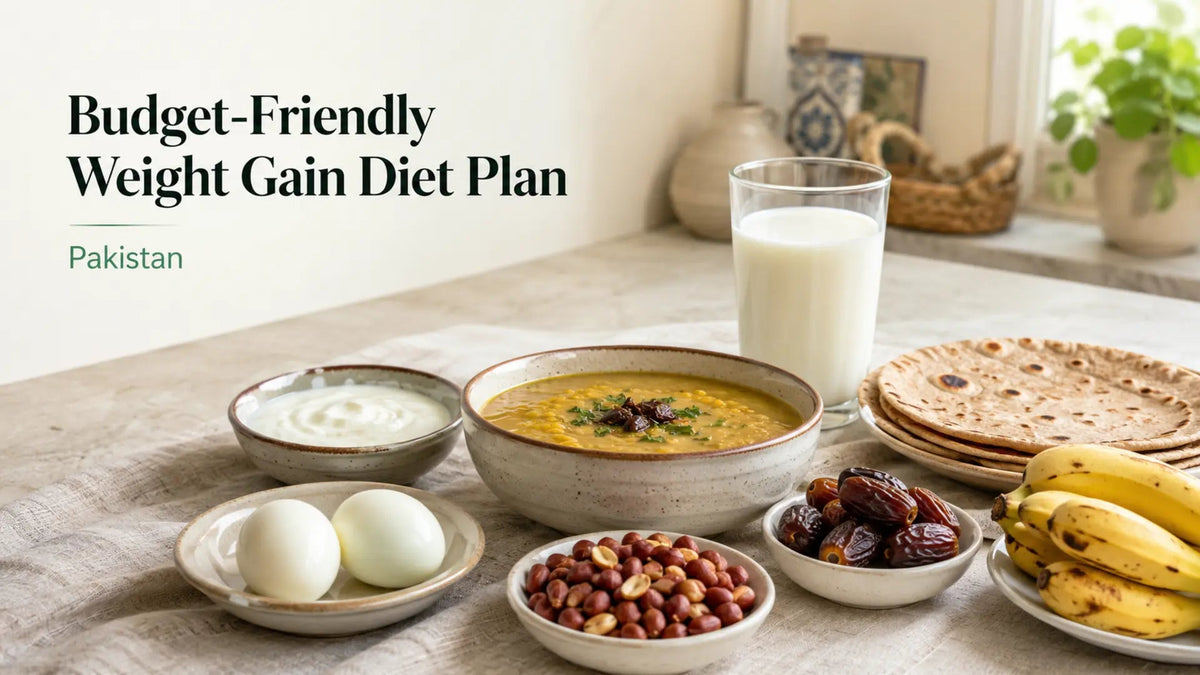
A budget-friendly weight gain diet plan in Pakistan should create a small, consistent calorie surplus using affordable foods such as roti, rice, daal, chana, eggs, milk, dahi, potatoes, bananas, peanuts, oats and dates. Start by adding about 300 to 500 calories a day to your usual intake, eat three meals with two or three snacks, and include a protein food in each main meal. Use homemade shakes when you feel full quickly. Check your average weight once or twice a week and increase portions if your weight does not rise after two to three consistent weeks. Your exact calorie needs depend on your age, sex, height, weight, activity, appetite and health. If you are losing weight without trying or have ongoing digestive symptoms, consult a doctor before following a general diet chart.
The NHS also recommends gradual weight gain, smaller meals more often, nutritious snacks, extra calories from foods such as nuts and seeds, and high-calorie drinks between meals. Read the NHS guidance on healthy weight gain.
Important: This is a general food-based guide for healthy adults. It is not a personalised prescription for children, teenagers, pregnancy, breastfeeding, eating disorders, diabetes, kidney disease, liver disease, thyroid disease or unexplained weight loss.
Budget-friendly weight gain plan at a glance
| Goal | Practical approach |
|---|---|
| Increase calories | Add one extra roti, serving of rice, glass of milk, banana, handful of peanuts or homemade shake |
| Support muscle | Include eggs, daal, chana, milk, dahi, chicken, fish or another protein food |
| Keep costs low | Base meals on local staples and use chicken or meat less often when needed |
| Eat consistently | Follow three main meals and two or three planned snacks |
| Manage low appetite | Use smaller meals, calorie-dense additions and drinks between meals |
| Monitor results | Compare weekly weight averages instead of reacting to one daily reading |
What makes a healthy weight gain diet?
Healthy weight gain means increasing body weight with a balanced eating pattern rather than relying mainly on soft drinks, sweets, bakery foods or fried snacks. A useful plan contains:
- A modest calorie surplus
- Protein foods spread through the day
- Carbohydrates such as rice, roti, potatoes, oats and dalia
- Calorie-dense fats such as peanuts, seeds and suitable cooking oils
- Milk, dahi or suitable alternatives
- Fruits and vegetables
- Regular meals and snacks
- Strength training if your goal is to gain muscle
- Enough sleep and recovery
The Academy of Nutrition and Dietetics recommends focusing on nutrient-rich foods instead of empty calories when trying to gain weight. Read its healthy weight gain guidance.
How does weight gain work?
You gain weight when, over time, you consume more energy than your body uses. The extra energy can support body tissues, glycogen stores and muscle, but some may also be stored as body fat. The quality of the food, your activity and the size of the surplus all matter.
Start with a small calorie surplus
For many healthy adults, adding around 300 to 500 calories per day is a practical starting point. This is a starting range, not a rule for every person. Someone with a small appetite may begin with a smaller increase, while a very active person may need more.
You do not need to begin with a fixed target such as 2,800 or 3,200 calories. People of the same age and sex can have very different calorie needs because of height, body weight, activity, occupation, appetite and health.
How much protein do you need?
Protein needs vary. Healthy adults need protein as part of a balanced diet, while people who regularly perform resistance training may need more. Sports-nutrition guidance commonly uses approximately 1.4 to 2.0 grams of protein per kilogram of body weight per day for exercising individuals, but this should be adjusted for your training, health and total diet. MedlinePlus explains protein needs. See the International Society of Sports Nutrition position stand.
For a simple food-based approach, include one protein source at each main meal and at least one snack. Examples include eggs, milk, dahi, daal, chana, lobia, rajma, chicken, fish, paneer, soy foods and peanuts.
Healthy weight gain is gradual
Do not expect a fixed amount of weight gain every week. Early changes can include water, glycogen and food volume, not only muscle or fat. A steady trend is more useful than a promise such as “gain 5 kg in one month.”
If your goal is muscle gain, combine food intake with progressive resistance training. Eating extra protein without a training stimulus does not guarantee that all additional weight will be muscle.
Cheap weight gain foods in Pakistan
The most useful low-cost foods are usually the foods you can buy locally, cook at home and eat consistently.
| Food group | Affordable Pakistani options | Easy ways to use them |
|---|---|---|
| Protein foods | Eggs, daal, chana, lobia, rajma, milk, dahi, chicken | Add to breakfast, curry, rice, roti or snacks |
| Carbohydrates | Roti, rice, potatoes, bread, oats, dalia | Increase portions or add to meals |
| Calorie-dense foods | Peanuts, roasted chana, sesame seeds, peanut butter | Use as snacks or add to oats, dahi and shakes |
| Fruits | Bananas, dates, mangoes and seasonal fruit | Add to breakfast, snacks or shakes |
| Dairy | Milk, dahi, lassi and paneer | Use between meals or with rice and roti |
| Meal additions | Potatoes, eggs, dahi and a small amount of oil | Add to daal, curry, sandwiches and rice |
Eggs
Eggs are an affordable source of high-quality protein. Use boiled eggs, omelettes, egg bhurji, egg curry or egg sandwiches. If you have been told to limit eggs because of a medical condition, follow your clinician’s advice.
Daal, chana, lobia and rajma
Pulses provide protein, carbohydrates and fibre. Combine them with rice or roti for a filling meal. If pulses cause gas or bloating, start with smaller portions, soak and cook them well, and choose the type you tolerate best.
Milk and dahi
Milk and dahi provide calories, protein and calcium. Choose full-fat versions only if they suit your health needs and digestion. People with lactose intolerance can ask a dietitian about suitable alternatives.
Peanuts and roasted chana
Peanuts provide calories in a small portion and are often cheaper than almonds or walnuts. Roasted chana is another practical snack. Avoid peanuts if you have an allergy, and prevent cross-contamination if the allergy is serious.
Bananas and dates
Bananas are convenient and usually available throughout Pakistan. Dates can add sweetness and calories to milk, oats and homemade shakes. If you have diabetes, count these foods as part of your carbohydrate intake rather than treating them as unlimited “healthy” foods.
Rice, roti, potatoes, oats and dalia
These foods make it easier to increase meal energy without buying imported products. Choose the portion that fits your needs, appetite and digestion. There is no universal rule that rice is better than roti, or that one is automatically more effective for weight gain.
7-day budget-friendly weight gain diet plan in Pakistan
This meal chart is a flexible starting point for healthy adults. Portions should be adjusted according to your current intake, body size, activity, appetite and weight trend. Prices vary by city, season, brand and market, so use the cheapest suitable option from each food group.
| Day | Breakfast | Mid-morning snack | Lunch | Evening snack | Dinner |
|---|---|---|---|---|---|
| 1 | 2 eggs, 2 rotis and milk | Banana with peanuts | Daal chawal with dahi | Roasted chana and dates | Chicken or potato curry with roti |
| 2 | Besan chilla with dahi | Dates with milk | Chana curry with roti | Banana-milk shake | Egg curry with rice |
| 3 | Paratha or roti with 2 eggs and dahi | Banana and roasted chana | Daal khichri with yogurt | Peanut sandwich and fruit | Chicken, daal or potato curry with roti |
| 4 | 2 eggs, roti and seasonal fruit | Milk with dates | Lobia or rajma with rice | Banana with peanuts | Aloo-egg curry with roti |
| 5 | Egg sandwich, milk and banana | Peanuts and dates | Daal with rice and dahi | Homemade oats shake | Chicken, chana or vegetable pulao with raita |
| 6 | Besan chilla and dahi | Banana and roasted chana | Aloo chana with roti | Peanuts with milk | Egg rice with vegetables |
| 7 | Paratha or roti, egg and dahi | Banana with peanuts | Chicken, daal or chana with rice | Chana chaat with dahi | Daal or egg curry with roti |
Basic portion guide
Use these portions as a starting point, not as a fixed prescription:
- Eggs: 2 at a meal
- Roti: 2 medium rotis with a main meal
- Cooked rice: 1 to 1½ cups
- Cooked daal, chana or beans: about 1 cup
- Milk or dahi: 1 cup
- Banana: 1 medium banana
- Peanuts: one small handful
- Chicken or fish: one palm-sized serving
If your current intake is much lower, begin with smaller portions and increase gradually. If you are very active or remain weight-stable, you may need more food.
How to follow this plan on a small budget
Buy the basics in larger quantities
Rice, flour, daal, chana, oats and potatoes are often easier to budget when purchased in suitable quantities. Store them safely and avoid buying more than your household can use before quality declines.
Use eggs and pulses more often
Chicken, fish and beef can be included when affordable, but they do not need to appear at every meal. Eggs, daal, chana, lobia, rajma, milk and dahi can help lower the cost of a protein-containing plan.
Choose seasonal foods
Bananas and other seasonal fruits may cost less than imported fruit. Select the fruit that is affordable and available in your area.
Cook in batches
Preparing daal, chana, rice or curry in batches can reduce skipped meals and the temptation to buy expensive low-nutrient snacks when busy.
Use substitutions
| If the plan includes | Lower-cost or practical replacement |
|---|---|
| Chicken | Eggs, daal, chana, lobia or rajma |
| Almonds or walnuts | Peanuts or roasted chana |
| Protein powder | Eggs, milk, dahi, daal or chana |
| Imported cereal | Oats, dalia, roti or rice |
| Packaged mass gainer | Homemade milk, banana and peanut shake |
| Expensive fruit | Bananas or seasonal local fruit |
| Meat at every meal | Pulses and eggs on alternate meals |
Homemade banana-peanut weight gain shake
A homemade shake can help when you feel full quickly or cannot prepare a large meal. It is an addition to meals, not a replacement for every meal.
Ingredients
- 1 cup milk or a suitable fortified alternative
- 1 banana
- 2 tablespoons roasted peanuts or peanut butter
- 1 to 2 dates, if desired
- 2 tablespoons oats, if extra energy is needed
Method
Blend until smooth and drink between meals. Do not add raw eggs. If you have a peanut allergy, lactose intolerance, diabetes, reflux or another health condition, use a suitable recipe recommended by a healthcare professional.
The calorie content changes with the type and amount of milk, peanuts, dates and oats. Do not treat a recipe’s estimated calories as exact unless the ingredients are weighed and calculated.
Weight gain diet plan for students and hostel residents
Students often have limited cooking facilities, irregular classes and a tight budget. Keep simple foods available:
- Bananas
- Milk or dahi
- Roasted chana
- Peanuts
- Dates
- Oats
- Egg sandwiches
- Boiled eggs from a hygienic source
- Ready-made daal or chana from a reliable kitchen
- Rice and roti from home or the hostel mess
A simple hostel routine could include eggs and roti at breakfast, peanuts or roasted chana during classes, daal and rice at lunch, a banana-milk shake in the evening, and eggs, chana or chicken with roti at dinner.
Vegetarian weight gain diet plan
A vegetarian plan can provide sufficient calories and protein when it contains a variety of foods. Use:
- Daal, chana, lobia and rajma
- Milk, dahi and paneer
- Eggs, if included in your diet
- Soy foods, if suitable
- Peanuts and seeds
- Rice, roti, potatoes, oats and dalia
- Fruits and vegetables
If you follow a fully plant-based diet, speak with a dietitian about vitamin B12, iron, calcium, vitamin D and protein planning.
How to gain muscle instead of only fat
Extra calories can increase body weight, but resistance training helps provide the signal for muscle growth. Start with exercises you can perform safely, such as:
- Squats
- Lunges
- Push-ups
- Rows
- Overhead presses
- Resistance-band exercises
- Weight training
Increase resistance or repetitions gradually. Eat a protein-containing meal or snack around your training if it helps you meet your daily needs. Do not start intense training if you have a medical problem without professional advice.
What to do if you have a poor appetite
Try the following strategies:
- Eat five or six smaller meals instead of forcing three very large meals.
- Use milk, dahi, lassi or a homemade shake between meals if tolerated.
- Keep ready-to-eat snacks visible and available.
- Add peanuts, seeds, milk powder or a small amount of suitable oil to meals.
- Avoid drinking a large amount of fluid immediately before a meal if it makes you feel full, but continue to drink enough water during the day.
- Eat at regular times, even when hunger is low.
- Address constipation, reflux, stress, poor sleep or nausea instead of ignoring them.
For more guidance, read MNT’s article on how to increase appetite naturally for weight gain.
How to know whether the plan is working
Do not judge progress from one daily weighing. Body weight changes because of water, salt, food volume and bowel movements.
- Weigh yourself once or twice a week under similar conditions.
- Record the results for at least two to three weeks.
- Compare the average or overall trend.
- Track appetite, digestion, exercise and energy.
- If your weight is unchanged, add one snack or increase a meal portion.
- If you develop discomfort or gain very quickly, reduce the amount of added oil, very large portions or heavily fried foods and seek advice if needed.
If you are eating regularly but still losing weight, read MNT’s guide on why you may not be gaining weight despite eating a lot.
Common mistakes that prevent healthy weight gain
Eating only roti and rice
Roti and rice provide energy, but a balanced plan also needs protein foods, fats, fruits, vegetables and dairy or suitable alternatives.
Depending on junk food
Fried foods, sugary drinks, sweets and bakery products can add calories but do not provide the balanced nutrition needed for muscle, bones and tissue repair. The Academy of Nutrition and Dietetics explains why nutrient-rich foods are preferred.
Eating too much protein and not enough total food
Protein is important, but protein alone does not create a calorie surplus. Include suitable carbohydrates and fats as well.
Copying another person’s calorie target
A gym friend’s 3,000-calorie plan may be too much or too little for you. Adjust food according to your own body and progress.
Buying supplements before improving meals
Most healthy adults can begin with ordinary foods. A supplement may be useful in a specific medical or nutritional situation, but it should not replace assessment and good-quality meals.
Expecting rapid results
Healthy weight gain is gradual. Be cautious with products and plans promising several kilograms in a few days.
When should you consult a doctor?
Do not rely on a general weight-gain chart if you:
- Are losing weight without trying
- Have persistent diarrhoea, vomiting, abdominal pain or severe bloating
- Feel full after only a few bites for a prolonged period
- Have difficulty swallowing
- Have excessive thirst or frequent urination
- Have fever, night sweats or severe weakness
- Have a very poor appetite
- Have diabetes, thyroid disease, kidney disease, liver disease, IBS, GERD or another diagnosed condition
- Are pregnant or breastfeeding
- Have a history of an eating disorder
- Are a child, teenager or older adult with unintended weight change
Unintentional weight loss can be linked with digestive disease, thyroid disease, diabetes, infection, medication effects, mental health concerns or other medical conditions. The NHS recommends medical assessment for unexplained weight loss.
Frequently asked questions
What is the cheapest food for weight gain in Pakistan?
There is no single best food. Rice, roti, potatoes, daal, chana, eggs, milk, dahi, bananas, peanuts, roasted chana and oats are often useful low-cost choices. Combine foods from different groups instead of depending on only one item.
How can I gain weight cheaply in Pakistan?
Eat three regular meals and two or three snacks. Base meals on rice, roti, daal, chana, eggs, potatoes, milk, dahi, bananas and peanuts. Buy suitable staples in larger quantities, choose seasonal foods, cook in batches and replace expensive meat or supplements with eggs and pulses when needed.
How many calories should I eat to gain weight?
There is no single calorie target for everyone. Estimate your usual intake and add around 300 to 500 calories per day as a starting point. Review your weight trend after two to three consistent weeks and adjust portions. A dietitian can calculate a more accurate plan using your age, height, weight, activity and health.
How much protein do I need for weight gain?
Protein needs depend on your body weight, age, health and activity. Include a protein food at each main meal. People who regularly strength train may need more protein than inactive adults, but an exact target should be personalised rather than copied from another person.
Can I gain weight without protein powder?
Yes. Eggs, milk, dahi, daal, chana, lobia, rajma, chicken, fish, paneer, soy foods and peanuts can provide protein. Protein powder is not essential for everyone.
Is rice or roti better for weight gain?
Both can support weight gain. Choose the food you enjoy, tolerate and can afford. Your total calorie intake and overall diet matter more than choosing rice over roti.
Is daal and rice good for weight gain?
Yes. Daal and rice can provide calories, carbohydrates and protein. Add dahi, eggs, vegetables, fruit or another suitable food to improve variety and meet your individual needs.
Is a banana shake good for weight gain?
A homemade banana shake with milk, peanuts or oats can increase calories between meals. It is useful when you feel full quickly. People with diabetes, lactose intolerance, peanut allergy or reflux may need a modified recipe.
Can I gain weight without going to the gym?
Yes. Eating more calories can increase body weight without gym training. If you want more muscle and less unnecessary fat gain, add safe resistance training and adequate protein.
How long does healthy weight gain take?
It varies with your calorie intake, body size, activity, appetite, digestion, health and consistency. Healthy gain is usually gradual. Avoid promises of guaranteed weight gain in a specific number of days.
Can women follow this Pakistani weight gain diet plan?
Women can follow the same basic principles, but their calorie and protein needs vary. Pregnancy, breastfeeding, PCOS, thyroid disease, anaemia and digestive symptoms require individual advice.
Can I follow this plan if I have diabetes or PCOS?
You may need a modified plan. Portion sizes, carbohydrate distribution, fibre, protein, medication and activity must be considered. Consult a registered dietitian or doctor rather than following this general chart unchanged.
Need a personalised Pakistani weight gain plan?
A general chart can provide ideas, but it cannot assess your medical history, appetite, digestion, routine, food preferences, budget, calorie needs or progress. MNT provides personalised weight-gain diet plans in Pakistan using Pakistani foods and individual nutrition planning.
MNT can help you create a plan around your:
- Age, height and current weight
- Appetite and meal routine
- Food preferences and budget
- Work, study or hostel schedule
- Exercise and muscle-gain goal
- Digestive symptoms and health history
- Follow-up and progress needs
Book an MNT weight gain dietitian consultation
Get personalised online nutrition support built around your body, routine, food preferences, budget and weight-gain goal.
Final takeaway
The best budget-friendly weight gain diet plan in Pakistan is not a fixed 3,000-calorie chart or an expensive mass gainer. It is a consistent plan that adds a modest calorie surplus through affordable foods such as roti, rice, daal, chana, eggs, milk, dahi, potatoes, bananas, peanuts, oats and dates.
Eat three meals with two or three snacks, include protein regularly, use homemade shakes when needed, monitor your weekly trend and add resistance training if muscle gain is your goal. If you are losing weight without trying or have ongoing symptoms, consult a doctor before relying on a general diet plan.
We rely on peer-reviewed studies and reputable medical journals.