

Dirty Bulk vs Lean Bulk: Which Is Better for Weight Gain?
Lean bulking is the better choice for most people who want to gain muscle while keeping fat gain under control. This evidence-based guide compares calories, protein, training, foods, and safe weight-gain strategies.
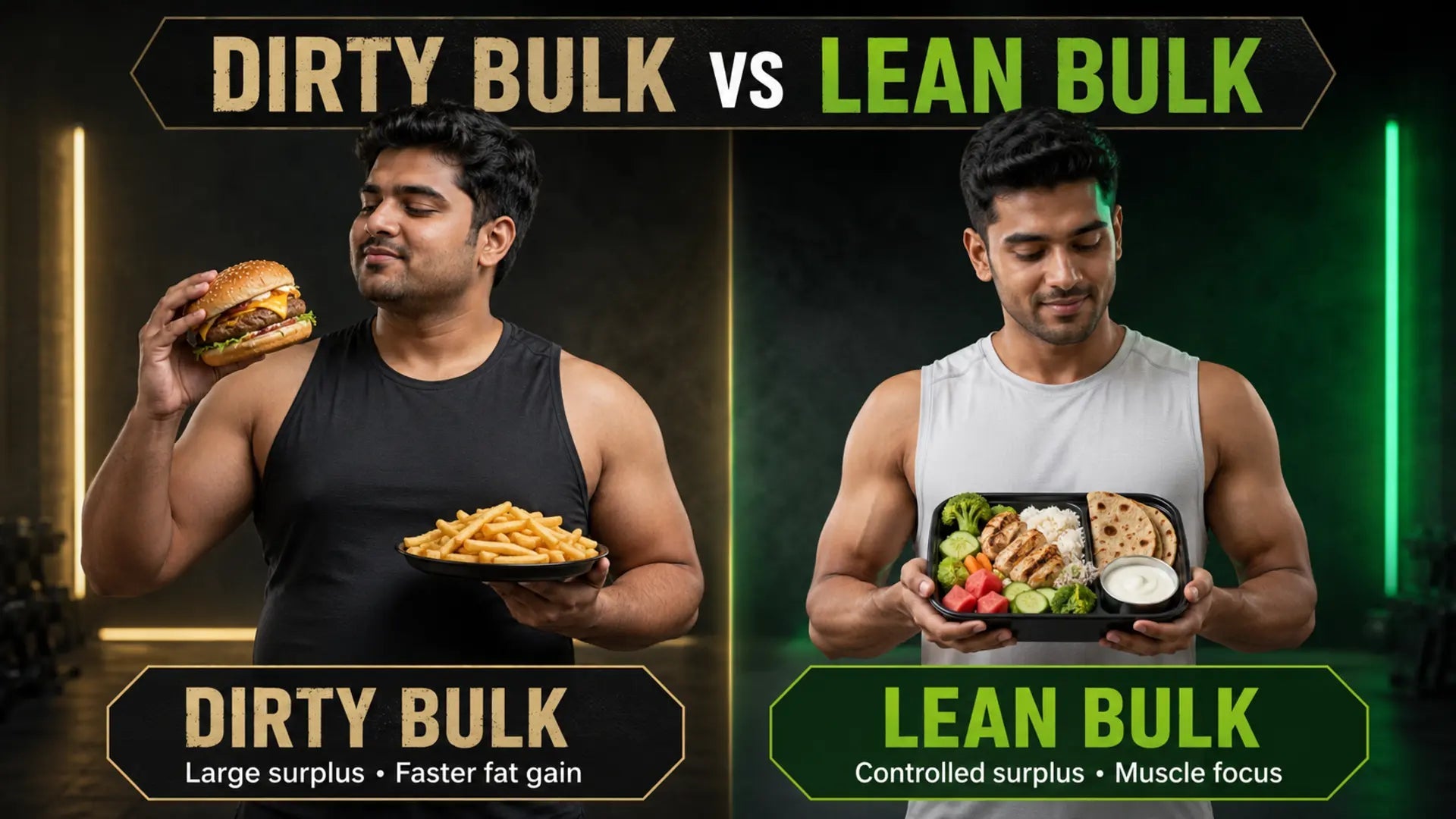
If you want to gain muscle with less unnecessary fat, a lean bulk is better than a dirty bulk for most people. A dirty bulk can make your body weight rise faster, but much of the faster gain may be body fat, water, glycogen, and food weight, not extra muscle. A lean bulk uses a controlled calorie surplus, enough protein, progressive resistance training, and mostly nutrient-dense foods.
The main point is simple: a larger calorie surplus does not automatically create faster muscle growth. Your body can build muscle only so quickly. Once your training, protein, and energy needs are met, extra calories are more likely to be stored as fat.
Dirty Bulk vs Lean Bulk: Quick Answer
| Factor | Lean bulk | Dirty bulk |
|---|---|---|
| Main goal | Gain muscle while limiting fat gain | Gain body weight as fast as possible |
| Calorie surplus | Small and controlled | Large or poorly controlled |
| Food choices | Mostly nutrient-dense foods | Often relies heavily on fast food and processed snacks |
| Weight gain | Slower and easier to monitor | Faster on the scale |
| Fat gain | Usually lower | Usually higher |
| Muscle gain | Supports muscle growth with training | Does not reliably build more muscle |
| Health and digestion | Usually easier to sustain | May cause bloating, low diet quality, and sluggishness |
| Cutting phase later | Usually shorter and easier | Often longer and harder |
| Best choice for most people | Yes | No |
Bottom line: If your only goal is to make the scale go up quickly, dirty bulking will usually do that. If your goal is to gain weight mainly through muscle, improve strength, and avoid excessive fat gain, choose a lean bulk.
What Is a Dirty Bulk?
A dirty bulk is an aggressive weight-gain approach. A person eats a large calorie surplus with little control over portion size, food quality, or the amount of fat being gained.
Dirty bulking may include frequent burgers, fried foods, pizza, bakery items, sweets, sugary drinks, chips, mass-gainer shakes, and oversized meals. These foods are not automatically harmful when eaten sometimes. The problem is when they become the main way you create a calorie surplus.
A dirty bulk can help someone gain weight because calorie-dense foods are easy to eat in large amounts. But gaining weight quickly does not mean gaining muscle quickly.
What Is a Lean Bulk?
A lean bulk is a planned approach to gaining muscle and body weight. It uses a modest calorie surplus, enough protein, regular resistance training, and mostly nutrient-dense foods.
A lean bulk does not mean eating perfectly or never having pizza, biryani, dessert, or a restaurant meal. It means most meals support your health, training, recovery, and calorie target.
Your diet can include:
- Protein-rich foods
- Rice, roti, oats, potatoes, and fruit
- Milk, yogurt, nuts, seeds, and healthy fats
- Vegetables and fibre-rich foods
- Occasional enjoyable foods in sensible portions
The key difference is not whether every food is “clean” or “dirty.” The key difference is whether your calorie surplus is controlled.
Is a Clean Bulk the Same as a Lean Bulk?
Usually, yes. “Clean bulk” and “lean bulk” are often used for the same idea: gaining muscle gradually while limiting unnecessary fat gain.
However, “clean bulk” can make people feel that one dessert or burger will ruin their progress. That is not true. A better mindset is:
Eat mostly nutritious foods, meet your calorie and protein target, train properly, and leave room for flexibility.
Does Dirty Bulking Build More Muscle?
Dirty bulking can build some muscle if you eat enough protein and train with resistance. However, it does not reliably build more muscle than a controlled lean bulk.
Muscle growth depends mainly on:
- Progressive resistance training
- Enough protein
- Enough total calories
- Sleep and recovery
- Consistency over time
Eating far more calories than you need does not force your body to make unlimited muscle. Your body has a limited rate of muscle growth.
A 2023 study of resistance-trained lifters compared maintenance calories with moderate and higher calorie surpluses. Faster body-weight gain mainly increased skinfold thickness, a measure linked with fat gain, without clear improvements in muscle thickness or squat strength. The researchers concluded that faster weight gain primarily increased fat gain, although a small benefit for one muscle measure remained possible. Helms et al., 2023
It is important to understand that dirty bulk and lean bulk are gym terms, not fixed scientific protocols. Research usually compares smaller and larger calorie surpluses. Still, the practical lesson is clear: a very large surplus is usually less efficient for body composition.
Why Does a Dirty Bulk Cause More Fat Gain?
A calorie surplus is useful for intentional weight gain. But once your body has enough energy to support training, recovery, and muscle growth, additional calories are more likely to be stored as body fat.
This does not mean a lean bulk gives zero fat gain. Some fat gain can happen during any bulk. The goal is to gain at a pace that supports muscle growth without creating a long and difficult cutting phase later.
A dirty bulk can also make it harder to get enough fibre, vitamins, minerals, and protein if most calories come from processed foods. The World Health Organization recommends diets based mainly on fruits, vegetables, legumes, nuts, and whole grains while limiting excess free sugars, salt, and unhealthy fats. WHO healthy diet guidance
Is Dirty Bulking Bad for You?
A single fast-food meal is not the same as a dirty bulk. The concern is a long-term pattern of uncontrolled overeating and poor diet quality.
Possible drawbacks of dirty bulking include:
- Faster body-fat gain
- Bloating, reflux, or digestive discomfort
- Low fibre intake
- Low intake of vitamins and minerals
- Feeling tired or sluggish during training
- Difficulty controlling appetite and portions
- A longer cutting phase after the bulk
- Poorer diet quality for people with diabetes, high cholesterol, high blood pressure, or digestive conditions
For most people, there is no strong reason to choose an unrestricted dirty bulk when a structured lean bulk can provide enough calories for progress.
Who Should Choose a Lean Bulk?
Beginners
Beginners can often gain muscle well when they start resistance training consistently. They usually do not need an extreme calorie surplus.
Skinny people with low appetite
If you struggle to eat enough, use calorie-dense but nutritious foods instead of unlimited junk food. Good options include milk, yogurt, nuts, seeds, peanut butter, eggs, rice, potatoes, bananas, dates, smoothies, and homemade shakes.
Read MNT’s guide on how to increase appetite naturally for weight gain.
Intermediate and advanced lifters
Experienced lifters usually gain muscle more slowly than beginners. A slower and more controlled bulk can help them avoid gaining excessive fat.
People who care about body composition
If you want strength, muscle, energy, and a leaner appearance, a lean bulk is more suitable than an aggressive dirty bulk.
Is Dirty Bulking Ever Appropriate?
A very active athlete or someone with a very low appetite may need more calorie-dense foods to meet their energy needs. But this still does not require eating unlimited fast food.
A better approach is to add calories strategically through foods such as:
- Full-fat milk and yogurt
- Peanut butter
- Nuts and seeds
- Olive oil or ghee in reasonable portions
- Rice, potatoes, oats, and roti
- Homemade banana, date, or mango shakes
- Eggs, chicken, fish, daal, chana, and beans
If you eat a lot but still do not gain weight, the issue may be inconsistent intake, high activity, low appetite, or an underlying health concern. Read why you may not be gaining weight even though you eat a lot.
How to Lean Bulk Correctly
1. Find your maintenance calories
Maintenance calories are the approximate number of calories you need to keep your weight stable.
For one to two weeks:
- Eat as you normally do.
- Record food and drinks.
- Weigh yourself each morning under similar conditions.
- Use your weekly average weight, not one day’s result.
If your average weight is stable, your usual intake is close to maintenance.
For a detailed method, see MNT’s guide on how many calories to eat to gain weight.
2. Add a modest calorie surplus
A practical starting point for many people is around 200 to 300 extra calories per day. Some highly active people or people with a low appetite may need more.
Another useful method is to start at around 5% to 10% above maintenance calories and then adjust according to your progress.
Avoid immediately adding 1,000 extra calories per day. It may push scale weight up quickly, but it usually gives you less control over fat gain.
Sports-nutrition guidance often uses a 300 to 500 calorie increase for intentional weight gain, but needs vary greatly between individuals. Larson-Meyer et al., 2022
3. Aim for gradual weight gain
A useful starting target is around 0.25% to 0.5% of body weight per week.
For example:
| Current body weight | Weekly target gain |
|---|---|
| 50 kg | 0.13 to 0.25 kg |
| 60 kg | 0.15 to 0.30 kg |
| 70 kg | 0.18 to 0.35 kg |
| 80 kg | 0.20 to 0.40 kg |
Beginners may sometimes gain near the higher end. Advanced lifters often do better near the lower end.
4. Eat enough protein
For most people who do resistance training, a practical protein target is around 1.6 to 2.0 grams per kilogram of body weight per day.
For example:
| Body weight | Daily protein target |
|---|---|
| 50 kg | 80 to 100 g |
| 60 kg | 96 to 120 g |
| 70 kg | 112 to 140 g |
| 80 kg | 128 to 160 g |
Useful protein foods in Pakistan include:
- Eggs
- Chicken
- Fish
- Milk and yogurt
- Paneer
- Beef or mutton in suitable portions
- Daal
- Chana
- Beans
- Soy foods
- Peanuts and mixed nuts
Protein supports muscle repair, but it cannot replace enough calories, good training, and recovery. The International Society of Sports Nutrition supports protein intakes of around 1.4 to 2.0 g/kg/day for most exercising adults. ISSN Position Stand
5. Include carbohydrates and healthy fats
Carbohydrates help fuel resistance training. Fats add calories without making meals too large.
Good carbohydrate choices include rice, roti, oats, potatoes, sweet potatoes, bananas, dates, fruit, and whole-grain bread.
Useful calorie-dense foods include nuts, seeds, peanut butter, milk, yogurt, cheese, olive oil, and ghee in suitable portions.
You do not need to remove carbohydrates or fats during a lean bulk. Your total calorie intake, food quality, training, and consistency matter more than extreme rules.
6. Train progressively
Extra calories alone do not tell your body to build muscle. Resistance training provides that signal.
Try to improve gradually by increasing:
- Weight lifted
- Repetitions
- Sets
- Exercise control
- Training consistency
Sleep, rest days, hydration, and recovery also matter. For food ideas around training, see MNT’s guide on what to eat before and after a workout for weight gain.
7. Monitor and adjust slowly
Use your weekly average weight and waist measurement.
Your calorie surplus may be too high if:
- Weight is rising much faster than planned
- Your waist is increasing quickly
- You feel bloated or sluggish most days
- Strength is not improving despite rapid weight gain
- Most extra calories come from fried or sugary foods
Your calorie surplus may be too low if:
- Your average weight has not increased for two to three weeks
- You are unintentionally losing weight
- Recovery and training performance are poor
- You struggle to finish your calorie target
Make small changes of around 100 to 200 calories per day, then reassess after two consistent weeks.
Pakistani Foods for a Lean Bulk
You do not need imported supplements or expensive foods to lean bulk. A practical Pakistani weight-gain diet can use normal foods you can repeat every day.
| Meal | Lean-bulk example |
|---|---|
| Breakfast | Eggs with roti or paratha, milk, and a banana |
| Mid-morning snack | Yogurt with fruit, nuts, or peanuts |
| Lunch | Chicken, fish, daal, or chana with rice or roti, vegetables, and yogurt |
| Pre-workout | Banana with milk, or roti with eggs |
| Post-workout | Milk, yogurt, eggs, chicken rice, or a homemade banana shake |
| Dinner | Chicken, fish, daal, beans, or paneer with rice or roti and vegetables |
| Evening option | Milk with dates, yogurt, or oats with peanut butter |
For more meal ideas, read MNT’s diet plan for skinny guys to gain muscle.
Common Lean-Bulk Mistakes
Eating more without training
Extra calories without resistance training can increase body weight, but not necessarily the muscle you want.
Changing calories every day
Body weight can change because of water, sodium, glycogen, food volume, and bowel movements. Look at weekly averages.
Eating only protein
Muscle gain needs protein, but it also needs enough total calories, carbohydrates, fats, training, and recovery.
Avoiding every enjoyable food
A lean bulk does not require a perfect diet. Occasional fast food, dessert, or restaurant meals can fit into a balanced plan.
Relying only on mass gainers
Mass gainers can be convenient, but they are not essential. A homemade shake with milk, banana, oats, yogurt, dates, and peanut butter can be a useful alternative.
Using “hardgainer” as a diagnosis
Some people have high activity levels, low appetite, irregular meals, or inconsistent calorie intake. Others may have a health issue. Do not use dirty bulking to ignore unexplained weight loss or long-term symptoms.
When Should You Get Professional Advice?
Speak with a qualified doctor or dietitian before starting a bulk if you have:
- Unexplained weight loss
- Persistent vomiting, diarrhoea, pain, or severe bloating
- Very low appetite or early fullness
- Ongoing fatigue or weakness
- Diabetes, high blood pressure, or high cholesterol
- Kidney, liver, thyroid, or digestive disease
- A history of disordered eating
- A child or teenager needing weight-gain support
Unintentional weight loss should be assessed rather than treated only by eating more junk food. NHS guidance on unintentional weight loss
Frequently Asked Questions
Is lean bulk better than dirty bulk?
Yes. A lean bulk is better for most people because it supports muscle growth while helping limit unnecessary fat gain.
Does dirty bulking build muscle faster?
Not reliably. A larger calorie surplus can increase body weight faster, but much of the additional gain may be fat rather than muscle.
Should skinny guys dirty bulk?
Usually, no. Start with a structured lean bulk. If appetite is low, add calorie-dense foods and homemade shakes instead of relying on unlimited fast food.
How many calories should I eat for a lean bulk?
Start with around 200 to 300 extra calories per day or 5% to 10% above maintenance. Track your average weight for two to three weeks and adjust gradually.
How fast should I gain weight during a lean bulk?
A practical starting range is around 0.25% to 0.5% of body weight per week. More experienced lifters may prefer the lower end.
Can I eat junk food during a lean bulk?
Yes, occasionally. Most of your calories should still come from foods that provide protein, fibre, vitamins, minerals, and useful training energy.
Can I gain muscle without a calorie surplus?
Some beginners, people returning to training, and people with higher body fat may gain muscle at maintenance calories. However, a modest surplus can make muscle gain easier for many lean people who train consistently.
What should I eat for a lean bulk in Pakistan?
Build meals around eggs, milk, yogurt, chicken, fish, daal, chana, rice, roti, potatoes, oats, fruit, nuts, seeds, and homemade shakes.
Is dirty bulking unhealthy?
Occasional high-calorie meals are not the same as dirty bulking. The concern is long-term uncontrolled overeating and relying heavily on processed foods, which can increase fat gain and lower overall diet quality.
Final Verdict: Lean Bulk vs Dirty Bulk
For most people, lean bulking is the better choice for weight gain and muscle building.
A dirty bulk may make the scale move faster, but it does not reliably produce more muscle. It often adds more fat than necessary and can create a longer, harder cutting phase later.
The best approach is to:
- Use a modest calorie surplus
- Eat enough protein
- Train with progressive resistance
- Choose mostly nutrient-dense foods
- Include Pakistani foods you can afford and repeat
- Track your weekly weight trend and waist measurement
- Adjust slowly instead of chasing rapid weight gain
If you want a personalised calorie, protein, and meal plan based on your weight, appetite, training, medical history, and budget, explore MNT’s online weight gain diet plan in Pakistan.
Build a Weight-Gain Plan That Fits Your Routine
MNT provides personalised online weight-gain nutrition support based on your appetite, body weight, training, medical history, Pakistani food preferences, and budget.
Book Your Weight Gain ConsultationWe rely on peer-reviewed studies and reputable medical journals.