


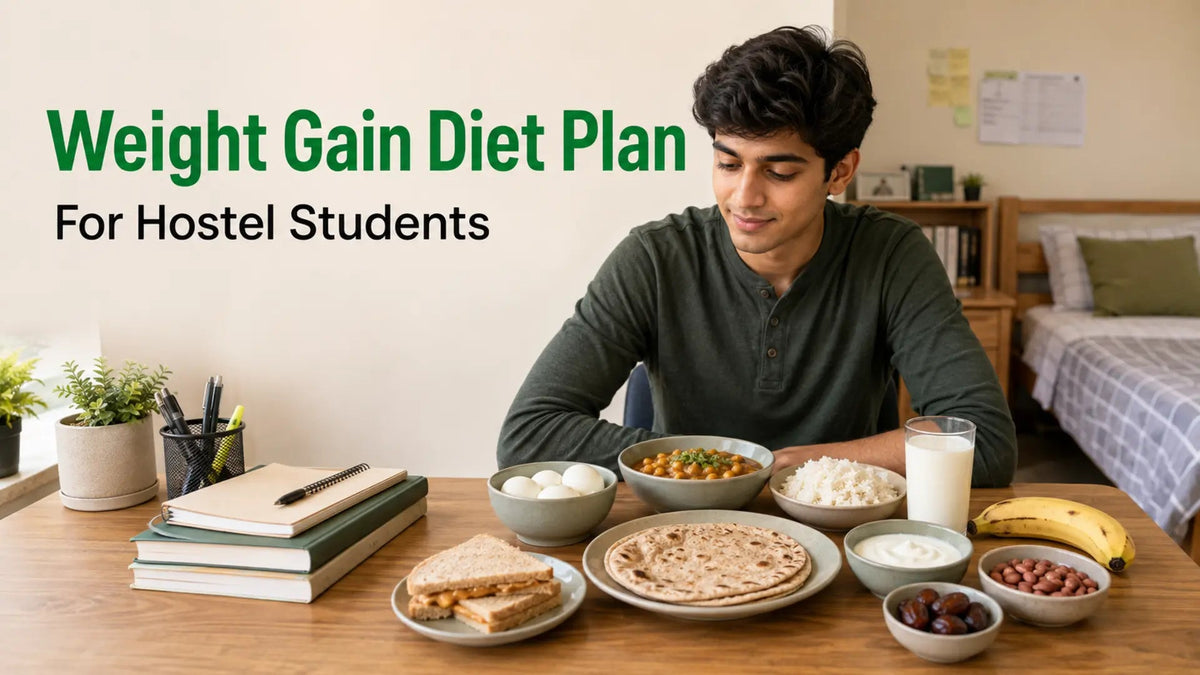
Weight Gain Diet Plan for Hostel Students: 7-Day Guide
A practical 7-day weight gain diet plan for hostel students using affordable Pakistani mess food, no-cook snacks, and simple protein-rich meals.
Quick answer
To gain weight in a hostel, eat three regular meals and add two or three planned snacks every day. Use hostel mess food as your base, then add affordable protein and calorie-rich foods such as eggs, milk, dahi, daal, chana, peanuts, bananas, dates, oats and peanut butter. If you are a healthy adult, adding about 300 to 500 calories daily can be a practical starting point. Include protein with your meals, add strength training if you want more muscle, and seek medical advice if you are losing weight without trying or have ongoing digestive symptoms. NHS guidance also recommends gradual weight gain, nutritious snacks and balanced meals.
Important: This is a general food-based guide for healthy adults. It is not a personalised prescription for children, teenagers, pregnancy, breastfeeding, eating disorders, diabetes, kidney disease, liver disease, thyroid disease or unexplained weight loss.
Hostel weight gain diet plan at a glance
| Goal | Practical hostel solution |
|---|---|
| Eat enough calories | Have three main meals and two or three planned snacks |
| Increase protein | Add eggs, milk, dahi, daal, chana, chicken, fish, paneer, soy or peanuts |
| Keep costs low | Base meals on rice, roti, potatoes, pulses, eggs, bananas and seasonal foods |
| Manage no cooking | Keep portable foods such as peanuts, roasted chana, dates, bread and UHT milk available |
| Improve mess meals | Add the missing protein, dairy, fruit or calorie-dense food |
| Gain more muscle | Combine enough food and protein with progressive resistance training |
| Check progress | Compare your weekly weight trend instead of reacting to one daily reading |
Who should use this plan?
This plan is for generally healthy students who want practical ideas for gaining weight while living in a hostel. It is designed for common Pakistani and South Asian foods, limited budgets, hostel mess meals and little or no cooking equipment. It follows the local-food approach encouraged by the Pakistan Dietary Guidelines for Better Nutrition.
Being slim does not automatically mean that you have a health problem. Body frame, appetite, activity, stress, sleep and food access all affect body weight. For adults, a BMI below 18.5 is commonly used as a screening point for underweight, but BMI cannot show muscle mass, body shape or your complete health status. Use the NHLBI BMI calculator as a screening tool, not as a diagnosis.
Speak with a doctor or Registered Dietitian Nutritionist before following a general weight gain plan if you have sudden weight loss, very poor appetite, persistent diarrhoea or vomiting, severe bloating, abdominal pain, difficulty swallowing, excessive thirst or urination, fever, night sweats, severe weakness or a history of an eating disorder.
Children and teenagers need age-specific growth assessment. Pregnancy, breastfeeding and medical conditions also require an individual plan.
How healthy weight gain works
1. Create a small calorie surplus
You gain weight when, over time, you eat more energy than your body uses. This extra energy can support body tissues and muscle, but some may also be stored as body fat.
For many healthy adults, adding about 300 to 500 calories per day is a reasonable starting point. This is not a fixed rule. Your needs depend on your age, sex, height, weight, activity, appetite, digestion and health. The NHS recommends gradual weight gain through nutritious meals, snacks and balanced food choices.
Do not jump straight to a fixed target such as 2,500 or 3,000 calories. Start with one consistent extra snack or a small increase in one meal. The NIDDK Body Weight Planner shows why calorie needs differ by age, body size and activity, although it is intended for adults and is not a substitute for personalised care. Review your weight trend after two to three consistent weeks.
2. Include protein regularly
Protein supports tissue maintenance and repair. Hostel-friendly sources include:
- Eggs
- Milk and dahi
- Daal, chana, lobia and rajma
- Chicken and fish
- Paneer and soy foods
- Peanuts and seeds
For a simple routine, include one protein food at each main meal and at least one snack. MedlinePlus explains that protein comes from both animal and plant foods. Students who perform regular resistance training may need more protein than inactive adults. Sports-nutrition guidance commonly uses about 1.4 to 2.0 grams per kilogram of body weight per day for many exercising individuals, but this range should be adjusted to your training, total diet and health. See the International Society of Sports Nutrition position stand. People with kidney disease or another medical condition should ask a clinician before increasing protein.
3. Use carbohydrates for affordable energy
Rice, roti, bread, potatoes, oats, dalia, pasta, bananas and other fruits make it easier to add energy. Rice and roti are both useful. Neither one is automatically better for weight gain.
4. Add calorie-dense foods in small portions
Peanuts, peanut butter, seeds, nuts, cheese, milk, dahi and suitable cooking oils add energy without requiring a very large meal. This can help students who feel full quickly.
5. Keep the diet balanced
Weight gain should not depend mainly on soft drinks, sweets, chips and fried foods. A healthy pattern also includes pulses, fruits, vegetables, dairy or suitable alternatives and a variety of protein foods. The World Health Organization describes adequacy, balance, moderation and diversity as core principles of a healthy diet. The Academy of Nutrition and Dietetics also recommends nutrient-rich foods for healthy weight gain.
A simple hostel meal formula
At most main meals, combine four parts:
| Meal part | Hostel-friendly choices |
|---|---|
| Energy food | Rice, roti, paratha, bread, potatoes, oats or pasta |
| Protein food | Eggs, daal, chana, beans, chicken, fish, milk, dahi, paneer or soy |
| Calorie addition | Peanuts, peanut butter, seeds, nuts, cheese, dates or suitable oil |
| Fruit or vegetable | Banana, seasonal fruit, salad or cooked vegetables |
Examples include:
- Rice with daal, dahi and peanuts
- Roti with chicken and raita
- Bread with eggs, milk and a banana
- Oats with milk, dates and peanut butter
- Chana with potatoes and yogurt
If the mess meal is missing one part, add it later instead of abandoning the whole meal.
7-day weight gain diet plan for hostel students
This is a flexible example for generally healthy adults. It is not a fixed prescription. Use the hostel mess where possible and replace any unavailable food with the alternatives listed below. Adjust portions according to your current intake, appetite, body size, activity and weight trend.
| Day | Breakfast | Snack 1 | Lunch | Snack 2 | Dinner |
|---|---|---|---|---|---|
| 1 | 2 eggs, 2 roti and milk | Banana with peanuts | Daal chawal with dahi | Peanut-butter sandwich | Chicken or potato curry with roti |
| 2 | Oats with milk, banana and dates | Roasted chana and fruit | Chana curry with rice or roti | Yogurt with oats or nuts | Egg curry with rice |
| 3 | Egg sandwich, dahi and fruit | Banana with peanut butter | Rice with daal and raita | Milk with dates | Chicken, fish, beans or chana with roti |
| 4 | Paratha with egg and yogurt | Peanuts and dates | Lobia or rajma with rice | Cheese or peanut-butter bread | Aloo-egg curry with roti |
| 5 | Bread with eggs, milk and banana | Banana and roasted chana | Pulao or rice with chicken and raita | Milk and seasonal fruit | Roti, daal, vegetables and dahi |
| 6 | Eggs, bread and milk | Fruit with peanuts or seeds | Rice, chicken, daal or beans | Banana with milk | Chana, potatoes and eggs with roti |
| 7 | Egg sandwich, fruit and milk | Dates with peanuts | Mess curry with rice or roti and dahi | Peanut-butter sandwich | Chicken, fish, beans or daal with roti |
Optional bedtime snack
A bedtime snack is not compulsory. Use one if you are hungry or if it helps you meet your daily intake:
- One glass of milk
- Dahi with dates
- Peanut butter with bread
- Oats with milk
- Banana with milk
Do not force a large meal before sleep. If you feel bloated or nauseated, move the snack earlier.
Cheap and no-cook weight gain foods
Foods to keep in your room
These foods are useful when you have no kitchen or your classes run late:
- Peanuts
- Roasted chana
- Peanut butter
- Bananas
- Dates
- Bread
- Oats
- Seeds when affordable
- Unopened UHT milk
- Packaged crackers with suitable ingredients
Peanuts and roasted chana are often cheaper than almonds and walnuts. Bananas and seasonal fruit are also practical choices for a student budget.
Foods to buy fresh
Buy small quantities of perishable foods and eat them promptly:
- Milk
- Dahi or yogurt
- Boiled eggs from a hygienic source
- Fresh fruit
- Egg sandwiches
- Chana chaat
- Ready-made daal or beans from a clean and reliable kitchen
Easy snack combinations
| Combination | Why it is useful |
|---|---|
| Banana and peanuts | Portable energy with some protein |
| Bread and peanut butter | Easy to carry and requires no cooking |
| Milk and dates | Simple calories between meals |
| Yogurt and banana | Protein, energy and carbohydrate |
| Boiled eggs and bread | Convenient protein-containing meal |
| Roasted chana and fruit | Affordable, portable and filling |
Avoid peanuts, dairy or eggs if you are allergic to them. Choose a safe alternative.
How to make hostel mess food work
If breakfast is too small
Keep an emergency breakfast in your room:
- UHT milk
- Banana
- Bread
- Peanut butter
- Oats
- Roasted chana
This is more useful than starting the day with only tea.
If lunch contains mostly rice
Add daal, chana, dahi, eggs, chicken or peanuts. Rice provides carbohydrates, but combining it with protein and another food group creates a more balanced meal.
If the menu contains only roti and vegetables
Add eggs, milk, dahi, chana, daal or a peanut-butter sandwich later in the day.
If the food is very oily
Do not depend on excessive oil or fried food as your main weight gain strategy. Choose the protein and carbohydrate foods you tolerate, then add milk, dahi, eggs, peanuts, fruit or another suitable food.
If you miss a meal
Keep one emergency replacement in your bag or room:
- Banana and milk
- Peanut-butter sandwich
- Milk and dates
- Roasted chana and peanuts
- Yogurt and fruit
One missed meal is not a disaster. Repeatedly missing meals without replacing them can make weight gain difficult.
For a broader Pakistani food-based plan, see MNT’s Budget-Friendly Weight Gain Diet Plan in Pakistan.
Portion guide and calorie adjustments
Use these portions as starting points, not as a prescription:
| Food | Practical starting portion |
|---|---|
| Eggs | 2 eggs at a meal |
| Roti | 2 medium roti with a main meal |
| Cooked rice | 1 to 1½ cups |
| Daal, chana or beans | About 1 cup cooked |
| Milk or dahi | 1 cup |
| Banana | 1 medium banana |
| Peanuts | 1 small handful |
| Chicken or fish | 1 palm-sized serving |
If your current intake is low, start with smaller portions and increase gradually. If your weight remains stable after two to three consistent weeks, add one of the following:
- One peanut-butter sandwich
- One glass of milk with dates
- One banana with peanuts
- One serving of dahi with oats
- One extra serving of daal, chana or eggs
If you gain weight very quickly or develop discomfort, reduce very large portions, excess oil and heavily fried foods and seek advice when needed.
Budget grocery list
Your exact cost will depend on your city, season, brand and storage facilities. A flexible weekly starter list may include:
- Eggs
- Bananas and seasonal fruit
- Milk or UHT milk
- Dahi
- Oats or dalia
- Peanuts
- Roasted chana
- Dates
- Bread
- Peanut butter
- Daal, chana or other pulses
- Seeds if affordable
To reduce cost:
- Choose eggs and pulses more often when meat is expensive.
- Use peanuts or roasted chana instead of costly nuts.
- Choose bananas and seasonal fruits.
- Use rice, roti, potatoes, daal, chana and oats as staples.
- Buy only as much fresh food as you can store safely.
- Compare the cost of a supplement with ordinary foods before buying it.
- Keep an emergency snack so a busy day does not become an expensive fast-food day.
MNT’s guide to why you may not be gaining weight even though you eat a lot can help if your weight remains unchanged despite consistent effort.
Food safety in a hostel
Healthy weight gain also requires safe storage and handling. Follow these rules:
- Wash your hands before eating.
- Keep packaged foods closed and dry.
- Do not eat swollen, leaking, spoiled or damaged packages.
- Refrigerate milk, dahi, cooked food and eggs when required.
- Follow the storage instructions on UHT milk and packaged foods.
- Buy single servings if you do not have a refrigerator.
- Avoid raw eggs and raw milk.
- Use clean cups, bottles and containers.
- Do not keep cooked meat, eggs, dairy or prepared meals at room temperature for long periods.
FoodSafety.gov recommends the four basic steps of clean, separate, cook and chill to reduce foodborne illness risk.
Exercise and progress tracking
Add resistance training for muscle gain
Extra calories can increase body weight, but they do not guarantee muscle gain. If you want to gain more muscle, combine your diet with safe, progressive resistance training.
You can begin with:
- Squats
- Lunges
- Push-ups
- Rows
- Resistance-band exercises
- Overhead presses
- Weight training
Increase repetitions or resistance gradually. Protein alone does not build muscle without a suitable training stimulus. A meta-analysis on protein supplementation and resistance training found that supplementation is most useful in the context of resistance training, rather than as a replacement for training and a balanced diet.
Stop exercise if you experience chest discomfort, fainting, severe dizziness, unusual shortness of breath or significant pain. Seek professional advice before intense training if you have a medical condition.
Track the trend, not one weighing
Body weight changes daily because of water, salt, food volume and bowel movements. Use this process:
- Weigh yourself once or twice a week under similar conditions.
- Record the results for at least two to three weeks.
- Compare the weekly average or overall trend.
- Track appetite, digestion, energy, sleep and exercise.
- Add one small snack if your weight remains stable.
- Seek advice if you continue losing weight or develop symptoms.
If you are not gaining weight
Many students feel that they eat a lot but still consume less energy than they need across the full week. Common reasons include:
- Skipping breakfast
- Eating only once or twice daily
- Missing snacks between classes
- Underestimating portion sizes
- Walking, sports or exercise increasing energy needs
- Drinking tea instead of eating
- Low appetite or feeling full quickly
- Digestive symptoms or a medical condition
Write down everything you eat and drink for three to seven days. Check whether meals, snacks or drinks are being missed. If intake is consistent, add one snack and review your trend after two to three weeks.
If you keep losing weight without trying, do not simply keep adding more food. The NHS advises medical assessment for unintentional weight loss, especially when other symptoms are present.
Supplements and mass gainers
Most healthy students can begin with regular food. A commercial mass gainer is not essential for weight gain. Protein powder may be convenient when a person cannot meet protein needs through food, but it should not replace proper meals.
Avoid unverified weight-gain syrups, steroids and products that promise several kilograms in a few days. Check the label, source and ingredients of any supplement. People with diabetes, kidney disease, liver disease, allergies or regular medicines should speak with a healthcare professional before using supplements.
Special situations
Can girls and boys follow the same plan?
The basic meal structure is similar, but calorie and protein needs differ according to body size, age, activity, appetite and health. Pregnancy, breastfeeding, PCOS, thyroid disease, anaemia and digestive problems require individual advice.
Can vegetarians follow this plan?
Yes. Use daal, chana, lobia, rajma, milk, dahi, paneer, eggs if included, soy foods, peanuts and seeds. If you follow a fully plant-based diet, ask a dietitian about vitamin B12, iron, calcium, vitamin D and protein planning.
What if I have diabetes or PCOS?
Do not follow this general chart unchanged. Portions, carbohydrate distribution, fibre, protein, medication and activity may need adjustment. Speak with a doctor or dietitian for an individual plan.
When to see a doctor or dietitian
Seek medical advice before relying on a general weight gain diet plan if you:
- Are losing weight without trying
- Have persistent diarrhoea, vomiting, bloating or abdominal pain
- Feel full after only a few bites for a prolonged period
- Have difficulty swallowing
- Have severe weakness, fever or night sweats
- Have excessive thirst or frequent urination
- Have a very poor appetite
- Have diabetes, thyroid disease, kidney disease, liver disease, IBS, GERD or another diagnosed condition
- Have a history of an eating disorder
- Are pregnant or breastfeeding
- Are planning a weight change for a child or teenager
Unintentional weight loss can have many causes, including stress, digestive disease, hormone conditions, diabetes, medicine effects and other health problems. A doctor can assess the cause and arrange tests or specialist care when needed.
Frequently asked questions
What is the best weight gain diet plan for hostel students?
The best plan uses hostel mess meals as a base and adds affordable protein- and calorie-rich snacks. Eat three regular meals, add two or three snacks, and use eggs, daal, chana, milk, dahi, peanuts, bananas, dates and peanut butter according to your budget and tolerance.
How can I gain weight in a hostel without cooking?
Keep bananas, peanuts, roasted chana, dates, bread, peanut butter, UHT milk, yogurt and boiled eggs from a hygienic source available. Combine these foods with mess meals. You do not need a blender. Eat a banana separately and drink milk, or use a peanut-butter sandwich.
Is hostel mess food enough to gain weight?
It can be, if you eat it consistently and receive enough total calories and protein. If the mess mainly provides rice, roti or vegetables, add eggs, milk, dahi, daal, chana, peanuts or another protein food.
What is the cheapest food for weight gain for students?
There is no single best food. Rice, roti, potatoes, daal, chana, eggs, bananas, peanuts, roasted chana, milk and oats are often practical low-cost choices. Combine foods from different groups instead of depending on only one item.
How many meals should a hostel student eat to gain weight?
Three main meals and two or three snacks are a practical structure. If you have a small appetite, use smaller meals more often. Your total daily intake matters more than following a fixed number of meals.
Can I gain weight without protein powder?
Yes. Eggs, milk, dahi, daal, chana, beans, chicken, fish, paneer, soy foods and peanuts can provide protein. Protein powder is optional, not essential for every student.
Is a banana shake good for weight gain?
A banana shake made with milk can add calories between meals. You can add oats, dates or peanut butter if tolerated. If you have diabetes, lactose intolerance, peanut allergy, reflux or another medical condition, use a modified option recommended by a professional.
Is rice or roti better for weight gain?
Both can support weight gain. Choose the food you enjoy, tolerate and can afford. Total calorie intake and the overall meal matter more than choosing rice over roti.
Can I gain muscle without going to the gym?
Yes. Body weight can increase without gym training. If you want more muscle and less unnecessary fat gain, add safe resistance exercises and enough protein. Home exercises and resistance bands can be useful.
How can I gain weight without gaining too much belly fat?
Use a moderate calorie surplus, eat protein-containing meals, perform resistance training and avoid relying mainly on sugary drinks and fried foods. Some fat gain may occur, but gradual progress can help manage it.
Why am I not gaining weight even though I eat a lot?
You may be eating less than you think across the full week, missing meals, underestimating activity, eating filling but low-calorie foods or having an appetite or health problem. Track food and weight for two to three weeks. Continued weight loss or digestive symptoms need medical assessment.
Can hostel girls follow the same weight gain diet?
They can follow the same basic structure, but portions and nutrient needs differ. Pregnancy, breastfeeding, PCOS, thyroid disease, anaemia and digestive symptoms require individual nutrition advice.
How long does healthy weight gain take?
The timeline varies with calorie intake, body size, activity, appetite, digestion, health and consistency. Healthy weight gain is gradual. Avoid products that promise guaranteed results in a fixed number of days.
Need a personalised hostel weight gain plan?
A general chart cannot calculate your exact calorie needs or account for your hostel menu, budget, appetite, health history and progress. Book an online nutrition consultation with MNT for a plan built around your routine, food preferences and weight-gain goal.
Final takeaway
The best weight gain diet plan for hostel students is simple enough to follow every day. Eat three regular mess meals, add two or three affordable snacks, include a protein food with each main meal and keep portable foods available.
Use rice, roti, daal, chana, eggs, milk, dahi, bananas, peanuts, roasted chana, dates and peanut butter according to your budget and tolerance. Start gradually, track your weekly weight trend and add resistance training if muscle gain is your goal.
If you are losing weight without trying or have ongoing symptoms, consult a doctor before relying on a general diet plan.
We rely on peer-reviewed studies and reputable medical journals.