

Weight Gain Diet for Thyroid Patients: What to Eat & How to Gain Weight Safely
Struggling to gain weight with thyroid disease? Learn what to eat, how many calories and protein you may need, and how to gain weight safely with practical meals, shakes and thyroid-specific guidance.
Quick Answer: What Should a Thyroid Patient Eat to Gain Weight?
If thyroid disease is making you lose weight or preventing you from maintaining a healthy weight, the safest approach is to treat the thyroid condition while eating enough calories and protein to replace the energy and muscle you are losing.
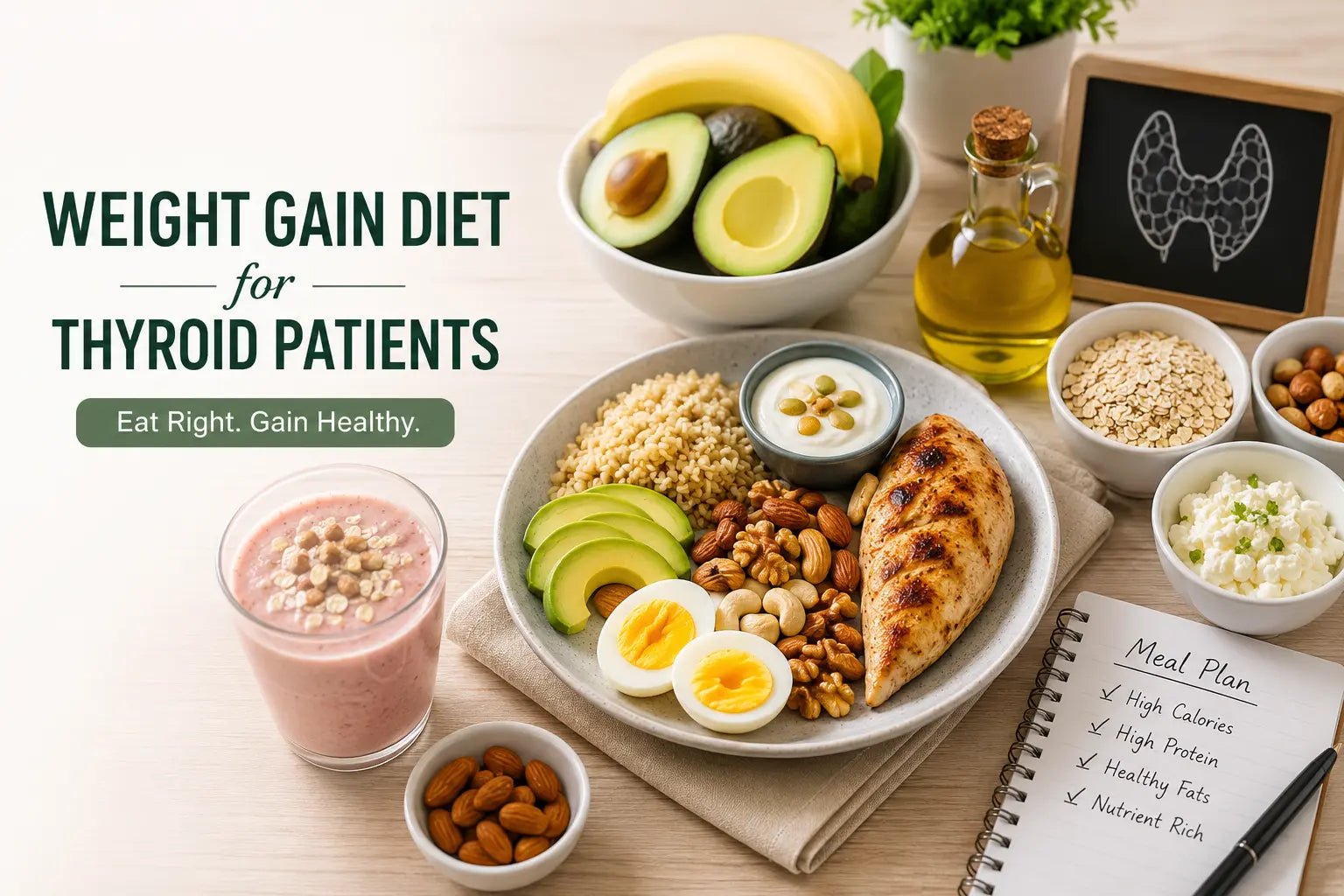
For most people who genuinely need to gain weight, build meals around:
- eggs, milk, yogurt, chicken, fish, meat, lentils and beans for protein
- rice, roti, oats, potatoes, bread and other energy-rich carbohydrates
- nuts, seeds, nut butter, healthy oils and dairy for concentrated calories
- fruit and vegetables for vitamins, minerals and fiber
- nutritious shakes between meals if appetite is poor
- three regular meals plus two or three snacks when needed
This approach is particularly important in hyperthyroidism, because an overactive thyroid can increase energy use and cause weight loss even when appetite is normal or increased.[1][2]
Most important point: You cannot reliably “out-eat” uncontrolled hyperthyroidism. Food can replace energy and support muscle recovery, but medical treatment is needed to control excess thyroid hormone.
Not every person with thyroid disease should gain weight. If you have hypothyroidism, Hashimoto's disease, or a treated thyroid condition but remain underweight, the reason for your low weight should be assessed rather than assuming the thyroid is responsible.
Thyroid Weight Gain Diet: At a Glance
| Question | Direct answer |
|---|---|
| Which thyroid condition commonly causes weight loss? | Hyperthyroidism, or an overactive thyroid. |
| Can hyperthyroidism make weight gain difficult? | Yes. It can increase energy requirements and cause muscle and weight loss. |
| Can food treat hyperthyroidism? | No. Diet supports recovery but does not control excess thyroid hormone. |
| Should you eat more calories? | If you are underweight or losing weight, often yes—but the amount should match your individual needs and treatment stage. |
| Is protein important? | Yes. Thyroid-related weight loss can include muscle, not only body fat. |
| What are good weight-gain foods? | Eggs, dairy, meat, fish, daal, beans, rice, roti, oats, potatoes, nuts, nut butter and healthy oils. |
| Can you use weight-gain shakes? | Yes, if appropriate. Simple food-based shakes are often enough. |
| Should hyperthyroid patients take iodine? | Do not take high-dose iodine, kelp or “thyroid support” products without medical advice. |
| Can hypothyroid patients be underweight? | Yes. Low weight should then be assessed for other nutritional, medical or medication-related causes. |
| Will weight return after hyperthyroidism treatment? | Often. Some people regain all the lost weight and some gain more than expected. |
| Should the diet stay the same after treatment? | No. Extra calorie needs can fall as thyroid hormone levels normalize. |
Who Is This Weight Gain Guide For?
This article is mainly intended for adults who:
- have hyperthyroidism and are losing weight
- have Graves' disease and struggle to maintain weight
- are eating more but still losing weight with an overactive thyroid
- lost muscle or body weight during hyperthyroidism
- are recovering after hyperthyroidism treatment
- are underweight despite treated hypothyroidism
- have Hashimoto's disease but continue to lose weight
- have poor appetite during thyroid illness
- want to regain weight and strength rather than simply increase body fat
This is general nutrition education, not a personalized diet prescription.
Children, pregnant or breastfeeding people, older or frail adults, and people with diabetes, heart disease, kidney disease, severe liver disease, major digestive disease, swallowing problems, fluid restrictions, food allergies or eating disorders need an individualized plan from their healthcare team.
Hyperthyroidism vs Hypothyroidism: Which One Causes Weight Loss?
“Thyroid problem” is not one diagnosis.
Hyperthyroidism and hypothyroidism affect metabolism differently, so the right diet depends on which condition you actually have.
| Hyperthyroidism | Hypothyroidism | |
|---|---|---|
| Thyroid activity | Too high | Too low |
| Energy use | Usually increased | Usually reduced |
| Common weight effect | Weight loss | Modest weight gain |
| Appetite | May increase | Can vary |
| Muscle weakness | Can occur | Can occur |
| Main treatment goal | Reduce excess thyroid hormone | Replace insufficient thyroid hormone |
| Role of diet | Replace lost energy and support recovery | Support normal nutrition and individual body-weight goals |
Hyperthyroidism commonly causes weight loss because excessive thyroid hormone increases the body's energy requirements.[1][2]
Hypothyroidism is more often associated with modest weight gain, and part of that gain can be related to salt and water retention rather than body fat alone.[2]
This distinction matters because there is no single “thyroid diet” suitable for everyone.
Why Does Hyperthyroidism Make It Hard to Gain Weight?
Hyperthyroidism means that there is too much thyroid hormone in the body.
The thyroid produces hormones including thyroxine (T4) and triiodothyronine (T3). These hormones help regulate how the body uses energy.
When thyroid hormone levels become excessive, many body processes speed up. You may experience:
- weight loss despite eating normally or eating more
- rapid or irregular heartbeat
- sweating
- heat intolerance
- trembling
- anxiety or nervousness
- difficulty sleeping
- frequent bowel movements or diarrhea
- fatigue
- muscle weakness
NIDDK and the American Thyroid Association both identify weight loss despite an increased or normal appetite as a common feature of hyperthyroidism.[1][3]
Why eating more may still not be enough
Imagine that you normally eat enough food to maintain your weight.
If hyperthyroidism increases the amount of energy your body uses each day, the same amount of food may no longer be enough.
Even if your appetite rises and you begin eating more, your intake may still remain below your new energy requirement.
That is why someone can truthfully say:
“I am eating a lot but still losing weight with hyperthyroidism.”
The problem is not always poor appetite or insufficient effort. The disease itself can be increasing energy use.
The First Goal Is Not Always Weight Gain
When active hyperthyroidism is causing ongoing weight loss, your first realistic nutrition goal may simply be:
Stop losing more weight.
Once thyroid treatment starts working and your weight stabilizes, the goal can shift toward:
- replacing lost weight
- rebuilding muscle and strength
- returning to a stable healthy range
- avoiding unnecessary weight overshoot after recovery
The correct plan therefore changes with the stage of thyroid treatment.
Weight Gain Strategy by Thyroid Treatment Stage
| Treatment stage | Main goal | Food strategy | Activity and follow-up |
|---|---|---|---|
| Active, untreated or poorly controlled hyperthyroidism | Treat the thyroid and limit further nutrition and muscle loss | Eat regular, nutrient-rich meals and snacks. Add energy if needed, but do not rely on food instead of treatment. | Avoid intense exercise if you have significant palpitations, weakness, dizziness or poor heat tolerance. |
| Treatment working but still underweight | Restore lost weight and strength | Gradually add calories and include protein throughout the day. | Begin light resistance activity only when medically appropriate. |
| Thyroid levels stable and weight returning | Replace what was lost without overshooting | Continue balanced meals but reassess high-calorie snacks, shakes and boosters. | Progress toward usual activity and continue thyroid follow-up. |
| Weight restored or rising faster than intended | Maintain a healthy stable weight | Remove unnecessary calorie extras while keeping meals nutritious and protein adequate. | Review thyroid tests if rapid gain occurs with symptoms of hypothyroidism. |
This stage-based approach is one of the most important principles of thyroid-related weight management.
The diet you need during uncontrolled hyperthyroidism may not be the diet you need after successful treatment.
How to Gain Weight With Hyperthyroidism Safely
1. Treat the Overactive Thyroid
This is the most important step.
A high-calorie diet may reduce the rate of weight loss, but it cannot reliably overcome uncontrolled hyperthyroidism.
Treatment can include:
- antithyroid medication
- radioactive iodine
- surgery
The appropriate treatment depends on the cause of hyperthyroidism, disease severity, age, pregnancy status, other health conditions and individual circumstances.[1][3]
Take thyroid medicine exactly as prescribed.
Do not skip doses or change treatment in an attempt to control your weight.
2. Set the Right Weight Goal
Do not automatically aim for the highest number possible.
Your healthcare team may consider:
- your weight before thyroid symptoms began
- how much weight you lost
- how quickly you lost it
- your current strength
- muscle loss
- appetite
- bowel symptoms
- thyroid test results
- treatment stage
- activity
- other medical conditions
BMI can be one screening tool, but it cannot tell you how much of your body weight is muscle, fat, bone or fluid.
Recovery should also consider:
- strength
- energy
- symptoms
- laboratory results
- nutritional intake
- a stable weight trend
For some people, regaining their previous stable weight is appropriate. For others, a different target may be healthier.
3. Add Calories Gradually
Weight gain requires your average energy intake to exceed your average energy use.
For general healthy adult weight gain, NHS guidance suggests that some adults can begin by adding approximately 300–500 calories per day.[4]
But this is not a hyperthyroidism-specific prescription.
Active hyperthyroidism can substantially change energy requirements. Some people may need more, less, or initially only enough extra food to stop ongoing loss.
A better approach is:
- identify what you currently eat
- add one or two consistent calorie sources
- follow your weight trend
- monitor symptoms and thyroid treatment
- adjust again if necessary
Do not make a huge increase simply because the scale did not change after one or two days.
Weight trends are more useful than individual readings.
4. Include Protein Throughout the Day
Hyperthyroidism-related weight loss can include muscle as well as fat, so restoring body weight should not mean focusing only on calories.[5]
Useful protein foods include:
- eggs
- chicken
- fish
- lean meat
- milk
- yogurt
- cheese or paneer
- daal
- lentils
- chickpeas
- beans
- tofu and other soy foods
- nuts and seeds
Try to include a meaningful protein source at breakfast, lunch and dinner, with protein-containing snacks where useful.
For example:
Breakfast: eggs + yogurt
Lunch: chicken or daal
Snack: milk, yogurt or nuts
Dinner: fish, meat, beans or lentils
How much protein do you need?
There is no single thyroid-specific protein target suitable for everyone.
Requirements depend on:
- body size
- age
- activity
- degree of muscle loss
- overall calorie intake
- kidney function
- liver health
- other illnesses
Research in generally healthy adults doing resistance training suggests that additional protein can help support lean-mass gains, with average benefits tending to level off around approximately 1.6 g/kg/day in those study populations.[10]
That number should not be treated as a universal prescription for thyroid patients.
People with kidney disease, significant liver disease or other conditions affecting protein metabolism need individualized advice.
5. Eat Smaller Meals More Often if Needed
Three very large meals can be uncomfortable when hyperthyroidism causes:
- nausea
- diarrhea
- tremor
- anxiety
- fatigue
- early fullness
- heat intolerance
Instead, try:
3 smaller meals + 2–3 snacks
or eat something useful every three to four hours while awake.
This can increase calorie intake without forcing very large portions.
Keep simple foods available when tiredness or tremor makes cooking difficult.
Examples include:
- yogurt and fruit
- toast with peanut butter
- cheese with bread or crackers
- boiled eggs with toast
- hummus with bread
- dates with nuts
- milk
- banana shake
- yogurt smoothie
6. Increase Calories Without Making Food Volume Much Larger
This is one of the easiest ways to gain weight when appetite is limited.
Instead of trying to double the amount of food on your plate, increase the energy density of food you already eat.
Oats
Instead of:
oats + water
Try:
oats + milk + banana + nuts or nut butter
Bread or roti
Instead of:
plain bread
Try:
bread + egg + peanut butter or cheese
Rice
Instead of:
plain rice
Try:
rice + chicken or daal + yogurt + a little added oil
Yogurt
Instead of:
plain yogurt
Try:
yogurt + banana + dates + nuts
Vegetables
Instead of:
plain cooked vegetables
Try:
vegetables prepared with a suitable amount of healthy oil
Small additions made several times each day can create a useful calorie increase.
7. Use Nutritious Drinks Between Meals
Liquid calories can help when solid food is difficult to finish.
A simple homemade shake can contain:
- milk or a suitable fortified alternative
- banana
- oats
- peanut butter or ground nuts
- yogurt, if desired
- dates or another fruit, if needed
This gives a mixture of:
- carbohydrate
- protein
- fat
- calories
- useful micronutrients
Have high-calorie drinks between meals rather than immediately before meals if they reduce your appetite.
Do not add:
- kelp
- seaweed powder
- iodine drops
- stimulant “metabolism” products
- unverified thyroid-support herbs
8. Reassess the Diet as Treatment Works
Your energy needs can fall when excessive thyroid hormone is brought under control.
That means extra snacks, large shakes or calorie boosters that were helpful during active hyperthyroidism may later become unnecessary.
Review:
- weight trend
- appetite
- strength
- portion sizes
- snacks
- shakes
- thyroid symptoms
- thyroid test results
A thyroid weight-gain diet should be temporary and adjustable, not automatically continued forever.
Best Foods for Weight Gain With Thyroid Disease
There is no single food that makes someone with thyroid disease gain weight.
The most useful foods provide significant energy while also contributing protein, vitamins, minerals or other nutrients.
| Food group | Useful choices | Why they help |
|---|---|---|
| Protein | Eggs, chicken, fish, meat, yogurt, milk, daal, beans, lentils, tofu | Support muscle maintenance and recovery |
| Energy-rich carbohydrates | Rice, roti, oats, potatoes, bread, pasta, cereal, fruit | Provide energy and make calorie needs easier to meet |
| Healthy fats | Nuts, seeds, peanut butter, olive oil, canola oil, avocado | Add concentrated calories without large portions |
| Dairy or alternatives | Milk, yogurt, cheese, fortified alternatives | Can provide protein, calories and minerals |
| Fruit | Banana, dates, raisins, mango and other tolerated fruit | Adds carbohydrate, calories and micronutrients |
| Nutritious drinks | Milk, lassi, yogurt smoothies, homemade shakes | Useful when appetite or meal size is limited |
Pakistani Foods for Healthy Thyroid Weight Gain
You do not need expensive imported “superfoods” to build a nutritious weight-gain diet.
Common Pakistani foods can work very well.
Useful combinations include:
- eggs with roti and yogurt
- omelette with bread and milk
- chicken with rice and raita
- daal with rice and yogurt
- chana with roti
- aloo with egg and roti
- chicken sandwich with milk
- banana milkshake
- yogurt with banana, dates and nuts
- peanut butter with bread
- dates with milk
- homemade lassi
- chicken pulao with yogurt
- daal khichdi with egg or chicken
- oats prepared with milk, banana and nuts
- rice pudding as part of an appropriate diet
- chana chaat with yogurt
- lentils with rice and a small amount of added oil
The goal is not to make every meal extremely oily.
Instead, use this simple formula:
For example:
Rice + chicken + vegetables + yogurt + a little added oil
or
Roti + egg + yogurt + banana + nuts
This adds energy while keeping the meal nutritionally useful.
High-Calorie Foods vs Healthy Weight Gain
Calories matter for gaining weight.
But calorie quality also matters for:
- muscle recovery
- bone health
- cardiovascular health
- digestion
- blood sugar
- vitamin and mineral intake
- long-term health
You could increase calories quickly with:
- soft drinks
- sweets
- cakes
- fried snacks
- large amounts of fast food
But these should not become the foundation of the diet.
NHS healthy weight-gain guidance specifically recommends nutritious calorie sources and advises against relying mainly on chocolate, cakes and sugary drinks.[4]
A better principle is:
High calorie + nutrient rich
rather than:
High calorie + low nutrition
Desserts or fried foods can still fit occasionally. They simply should not replace protein-rich, balanced meals.
What Should a Thyroid Patient Eat at Each Meal?
Use this four-part meal structure.
1. Protein
Choose one or more:
- egg
- chicken
- fish
- meat
- daal
- chickpeas
- beans
- yogurt
- milk
- tofu
2. Energy-Rich Carbohydrate
Choose one or more:
- rice
- roti
- bread
- potatoes
- oats
- pasta
- cereal
- fruit
3. Fruit or Vegetables
Choose foods that you enjoy and tolerate.
4. Calorie Booster
Add a suitable amount of:
- nuts
- seeds
- peanut butter
- yogurt
- cheese
- healthy oil
- avocado
- milk
This structure is more useful than following a rigid list of “thyroid foods.”
Example One-Day Weight Gain Diet for a Thyroid Patient
This menu is an example for an adult who has been advised to restore weight. It is not a personalized prescription.
Portions need to match your body size, appetite, weight trend, thyroid status, activity and medical history.
| Time | Example meal |
|---|---|
| Breakfast | 2 eggs + roti or bread + yogurt or milk + banana |
| Mid-morning snack | Yogurt with dates and nuts, or a banana milkshake |
| Lunch | Chicken, fish, meat or daal + rice or roti + cooked vegetables + yogurt/raita |
| Afternoon snack | Peanut butter sandwich, chana with yogurt, or milk with banana and nuts |
| Dinner | Chicken, fish, meat, beans or lentils + rice, potatoes or roti + vegetables + yogurt |
| Evening snack, if needed | Milk, yogurt, nuts with fruit, or a small sandwich |
A bedtime snack is not mandatory.
It is simply another opportunity to add nutrition when larger daytime meals are difficult.
What If You Have a Poor Appetite?
You do not need to force huge meals.
Try:
- eating every three to four hours while awake
- using five or six smaller eating occasions
- fortifying foods you already eat
- drinking nutritious shakes between meals
- keeping ready-to-eat snacks nearby
- choosing softer foods when tired or weak
- avoiding large amounts of water, tea or other filling drinks immediately before meals
If poor appetite is persistent, worsening or associated with ongoing unexplained weight loss, ask your healthcare team to investigate the cause.
What If Diarrhea or Frequent Bowel Movements Make Eating Difficult?
Hyperthyroidism can cause frequent bowel movements or diarrhea.[1][3]
During symptoms:
- use smaller meals
- drink enough fluid
- choose foods you tolerate
- avoid huge meals
- limit foods that clearly worsen your symptoms
- be cautious with excessive caffeine
Seek medical review if diarrhea:
- becomes severe
- contains blood
- causes dizziness or dehydration
- prevents normal food or fluid intake
- continues despite improvement in thyroid disease
Do not assume every digestive symptom comes from your thyroid.
Weight Gain Shakes for Thyroid Patients
A homemade shake can be particularly useful when:
- appetite is low
- cooking is difficult
- meals feel too large
- calorie needs are temporarily increased
- you need a convenient snack
Simple food-based thyroid weight-gain shake
Blend:
- 1 cup milk or suitable fortified alternative
- 1 banana
- 2 tablespoons peanut butter or ground nuts
- 2–4 tablespoons oats
- yogurt, if desired
- dates or another fruit if additional energy is needed
Drink it between meals if possible.
Does the shake treat thyroid disease?
No.
It is simply a convenient source of energy and nutrients.
Can Thyroid Patients Use Protein Powder?
Some can, but protein powder is optional.
Whole foods can provide enough protein for many people.
Protein powder may be useful when:
- appetite is poor
- cooking is difficult
- food intake is limited
- protein requirements are difficult to meet
- you are rebuilding muscle after illness
Check the ingredient list carefully.
Avoid assuming a product is safe just because its marketing mentions “thyroid,” “natural” or “metabolism.”
Be cautious with products containing:
- kelp
- seaweed
- large amounts of iodine
- stimulant ingredients
- large caffeine doses
- unverified herbal blends
- “thyroid boosters”
People with kidney disease, significant liver disease, diabetes or other conditions should get individual advice before substantially increasing protein or using concentrated supplements.
Are Mass Gainers Safe for Thyroid Patients?
Mass gainers are high-calorie powdered products containing various combinations of:
- carbohydrate
- protein
- fat
- vitamins
- minerals
- flavorings
- other ingredients
They can increase calorie intake, but they are not automatically better than food.
Before using one, check:
- calories per serving
- serving size
- protein amount
- added sugar
- iodine content
- caffeine
- stimulants
- herbal ingredients
- vitamins and minerals
Some products deliver extremely large calorie amounts in one serving.
That may be unnecessary.
For many people, a homemade shake with milk, yogurt, oats, banana and nut butter is simpler.
Should Hyperthyroid Patients Avoid Iodine?
Do not try to remove all iodine from your diet unless your medical team gives you specific instructions.
Iodine is an essential nutrient used to make thyroid hormones.[6]
The concern in hyperthyroidism is excessive iodine, particularly in susceptible people.
NIDDK warns that large amounts of iodine—including from kelp and other seaweed or iodine-containing supplements—can cause or worsen hyperthyroidism in some people with Graves' disease or other autoimmune thyroid disorders.[1]
Be particularly careful with:
- kelp supplements
- seaweed supplements
- iodine drops
- high-dose iodine tablets
- “thyroid support” supplements
- multivitamins containing significant iodine
- medicines that contain iodine
Do not start an iodine supplement merely because you have thyroid disease.
Do You Need a Low-Iodine Diet for Hyperthyroidism?
Usually not as a routine long-term diet.
A strict low-iodine diet may be recommended for specific medical reasons, such as preparation for certain radioactive iodine procedures.
That is different from general dietary management of hyperthyroidism.
Do not unnecessarily remove nutritious foods such as:
- dairy
- eggs
- fish
- other protein-rich foods
simply because they appeared on an online low-iodine list.
Follow a strict low-iodine diet only when your thyroid team specifically recommends it.
Do Thyroid Patients Need to Avoid Broccoli, Cabbage or Cauliflower?
Usually not.
Vegetables such as:
- broccoli
- cabbage
- cauliflower
- Brussels sprouts
contain compounds sometimes described as goitrogens.
This fact is often exaggerated online.
For most people with adequate iodine intake, normal portions of these foods do not justify removing nutritious vegetables from the diet.[6]
Your thyroid diagnosis, thyroid medication and total diet matter more than avoiding individual vegetables.
Thyroid Medicine and Food Timing
This section mainly applies to people taking levothyroxine, which is commonly prescribed for hypothyroidism and may also be required after some forms of hyperthyroidism treatment.
Food and several supplements can affect levothyroxine absorption.
Current NHS guidance advises taking levothyroxine consistently 30–60 minutes before the first meal of the day or a caffeinated drink such as tea or coffee.[7]
Food, calcium, iron and some medicines can reduce absorption.[7][8]
Pay attention to:
- calcium supplements
- iron supplements
- antacids
- multivitamins containing minerals
- coffee
- food timing
Follow the specific spacing instructions given by your doctor, pharmacist or medicine leaflet.
The solution is usually consistent timing, not removing nutritious calcium- or iron-containing foods from your diet.
Do not change your thyroid medicine schedule without medical advice.
What About Biotin?
Biotin is commonly found in supplements promoted for:
- hair
- skin
- nails
High-dose biotin can interfere with some laboratory tests used to measure thyroid function and may make results appear abnormal when actual thyroid hormone levels are different.[9]
Tell your doctor about all vitamins and supplements you use before having thyroid blood tests.
The American Thyroid Association advises avoiding biotin shortly before thyroid-function testing; follow the instructions from your own laboratory or healthcare professional.[9]
Can Exercise Help You Gain Weight With Thyroid Disease?
Yes—when the thyroid condition is stable enough for exercise.
Resistance training can help rebuild muscle when combined with:
- sufficient calories
- adequate protein
- recovery
- appropriate medical treatment
Examples include:
- body-weight exercises
- resistance bands
- weight machines
- free weights
But uncontrolled hyperthyroidism can cause:
- rapid heartbeat
- irregular heartbeat
- weakness
- fatigue
- poor heat tolerance
- cardiovascular complications
Do not start or intensify hard training simply because you want to gain muscle if hyperthyroidism remains uncontrolled.
Ask for medical advice first if you have significant palpitations, dizziness, chest symptoms, major weakness or abnormal thyroid levels.
How Fast Should a Thyroid Patient Gain Weight?
There is no thyroid-specific weekly rate that is ideal for everyone.
The aim should usually be gradual, reviewable recovery, not the fastest possible change on the scale.
Your first goal may simply be weight stability.
Monitor:
- body weight
- appetite
- strength
- energy
- bowel symptoms
- thyroid symptoms
- treatment changes
- exercise
If weighing yourself is appropriate, checking under similar conditions once or twice a week is usually more informative than reacting to daily changes.
Daily fluctuations can reflect:
- water
- salt intake
- bowel contents
- meals
- hormonal changes
rather than true muscle or fat gain.
Why Am I Eating More but Still Not Gaining Weight?
Eating “a lot” does not necessarily mean you are consuming more energy than your body is using.
| Situation | Possible explanation | What to consider |
|---|---|---|
| Weight continues to fall | Hyperthyroidism may remain active | Thyroid review |
| Large appetite but no gain | Energy requirements may still be elevated | Review treatment and actual intake |
| You become full quickly | Large meals may be difficult | Smaller, more energy-dense meals |
| Diet looks healthy but is low calorie | Too many bulky low-energy foods | Add nuts, dairy, oils, grains and other calorie-dense foods |
| Weight improves but strength does not | Muscle recovery may lag | Review protein, activity and overall health |
| Frequent diarrhea | Thyroid or digestive disease may affect intake | Medical assessment |
| Thyroid tests are normal but weight falls | Another cause may be present | Further medical evaluation |
Do not keep adding more and more calories indefinitely without investigating why the weight loss is continuing.
Will You Gain Weight After Hyperthyroidism Treatment?
Often, yes.
This is an important part of the thyroid weight cycle.
During active hyperthyroidism, excessive thyroid hormone increases energy requirements.
Once treatment brings thyroid hormone levels back toward normal, that extra energy use falls.
The American Thyroid Association explains that weight lost because of hyperthyroidism is commonly regained after treatment.[2]
More recent ATA-reviewed research also found that some patients gained substantially more weight following treatment, particularly people who had more severe hyperthyroidism or greater weight loss before treatment.[5]
This means your diet should change during recovery.
During active weight loss:
You may require additional food to stop the loss and restore weight.
As treatment works:
Your energy requirements begin to fall.
After weight is restored:
Large calorie boosters and multiple high-calorie snacks may no longer be necessary.
Continuing the exact same high-calorie diet after recovery can contribute to more weight gain than intended.
How to Reduce the Risk of Excessive Weight Gain After Treatment
If your weight begins to rise after hyperthyroidism treatment, do not panic and do not stop treatment.
Instead:
- confirm whether thyroid levels are in the desired range
- compare your current weight with your pre-illness and healthy weight history
- review extra snacks and shakes
- remove calorie boosters that are no longer needed
- keep protein and meal quality adequate
- remain physically active when medically safe
- follow the thyroid blood-test schedule recommended by your clinician
Rapid or unexpected weight gain accompanied by:
- tiredness
- feeling cold
- constipation
- dry skin
- low mood
may justify reassessment for hypothyroidism or another problem.
What If You Have Hypothyroidism but Want to Gain Weight?
A person with hypothyroidism can still be underweight.
Hypothyroidism is commonly associated with modest weight gain, but having hypothyroidism does not guarantee that someone will be overweight.[2]
Once hypothyroidism has been treated and thyroid hormone levels are normal, the American Thyroid Association notes that the ability to gain or lose weight becomes similar to that of people without thyroid disease.[2]
If you remain underweight despite treated hypothyroidism, possible issues include:
- insufficient calorie intake
- poor appetite
- digestive disease
- another medical condition
- high physical activity
- medication problems
- poor absorption
- mental health or psychosocial factors
Also remember that taking too much thyroid hormone replacement can produce excessive thyroid hormone levels and contribute to weight loss.[1]
Do not assume every weight problem is caused by the thyroid.
What If You Have Hashimoto's Disease and Cannot Gain Weight?
Hashimoto's disease is an autoimmune thyroid condition that commonly leads to hypothyroidism.
But Hashimoto's does not determine a person's body weight by itself.
People with Hashimoto's can be:
- underweight
- normal weight
- overweight
If you have Hashimoto's and continue losing weight, your healthcare professional may review:
- TSH
- thyroid hormone levels
- thyroid medicine dose
- how consistently medicine is taken
- medicine absorption
- diet and calorie intake
- digestive conditions
- other causes of unexplained weight loss
Do not start an unnecessarily restrictive “Hashimoto's diet” simply because you cannot gain weight.
The cause needs to be identified first.
Endocrinologist vs Dietitian: Who Should You See?
Both can be important, but their roles are different.
Doctor or Endocrinologist
A doctor can:
- diagnose thyroid disease
- request and interpret thyroid tests
- identify the cause of hyperthyroidism
- prescribe treatment
- adjust medication
- manage Graves' disease
- assess complications
- investigate unexplained weight loss
Qualified Dietitian
A dietitian can help with:
- estimating energy needs
- setting a realistic weight goal
- increasing calories without excessive food volume
- improving protein intake
- planning meals around poor appetite
- adapting food around treatment
- planning culturally suitable foods
- adjusting the diet as thyroid function changes
- monitoring weight and nutrition progress
Nutrition support works best alongside appropriate medical treatment, not instead of it.
Need a Personalized Weight Gain Plan?
If your thyroid condition is being medically managed but you still need help restoring weight, improving appetite, planning calories and protein, or building practical Pakistani meals, MNT offers personalized online weight gain nutrition support.
Your nutrition plan can be adapted around your current weight, appetite, routine, food preferences, treatment stage and weight goal while medical diagnosis and thyroid treatment remain with your physician or endocrinologist.
Book an MNT Weight Gain ConsultationThyroid Weight Gain Checklist
If your goal is to gain weight safely, ask:
- Is my thyroid condition diagnosed?
- Is it being treated appropriately?
- Am I still losing weight?
- Do I eat three proper meals most days?
- Would two or three planned snacks help?
- Do my main meals contain protein?
- Am I eating enough carbohydrate?
- Could I add nuts, nut butter, dairy or healthy oils?
- Am I filling up on drinks before meals?
- Would a nutritious shake help?
- Am I taking my thyroid medicine consistently?
- Am I taking iodine, kelp or “thyroid support” supplements?
- Is my exercise level too high for my current intake?
- Is my weight trend improving?
- Has my calorie intake been reviewed as thyroid treatment works?
- Do I need a dietitian or medical reassessment?
Fixing these basics is usually more useful than searching for one magical “thyroid weight gain food.”
Frequently Asked Questions
Can thyroid patients gain weight?
Yes. The correct approach depends on the type of thyroid condition and the reason body weight is low. If hyperthyroidism is responsible, treatment of the excess thyroid hormone is central to successful weight restoration.
Which thyroid condition causes weight loss?
Hyperthyroidism is the thyroid condition most strongly associated with unintended weight loss. Excess thyroid hormone increases energy use, and weight can fall even when appetite increases.
What is the best diet for weight gain with hyperthyroidism?
There is no single best diet. Use enough calories, regular meals and snacks, protein-rich foods, energy-rich carbohydrates and calorie-dense nutritious foods while receiving appropriate hyperthyroidism treatment.
What are the best foods to gain weight with hyperthyroidism?
Useful choices include eggs, milk, yogurt, chicken, fish, meat, daal, lentils, beans, rice, roti, oats, potatoes, bananas, dates, nuts, nut butter, seeds and healthy oils.
How many extra calories should I eat?
General NHS healthy weight-gain guidance suggests that some adults may begin with approximately 300–500 extra calories per day.[4] This is not a thyroid-specific prescription. Active hyperthyroidism can alter calorie requirements substantially.
Are bananas good for thyroid weight gain?
Bananas are a convenient carbohydrate source and work well in snacks and shakes. They can help increase calorie intake but do not treat thyroid disease.
Is milk good for thyroid patients who want to gain weight?
If tolerated, milk can provide calories and protein. People taking levothyroxine need to follow appropriate medicine and food timing instructions.
Can thyroid patients drink protein shakes?
Yes, some can. A shake may be useful when appetite is poor or protein intake is insufficient. Avoid products containing excessive iodine, stimulants or unverified thyroid-support ingredients.
Can thyroid patients use mass gainers?
Some may be able to, but mass gainers are not necessary for most people. Check the calorie amount, sugar, iodine, caffeine, herbal ingredients and serving size before using one.
Why am I eating a lot but still losing weight with hyperthyroidism?
An overactive thyroid can increase the amount of energy your body uses. Your calorie intake may have increased but still remain below your new requirements. Persistent weight loss requires medical review.
Can you gain muscle with hyperthyroidism?
Yes, but active uncontrolled hyperthyroidism may cause muscle loss and cardiovascular symptoms. First control the thyroid condition, meet calorie and protein needs, and begin resistance training only when it is medically appropriate.
Should hyperthyroid patients avoid iodine?
Avoid excessive iodine, especially from kelp, seaweed concentrates and high-dose supplements, unless prescribed. Do not try to remove all dietary iodine without medical advice.
Is a low-iodine diet required for hyperthyroidism?
Not routinely. Strict low-iodine diets are used in specific clinical situations and should be followed only when recommended by the thyroid-treatment team.
Can someone with hypothyroidism be underweight?
Yes. If thyroid hormone levels are adequately treated but weight remains low, other medical, nutritional and lifestyle causes should be considered.
Why do people gain weight after hyperthyroidism treatment?
Hyperthyroidism raises energy requirements. When treatment brings thyroid hormone levels toward normal, energy needs fall. Weight lost during the overactive state is therefore often regained.
Can you gain too much weight after hyperthyroidism treatment?
Yes. Some people regain more than the weight they initially lost. Extra calories should therefore be reduced when they are no longer necessary rather than automatically continuing the active-hyperthyroidism diet.
Bottom Line
The best weight gain diet for thyroid patients depends on why weight is low.
When hyperthyroidism is causing weight loss, the first priority is controlling the excessive thyroid hormone. Diet then supports recovery by replacing lost energy and helping rebuild muscle.
Focus on:
- enough calories
- protein throughout the day
- regular meals and snacks
- rice, roti, oats, potatoes and other energy-rich carbohydrates
- eggs, dairy, chicken, fish, meat, daal and beans
- nuts, nut butter, seeds and healthy oils
- nutritious shakes when appetite is poor
Do not rely mainly on junk food, high-dose iodine or unproven “thyroid support” products.
And remember that the diet should change as treatment works.
The extra calories needed during active hyperthyroidism may become unnecessary when thyroid hormone levels normalize. The long-term goal is not simply to make the scale rise—it is to restore nutrition, strength and a stable healthy weight.
If weight continues to fall despite adequate food or appropriate thyroid treatment, do not simply keep eating more. Ask your healthcare professional to investigate why.
We rely on peer-reviewed studies and reputable medical journals.