



Why Do I Gain Weight After a Cheat Day? Fat Gain vs Water Weight Explained
Learn why your weight increases after a cheat day and how to tell the difference between temporary water weight, glycogen, sodium, digestion, and real fat gain.
Direct Answer: Why Do I Gain Weight After a Cheat Day?
You gain weight after a cheat day because your body temporarily holds more water, stores more glycogen from extra carbohydrates, retains fluid from sodium, and carries more food inside the digestive system.
Most sudden weight gain after one cheat day is not pure fat gain.
A 1 to 3 kg increase, or a 2 to 6 lb increase, after a cheat day can happen because of:
- Extra carbohydrates stored as glycogen
- Water stored with glycogen
- High sodium intake from fast food, snacks, sauces, and restaurant meals
- More food still inside your stomach and intestines
- Constipation, bloating, gas, poor sleep, alcohol, or hormonal fluid shifts
- A calorie surplus, which can cause some fat gain if it is large enough
The key point is simple:
Scale weight is not the same as body fat.
If your weight increases the morning after a cheat day, it usually means your body is temporarily heavier from water, glycogen, sodium, and food volume. It does not mean you gained 1 to 3 kg of fat overnight.
One cheat day can cause some fat gain if you eat far above your maintenance calories, but the large next-day scale jump is usually mostly water weight and digestive weight.
Quick Summary: Cheat Day Weight Gain at a Glance
| Scale Change After Cheat Day | Most Likely Cause | Is It Fat? |
|---|---|---|
| 1 to 3 kg overnight | Water, glycogen, sodium, food volume | Usually no |
| 2 to 6 lb overnight | Water retention and food weight | Usually no |
| Puffy face or swollen hands | Sodium and water retention | No |
| Bloated stomach | Food volume, gas, constipation, sodium | No |
| Heavy stomach next morning | Food still digesting | No |
| Weight drops in 24 to 72 hours | Temporary water and digestion changes | No |
| Weight stays high for weeks | Repeated calorie surplus | Possible |
| Waist keeps increasing over time | Long-term fat gain | Possible |

Is Cheat Day Weight Gain Fat or Water?
Most cheat day weight gain is water weight, not fat.
Your scale measures your total body weight. It does not only measure body fat. It also includes:
- Water
- Food in your digestive tract
- Stool
- Glycogen
- Muscle
- Body fat
- Fluid shifts
- Inflammation-related water
- Menstrual-cycle-related water retention
This is why your weight can jump quickly after one unusual eating day even when your actual body fat has barely changed.
Body fat increases when you consistently eat more calories than your body uses. Water weight can change much faster than fat because carbohydrates, sodium, hydration, digestion, sleep, stress, and hormones can all shift your body weight within hours.
For a deeper explanation of normal daily scale changes, read our guide on why does my weight fluctuate every day?
So, if you ate pizza, fries, desserts, soft drinks, salty snacks, biryani, shawarma, burgers, or restaurant food and your weight increased the next morning, the most likely reason is temporary weight from water, glycogen, sodium, and food volume.
The Main Reasons You Gain Weight After a Cheat Day
1. Extra Carbs Refill Glycogen and Increase Water Weight
Carbohydrates are one of the biggest reasons the scale goes up after a cheat day.
When you eat carbohydrates, your body breaks them down into glucose. Some glucose is used for immediate energy. Some is stored as glycogen in your muscles and liver.
Glycogen is the stored form of carbohydrate.
The important point is:
Glycogen is stored with water.
When you eat more carbohydrates than usual, your body stores more glycogen. As glycogen increases, water weight also increases.
This is why the scale may rise after foods such as:
- Pizza
- Pasta
- Burgers and fries
- Rice dishes
- Paratha, naan, biryani, or pulao
- Cakes, biscuits, and bakery items
- Desserts
- Sugary drinks
- Ice cream
- High-carb restaurant meals
This is especially common if you follow a low-carb diet during the week. Your glycogen stores may be lower than usual. Then, when you eat a high-carb cheat meal, your body refills glycogen quickly and pulls in more water.
That weight is temporary. Once you return to your usual eating pattern and activity level, glycogen and water levels usually settle again.
2. High-Sodium Foods Cause Water Retention
Most cheat day foods are high in sodium.
Sodium is not bad by itself. Your body needs sodium for fluid balance, nerve function, and muscle function. But a sudden high-sodium day can make your body hold extra water temporarily.
Common high-sodium cheat foods include:
- Pizza
- Fries
- Burgers
- Fried chicken
- Shawarma
- Chips
- Sauces
- Processed meats
- Instant noodles
- Restaurant meals
- Packaged snacks
- Pickles and salty condiments
When sodium intake increases, your body holds more water to maintain fluid balance. This can make you feel bloated, puffy, and heavier the next morning.
You may notice:
- Puffy face
- Tight rings
- Bloated stomach
- Swollen-looking hands or feet
- More thirst than usual
- Sudden scale increase
This is not instant fat gain. It is usually sodium-related water retention. It often improves within 24 to 72 hours when you return to normal eating, drink water normally, and reduce very salty foods.
3. More Food Means More Weight Inside Your Digestive System
Food has physical weight.
If you eat more than usual on a cheat day, your body will weigh more until that food is digested, absorbed, and eliminated.
For example, if you eat a large dinner with pizza, fries, dessert, soft drinks, and snacks, some of that food may still be inside your stomach and intestines the next morning.
This can increase your scale weight even if you did not gain fat.
Digestive weight may come from:
- Food volume
- Fluid intake
- Stool volume
- Delayed digestion
- Gas
- Bloating
- Late-night eating
If bloating is your main issue after eating out or having a cheat meal, read our detailed guide on Can Bloating Look Like Belly Fat?.
This is one of the simplest reasons people weigh more after a cheat day. The food has not disappeared yet. Your body is still processing it.
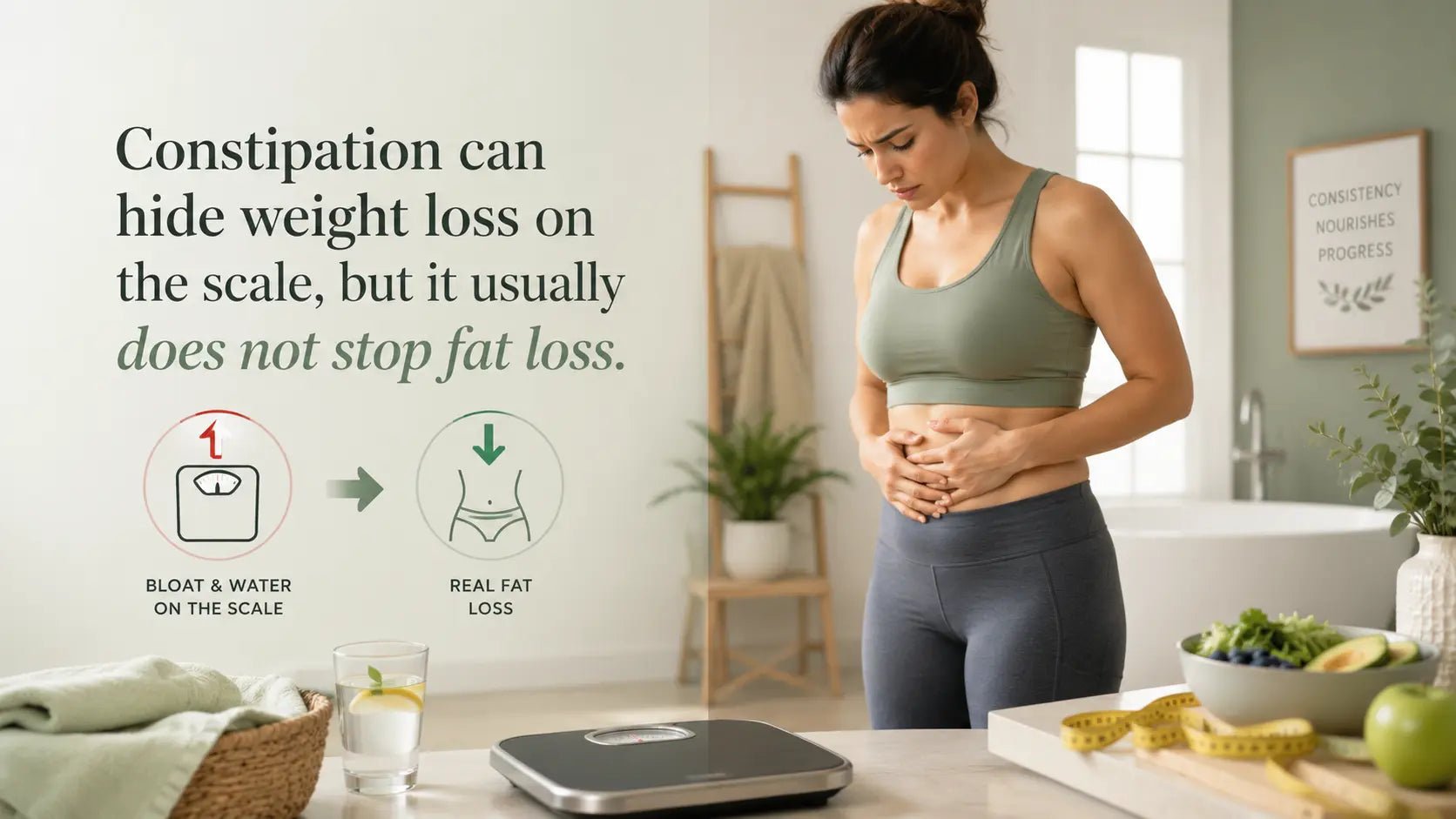
4. Constipation Can Make Cheat Day Weight Last Longer
Many cheat day foods are low in fiber and high in fat, sugar, refined carbohydrates, or sodium. These foods can slow digestion in some people.
If your cheat day includes fewer fruits, vegetables, lentils, beans, oats, whole grains, and other fiber-rich foods, you may feel constipated the next day.
Constipation can make weight stay higher because stool and gas remain in the digestive system.
If your scale weight stays high because of bloating or no bowel movement, you may also find our article on can constipation stop weight loss? helpful.
Common signs include:
- Bloating
- Heavy stomach
- No bowel movement
- Gas
- Tight abdomen
- Weight staying high for 2 to 4 days
This is usually digestive weight, not fat gain.
To improve this, return to fiber-rich foods, drink water normally, and walk after meals. Do not use laxatives as punishment after a cheat day unless a healthcare professional advises it.
5. Alcohol and Poor Sleep Can Make the Scale Jump Worse
If your cheat day included alcohol, late-night eating, caffeine, sugary foods, or very heavy meals, your sleep may be disturbed.
Poor sleep can affect:
- Hunger
- Cravings
- Stress hormones
- Fluid balance
- Digestion
- Motivation to return to routine
Alcohol can also make cheat day weight gain feel worse because it is often paired with salty and high-calorie foods such as fries, pizza, burgers, fried chicken, and late-night snacks.
You may wake up feeling:
- Puffy
- Dehydrated
- Bloated
- Tired
- More hungry
- Heavier on the scale
This does not automatically mean fat gain. It usually means your body is dealing with poor sleep, sodium, digestion, and fluid shifts.
6. Hormonal Changes Can Increase Water Retention
For women, cheat day weight gain may be more noticeable before or during the menstrual cycle.
Premenstrual changes can increase:
- Water retention
- Bloating
- Constipation
- Cravings
- Breast tenderness
- Scale fluctuations
If your cheat day happens before your period, the scale may jump more than usual. This does not mean you gained sudden fat. It may simply mean your cheat day overlapped with a time when your body was already holding more water.
In this case, avoid judging progress from one weigh-in. Use your weekly or 14-day average instead.
7. A Calorie Surplus Can Cause Some Fat Gain
It is important to be honest:
One cheat day can cause some fat gain if you eat far above your maintenance calories.
However, the full scale jump is usually not fat.
For example, if your body needs 2,200 calories per day and you eat 3,500 calories on a cheat day, you created a 1,300-calorie surplus. Some of that extra energy may be stored. But that does not mean you gained 2 kg of fat overnight.
The large next-day weight jump is usually a mixture of:
- Glycogen
- Water
- Sodium-related fluid
- Food volume
- Stool
- Gas
- Some possible fat gain if the surplus was large
The real problem is not one cheat day. The problem is when cheat days become cheat weekends or happen so often that your weekly calorie deficit disappears.
The Science Behind Cheat Day Weight Gain
A cheat day can increase scale weight through three main physiological mechanisms.
Glycogen and Intracellular Water
When you eat more carbohydrates, your body stores more glycogen in the muscles and liver. Glycogen binds water, so a high-carb day can increase body weight quickly without adding the same amount of body fat.
This is why people who eat low carb during the week may see a bigger jump after one high-carb cheat day.
The scale rises because the body is restoring stored carbohydrate and water.
Sodium and Extracellular Fluid
High-sodium meals can make the body retain more water outside the cells. This can cause puffiness, bloating, tight rings, thirst, and a higher scale weight the next morning.
This is common after restaurant food, fast food, packaged snacks, sauces, processed meats, and salty meals.
Gastrointestinal Mass
Large meals do not disappear immediately after eating. Food, fluids, and digestive waste remain inside the gastrointestinal tract until digestion and elimination are complete.
If you eat late at night and weigh yourself early in the morning, the scale may simply reflect food that is still being processed.
Why You Cannot Gain 2 kg of Fat Overnight
A sudden 2 kg increase after a cheat day does not mean you gained 2 kg of fat.
Fat gain requires a calorie surplus over time. Your body does not convert every extra gram of food into fat immediately.
After a high-carbohydrate day, your body may first refill glycogen stores.
After a salty day, your body may hold water.
After a large meal, your digestive system may still contain food.
To gain a large amount of body fat overnight, you would need an extremely large calorie surplus. Most people do not gain several kilograms of true body fat from one cheat day.
This is why the scale can rise quickly after a cheat day and then drop again within a few days.
How Much Weight Can You Gain After a Cheat Day?
Many people gain 1 to 3 kg, or 2 to 6 lb, after a cheat day. Some gain less. Some gain more.
The amount depends on:
- How many carbohydrates you ate
- How much sodium you consumed
- How much food volume you had
- Whether you ate late at night
- Whether you drank alcohol
- Whether you are constipated
- Your hydration level
- Your menstrual cycle
- Your sleep quality
- Your usual diet pattern
- Your exercise routine
- Whether you follow a low-carb diet
Example Breakdown of 2 kg Weight Gain After a Cheat Day
| Cause | Possible Contribution | Is It Fat? |
| Glycogen and water | 0.5 to 1.0 kg | No |
| Sodium water retention | 0.5 to 1.0 kg | No |
| Food still in the gut | 0.3 to 0.7 kg | No |
| Constipation or gas | 0.2 to 0.5 kg | No |
| Actual fat gain | Usually much smaller | Possible only with calorie surplus |
This is why a 2 kg increase after one cheat day does not mean you gained 2 kg of fat.
How Long Does Cheat Day Weight Gain Last?
Cheat day weight gain usually lasts 24 to 72 hours.
It may reduce faster if you return to your normal routine. It may last longer if you continue eating high-sodium foods, stay constipated, sleep poorly, drink alcohol, or overeat for several days.
Normal Pattern After a Cheat Day
| Time After Cheat Day | What Usually Happens |
| Next morning | Scale is often highest because of water, sodium, glycogen, and food volume |
| 24 hours later | Bloating may still be present |
| 48 hours later | Water weight often starts dropping |
| 72 hours later | Weight often returns close to normal |
| More than 1 week | Check weekly calories, digestion, sodium intake, and habits |
If your weight remains high for more than a week and your weekly average keeps increasing, it may be due to repeated calorie surplus, not just water weight.
Why Did I Gain 2 kg After One Cheat Day?
You likely gained 2 kg after one cheat day because of temporary weight from water, glycogen, sodium, and food still inside your digestive system.
This is common after a day that includes:
- Pizza
- Burgers
- Fries
- Biryani
- Desserts
- Sugary drinks
- Restaurant food
- Salty snacks
- Large portions
- Late-night eating
A 2 kg jump can look scary, but it is unlikely to be 2 kg of fat. Watch what happens over the next 3 to 4 days. If the weight starts coming down, it was mostly water and digestion-related weight.
Why Did I Gain 5 Pounds After a Cheat Day?
A 5 lb increase after a cheat day is usually mostly water, glycogen, sodium-related fluid, and food volume.
This often happens after:
- High-carb meals
- Salty restaurant meals
- Alcohol
- Eating late
- Poor sleep
- Constipation
- Multiple large meals in one day
- A high-carb day after low-carb dieting
Some fat gain is possible if your calories were very high, but the full 5 lb jump is usually not pure fat.
Why Do I Gain Weight After Eating Carbs?
You gain weight after eating carbs because carbohydrates refill glycogen stores in your muscles and liver.
Glycogen is stored with water, so your weight may temporarily increase after a high-carb meal.
This is not necessarily bad.
If you train, exercise, or have been dieting, a high-carb meal may make your muscles look fuller because glycogen is stored in muscle tissue. But if the meal is also high in sodium, fat, and total calories, you may also feel bloated and heavy.
Why Did I Gain Weight After Pizza?
Pizza can increase scale weight because it usually contains all the major cheat-day weight triggers:
- High carbohydrates from the crust
- High sodium from cheese, sauces, and processed toppings
- High fat from cheese and oils
- High calorie density
- Large portion size
- Slow digestion
So, if you gain weight after pizza, it is likely a combination of glycogen, water retention, food volume, and possible calorie surplus.
Why Did I Gain Weight After Eating Out?
Restaurant meals are often higher in sodium, calories, fat, sauces, and portion size than home-cooked meals.
This can cause:
- Water retention
- Bloating
- Thirst
- Digestive heaviness
- Higher scale weight the next morning
This is sometimes called the “restaurant food effect.” You eat one meal outside and wake up heavier, not because you gained instant fat, but because your body is holding more temporary weight.
How to Know If It Is Water Weight or Fat Gain
It Is Probably Water Weight If:
- Your weight increased overnight
- You ate more carbs than usual
- You ate salty or restaurant foods
- You feel bloated or puffy
- Your rings feel tight
- You ate late at night
- You drank alcohol
- You have not had a bowel movement
- Your weight starts dropping within 1 to 3 days
- Your waist measurement is almost the same
It May Be Fat Gain If:
- Weight keeps increasing for several weeks
- Your weekly average weight is rising
- Your waist measurement is increasing
- Cheat days happen often
- You regularly eat above maintenance calories
- One cheat day turns into multiple overeating days
- Clothes are getting tighter over time
The biggest clue is time.
Water weight changes quickly. Fat gain shows up as a longer-term trend.
Daily Weight vs Weekly Average Weight
Daily weight is not the best way to judge fat gain.
Your weight can change from day to day because of:
- Sodium
- Carbohydrates
- Water intake
- Sleep
- Stress
- Menstrual cycle
- Exercise soreness
- Constipation
- Meal timing
A better method is to track your 7-day average weight.
For example, if your weight jumps on Sunday after a Saturday cheat day but returns close to baseline by Wednesday, your fat gain was probably minimal.
Your weekly average tells the truth better than one emotional post-cheat-day weigh-in.
What to Do After a Cheat Day
The best thing to do after a cheat day is to return to your normal routine immediately.
Instead of extreme dieting or punishment exercise, focus on sustainable habits that support metabolism. You can also read our guide on how to boost metabolism naturally.
Do not panic. Do not punish yourself. Do not starve. Do not try to “detox.”
1. Return to Your Normal Diet
Start your regular diet again at the next meal. Do not wait for Monday.
One cheat day does not ruin progress. But continuing to overeat for several days can affect your weekly calorie balance.
A balanced next day may include:
- Protein
- Vegetables
- Fruit
- Whole grains
- Lentils or beans
- Normal portions of healthy fats
- Enough water
2. Drink Enough Water
Hydration helps your body regulate sodium and digestion.
Do not overdrink water. Just return to normal fluid intake. If your cheat day was salty, you may feel thirstier than usual. Respond with normal hydration instead of trying to aggressively flush your body.
3. Eat Protein-Rich Meals
Protein helps control hunger and supports muscle maintenance.
Good options include:
- Eggs
- Chicken
- Fish
- Greek yogurt
- Lentils
- Beans
- Tofu
- Cottage cheese
- Lean meat
4. Add Fiber
Fiber supports digestion and bowel movement.
Choose:
- Vegetables
- Fruits
- Oats
- Whole grains
- Lentils
- Beans
- Chia seeds
- Flaxseeds
This is especially useful if you feel constipated after a low-fiber cheat day.
5. Reduce Sodium for 24 to 48 Hours
Avoid very salty packaged foods, fast food, sauces, chips, processed meats, and instant noodles for the next 1 to 2 days.
This does not mean you need a zero-sodium diet. It simply means returning to normal, balanced meals.
6. Walk or Do Light Activity
A normal walk can help digestion and reduce bloating.
Good options include:
- Walking
- Light cycling
- Stretching
- Normal strength training
- Your regular workout
You do not need extreme cardio. Movement should support your routine, not punish your body.
7. Sleep Well
Good sleep helps appetite control, recovery, stress regulation, and fluid balance.
After a cheat day, try to return to your usual sleep schedule. Poor sleep can increase cravings and make it harder to return to normal eating.
8. Track Weekly Average Weight
Do not judge your progress from one post-cheat-day weigh-in.
Track your weight trend over 7 to 14 days. This gives a more accurate picture of whether you are gaining fat, losing fat, or simply experiencing normal fluctuations.
What Not to Do After a Cheat Day
Avoid these mistakes:
- Do not starve yourself
- Do not skip meals as punishment
- Do not do extreme cardio
- Do not use detox teas
- Do not use laxatives or diuretics
- Do not weigh yourself again and again
- Do not turn one cheat day into a cheat week
- Do not think one high-calorie day ruined everything
These reactions can increase stress, cravings, and unhealthy dieting patterns.
The best response is boring but effective:
Return to your normal plan.
Cheat Meal vs Cheat Day: Which Is Better?
A planned cheat meal is usually better than a full cheat day.
A cheat meal means you enjoy one controlled meal. A cheat day often becomes multiple high-calorie meals, snacks, desserts, drinks, and late-night eating.
Better Flexible Meal Examples
- One pizza meal with a normal portion
- One dessert after a balanced meal
- One restaurant meal with protein
- One burger meal without extra snacks all day
- One favorite food included within your weekly calories
This approach helps you enjoy food without destroying your weekly calorie target.
If your goal is fat loss, think in terms of flexible eating rather than uncontrolled cheat days.
Can One Cheat Day Ruin Weight Loss?
One cheat day usually does not ruin weight loss.
What matters most is your weekly and monthly pattern.
For example, if you are in a calorie deficit six days per week but have one moderate higher-calorie day, you may still lose weight.
But if your cheat day is so large that it erases your weekly deficit, fat loss may slow or stop.
If you want a structured approach that fits local foods and weekly calorie balance, see our weight loss diet plan Pakistan guide.
This is where many people get stuck.
They diet strictly from Monday to Friday, overeat heavily on Saturday and Sunday, then wonder why their weight is not dropping. In that case, the problem is not one cheat meal. The problem is the weekly calorie average.
Book Your Weight Loss Consultation
When Cheat Day Weight Gain May Be a Problem
Most cheat day weight gain is normal and temporary. But there are some situations where you should pay closer attention.
1. When Every Weekend Erases the Week
If your weight jumps every weekend and never fully returns to baseline, your cheat days may be too large or too frequent.
The solution is not always more restriction. Sometimes the better solution is a more sustainable diet during the week so you do not feel the need to overeat later.
2. When Cheat Days Feel Like Binges
A planned higher-calorie meal is different from feeling out of control around food.
Speak with a qualified health professional, registered dietitian, or therapist if cheat days regularly involve:
- Loss of control
- Eating in secret
- Eating past discomfort
- Guilt or shame
- Feeling unable to stop
- Restricting heavily after overeating
- Repeating the cycle again and again
The goal is not only weight control. The goal is also a healthier relationship with food.
3. When Sudden Weight Gain Comes With Symptoms
Do not assume all sudden weight gain is from a cheat day if you have concerning symptoms.
Speak with a healthcare professional if sudden weight gain comes with:
- Swelling in legs, feet, hands, or face
- Shortness of breath
- Chest pain
- Severe fatigue
- Very low urination
- One-sided leg swelling
- Pregnancy concerns
- Kidney, heart, liver, or thyroid disease
- New medication use
- Weight gain that continues without explanation
Most post-cheat-day weight gain is harmless, but sudden swelling or unexplained rapid weight gain can sometimes be a medical concern.
Final Answer: Should You Worry About Weight Gain After a Cheat Day?
You should not panic if your weight goes up after a cheat day.
Most weight gain after a cheat day is temporary and comes from water, glycogen, sodium, and food still inside your digestive system. A sudden 1 to 3 kg increase usually does not mean you gained 1 to 3 kg of fat.
The best response is simple:
Return to your normal diet, drink enough water, eat protein and fiber, reduce very salty foods for 24 to 48 hours, walk, sleep well, and track your weekly average weight.
One cheat day does not ruin fat loss.
Repeated uncontrolled cheat days can.
FAQs
Why did I gain 2 kg after one cheat day?
You likely gained 2 kg because of water retention, glycogen storage, sodium, and food still inside your digestive system. It is unlikely that all 2 kg is fat.
How long does cheat day weight gain last?
Cheat day weight gain usually lasts 24 to 72 hours. It may last longer if you ate very salty foods, drank alcohol, slept poorly, became constipated, or had multiple high-calorie days.
Can one cheat day make me fat?
One cheat day can cause some fat gain if you eat far above your maintenance calories. However, most sudden scale gain after a cheat day is usually water and food weight.
Why do I gain weight after eating carbs?
Carbohydrates refill glycogen stores in your muscles and liver. Glycogen is stored with water, so your weight may temporarily increase after a high-carb meal.
Why does salty food increase weight overnight?
High sodium intake can make your body retain water temporarily. This can cause bloating, puffiness, thirst, and a higher scale weight the next morning.
Should I fast after a cheat day?
You do not need to fast after a cheat day. Returning to normal balanced meals is usually better. Fasting as punishment can increase hunger and lead to overeating later.
Should I exercise more after a cheat day?
You can walk or continue your normal workout routine, but you do not need extreme exercise. Overtraining may increase soreness, hunger, and water retention.
How do I lose cheat day water weight?
Return to normal eating, drink enough water, reduce very salty foods, eat protein and fiber, walk, sleep well, and wait 24 to 72 hours.
Why did I gain weight after pizza?
Pizza is often high in carbohydrates, sodium, fat, and total calories. Carbohydrates increase glycogen and water storage, while sodium increases fluid retention. That combination can make the scale jump.
Why did I gain weight after eating out?
Restaurant food is often higher in sodium, calories, fat, sauces, and portion size than home-cooked food. This can cause temporary water retention, bloating, food-volume weight, and possible calorie surplus.
Is cheat day weight gain different from fat gain?
Yes. Cheat day weight gain is often a mix of water, glycogen, sodium, and food volume. Fat gain happens when calorie intake exceeds what your body uses over time.
When should I worry about sudden weight gain?
You should seek medical advice if sudden weight gain comes with swelling, shortness of breath, chest pain, severe fatigue, very low urination, pregnancy concerns, or known kidney, heart, liver, or thyroid disease.
Key Takeaway
Cheat day weight gain is usually temporary.
It mostly comes from water, glycogen, sodium, and digestion, not sudden fat gain. The scale may rise quickly, but it usually returns to normal when you return to your routine.
Do not punish yourself after a cheat day. Return to normal meals, hydrate, move gently, sleep well, and judge your progress by your weekly weight trend instead of one next-day weigh-in.
We rely on peer-reviewed studies and reputable medical journals.