



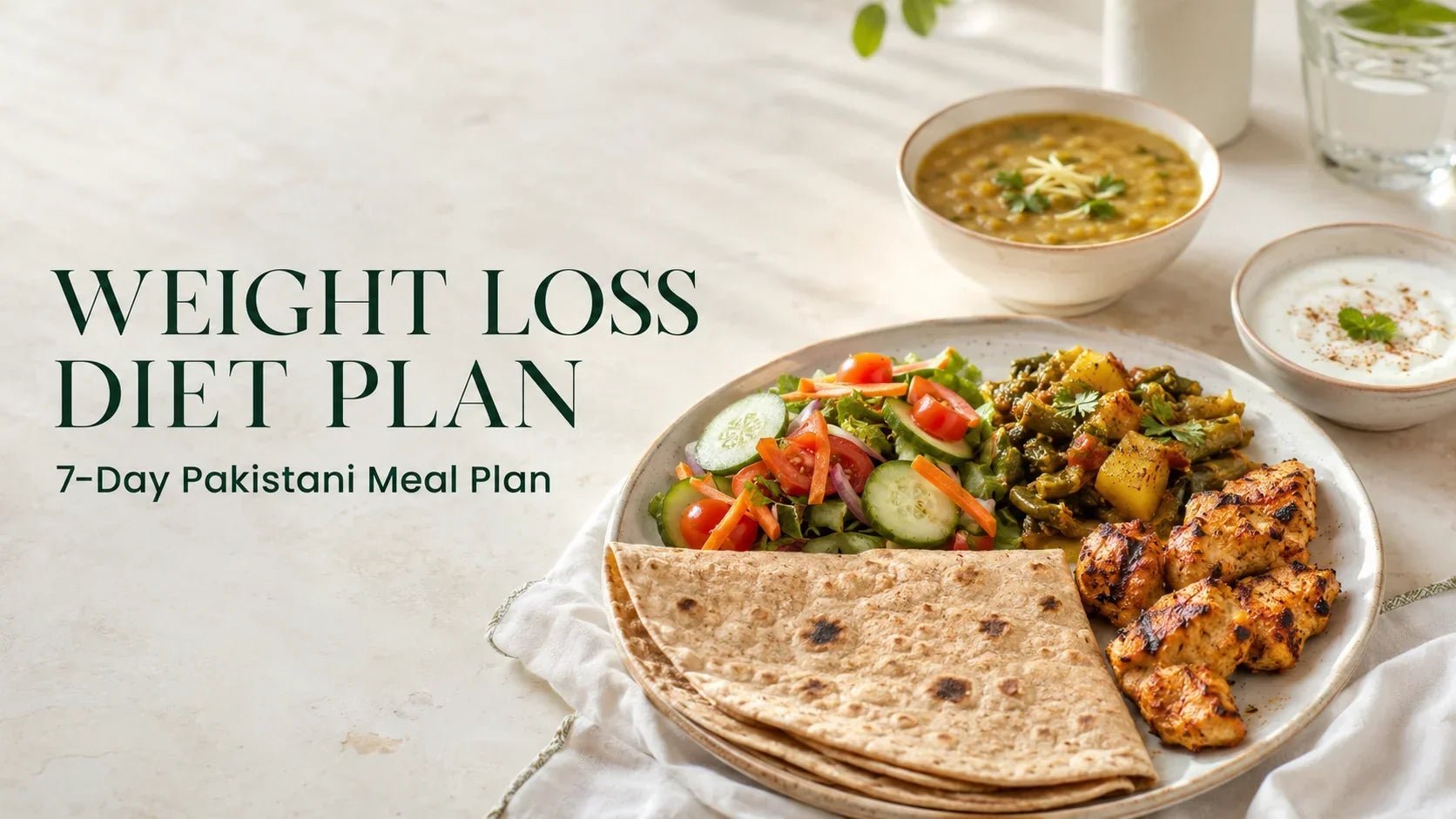
Weight Loss Diet Plan in Pakistan: 7-Day Meal Plan
A practical 7-day Pakistani weight loss diet plan featuring balanced meals, portion guidance, food swaps and science-backed tips for healthy, sustainable weight loss.
Quick answer: A healthy weight loss diet plan helps you eat fewer calories than your body uses while still providing enough protein, fibre, vitamins, minerals and healthy fats. You do not need to stop eating roti, rice, daal, fruit or other Pakistani foods. The most effective plan controls portions, includes protein and vegetables in main meals, limits sugary drinks and excess cooking oil, and fits your routine well enough to continue.
The seven-day Pakistani weight loss diet plan below is a flexible example for generally healthy adults. It is not a personal prescription because calorie and nutrient needs vary with age, body size, sex, activity, health, medicines and goals.
Weight Loss Diet Plan at a Glance
| Question | Simple answer |
|---|---|
| What causes weight loss? | Eating fewer calories than your body uses over time |
| Do you need to stop eating roti or rice? | No. Portion size and total daily intake matter more |
| How many meals should you eat? | Three main meals with an optional snack can work well |
| What should each meal include? | Protein, vegetables or fruit, and a controlled carbohydrate portion |
| How fast should weight loss be? | Gradual progress is safer and easier to maintain |
| Is this plan suitable for everyone? | No. Medical conditions and some life stages require a personalised plan |
Medical note: This is a general meal-planning example, not medical treatment. Speak with a doctor or qualified dietitian before trying to lose weight if you are pregnant or breastfeeding, under 18, underweight, have an eating disorder, use medicines that affect weight or blood sugar, or have diabetes, kidney disease, liver disease or another significant medical condition.
Table of Contents
- What is the best weight loss diet plan?
- Who can use this plan safely?
- How to use this seven-day plan
- Seven-day Pakistani weight loss meal plan
- Pakistani food portions and swaps
- Foods to eat more often and foods to limit
- Roti, rice and chai during weight loss
- Grocery list and meal preparation
- How to adjust the plan to your life
- How much weight can you realistically lose?
- The science behind the plan
- How to track progress and adjust
- Common weight loss mistakes
- When a personalised plan is better
- Frequently asked questions
What Is the Best Weight Loss Diet Plan?
The best weight loss diet plan creates a manageable calorie deficit while remaining balanced, affordable and practical enough to follow for months.
There is no single best diet for every person. Some people prefer a moderate-carbohydrate diet. Others find a lower-carbohydrate or lower-fat approach easier. A large clinical trial comparing healthy low-fat and healthy low-carbohydrate diets found no meaningful difference in average weight loss after 12 months. Food quality and the person's ability to follow the plan mattered more than the diet label.[1]
A useful diet plan to lose weight should have five features:
- A manageable calorie deficit
- Enough protein to support fullness and help protect muscle
- Fibre-rich vegetables, fruit, pulses and whole grains
- Measured portions of oil, ghee, sugary foods, nuts and snacks
- Foods that fit the person's culture, budget and routine
This means a Pakistani diet plan for weight loss can include roti, rice, daal, chana, chicken, fish, eggs, yogurt, sabzi, fruit and chai. These foods do not stop fat loss. The overall portion pattern and total intake matter.
Pakistan's national dietary guidelines also support varied meals built from local food groups rather than removing whole food groups without a medical reason.[2]
Who Can Use This Seven-Day Diet Plan?
This sample plan is intended for generally healthy adults who want a practical guide to balanced eating and gradual weight loss.
Get individual advice before following a generic diet if you:
- Are pregnant, planning pregnancy or breastfeeding
- Are younger than 18
- Are underweight or have recently lost weight without trying
- Have a current or past eating disorder
- Have diabetes and use insulin or medicine that can cause low blood sugar
- Have kidney, liver, gallbladder, heart or serious digestive disease
- Take medicine that affects appetite, blood pressure, blood sugar or body weight
- Use a prescription weight loss medicine
- Have had bariatric surgery
- Experience repeated binge eating
- Have unexplained weakness, swelling, dizziness or other concerning symptoms
If you are unsure whether weight loss is appropriate, begin with MNT's BMI Calculator and discuss the result with a healthcare professional. BMI is a screening measure. It does not measure body composition, diagnose disease or calculate your personal calorie needs.
How to Use This Seven-Day Weight Loss Diet Plan
With the optional snack and ordinary home recipes, many days in this plan may provide roughly 1,500–1,800 calories and about 75–100 grams of protein. These are broad estimates. Actual values change with roti size, meat cut, milk or yogurt type, brands, recipes and cooking oil.
This range may support weight loss for some adults. It may be too low, too high or close to maintenance for others. Taller, heavier and more active adults often require more food. Smaller or less active adults may need different portions.
Follow these guidelines:
- Use a medium whole-wheat roti made from about 40 grams of dry atta, without oil or ghee. A small roti may use about 30 grams.
- Measure oil instead of pouring it directly into the pan.
- Treat the snack as optional. Eat it when hungry rather than only because it appears on the chart.
- Measure daal, rice, beans and chickpeas after cooking.
- Use cooked weights for chicken and fish unless stated otherwise.
- Choose water or an unsweetened drink with meals.
- Repeat meals if that makes the plan easier. Weight loss does not require seven different breakfasts.
- Adjust portions if your assessed energy needs are higher or lower.
- Do not remove protein, vegetables or whole food groups simply to make the scale move faster.
A Safety Note About Very Low-Calorie Plans
Eating as little as possible is not the goal. NICE classifies diets providing 800–1,200 calories per day as low-energy diets and recommends them only within supported, multicomponent care for selected adults. Diets below 800 calories require closer specialist management and are not a routine long-term strategy.[8]
Do not copy a 1,200-calorie plan simply because it worked for someone else. That intake may be too low for many men, active adults, athletes, taller people and people with higher nutrient needs.
The Simple Pakistani Weight Loss Plate
For most lunches and dinners, aim for:
- Half the plate: non-starchy vegetables or salad
- One quarter: chicken, fish, eggs, daal, chana, beans, paneer or tofu
- One quarter: roti, rice, potato or another carbohydrate
- On the side: a small portion of plain yogurt or raita, if desired
- For cooking: a measured amount of oil or ghee
Daal, chana and beans provide both protein and carbohydrate. When they are the main protein source, use a generous portion and keep the roti or rice serving moderate.
7-Day Pakistani Diet Plan for Weight Loss
The following meal plan uses familiar and affordable foods. You may eat the meals at times that suit your work, studies, prayer, sleep and family routine. Fixed clock times are not required for fat loss.

Day 1
Breakfast
- Two-egg vegetable omelette with tomato, onion and coriander, cooked in 1 teaspoon oil
- One medium whole-wheat roti
- One cup chai with a small amount of milk and no added sugar
Lunch
- 120 grams cooked chicken curry made with measured oil
- One medium whole-wheat roti
- One cup seasonal sabzi
- One cup mixed salad
- Half a cup plain yogurt
Optional snack
- One medium guava
- Ten almonds
Dinner
- One cup cooked masoor daal
- Half to three-quarter cup cooked rice
- One cup salad
- Half a cup cucumber raita
Broad daily estimate: approximately 1,500–1,750 kcal and 80–95 g protein.
Day 2
Breakfast
- 40 grams oats cooked in one cup low-fat milk
- One small banana
- One teaspoon chia seeds or ground flaxseed
- One boiled egg
Lunch
- 150 grams grilled or baked fish
- One medium whole-wheat roti
- One cup cooked vegetables
- One cup salad
- Half a cup plain yogurt
Optional snack
- 30 grams roasted chana
- One cup chai without added sugar
Dinner
- Three-quarter to one cup chana curry
- One medium whole-wheat roti
- One cup mixed vegetables
- One cup salad
- Half a cup plain yogurt
Broad daily estimate: approximately 1,550–1,800 kcal and 80–100 g protein.
Day 3
Breakfast
- Two boiled or scrambled eggs
- Two standard slices whole-wheat bread
- Sliced tomato and cucumber
- One cup chai without added sugar
Lunch
- One cup cooked daal
- Half to three-quarter cup cooked rice
- One cup salad
- Half a cup plain yogurt
Optional snack
- One small apple
- 15 grams unsalted peanuts
Dinner
- 150 grams chicken tikka or grilled chicken without butter or creamy sauce
- One medium whole-wheat roti
- One cup cooked vegetables
- One cup salad
- Half a cup raita
Broad daily estimate: approximately 1,500–1,750 kcal and 80–100 g protein.
Day 4
Breakfast
- Two small besan chillas made with 60 grams besan, vegetables and 1 teaspoon oil
- Half a cup plain yogurt
- One cup chai without added sugar
Lunch
- 120 grams cooked lean beef or chicken keema
- One medium whole-wheat roti
- One cup seasonal sabzi
- One cup salad
Optional snack
- One orange
- 25 grams roasted chana
Dinner
- One cup cooked moong daal
- One medium whole-wheat roti
- One cup mixed vegetables
- One cup salad
- Half a cup raita
Broad daily estimate: approximately 1,500–1,750 kcal and 75–95 g protein.
Day 5
Breakfast
- One cup plain yogurt
- 30 grams oats
- One small chopped apple
- One teaspoon ground flaxseed
- One boiled egg
Lunch
- One to one-and-a-quarter cups homemade chicken pulao containing about 120 grams cooked chicken and measured oil
- One cup salad
- Half a cup raita
Optional snack
- One cup chai without added sugar
- Two small dates
- Two whole walnuts
Dinner
- 150 grams fish curry made with measured oil
- One medium whole-wheat roti
- One cup cooked vegetables
- One cup salad
Broad daily estimate: approximately 1,550–1,800 kcal and 85–105 g protein.
Day 6
Breakfast
- Two-egg vegetable bhurji cooked in 1 teaspoon oil
- One medium whole-wheat roti
- One cup chai without added sugar
Lunch
- Three-quarter to one cup cooked rajma
- Half to three-quarter cup cooked rice
- One cup salad
- Half a cup plain yogurt
Optional snack
- One small banana
- One cup low-fat milk
Dinner
- 150 grams grilled chicken
- One medium whole-wheat roti
- One cup cooked vegetables
- Half a cup raita
Broad daily estimate: approximately 1,600–1,800 kcal and 85–105 g protein.
Day 7
Breakfast
- 50 grams daliya cooked in one cup low-fat milk
- Half a chopped apple
- One boiled egg
Lunch
- 120 grams homemade chicken karahi made with measured oil
- One medium whole-wheat roti
- One cup salad
- Half a cup plain yogurt
Optional snack
- One cup fresh fruit chaat without juice, sugar or cream
- 20 grams roasted chana
Dinner
- Two-egg curry made with tomato, onion, spices and 1 teaspoon oil
- One medium whole-wheat roti
- One cup cooked vegetables
- One cup salad
- Half a cup plain yogurt
Broad daily estimate: approximately 1,500–1,750 kcal and 75–95 g protein.
Important Notes About the Estimates
The calorie and protein figures are guides, not guarantees. Restaurant curry, large rotis, fatty meat and unmeasured oil can raise the total considerably. Different food databases and recipes will also produce different results.
Do not reduce several portions at once just to make the plan lower in calories. If you feel weak, dizzy, unusually tired, constantly hungry or unable to exercise normally, the intake may be too low or poorly matched to your needs.
You may change the order of the days or repeat meals that are easy to prepare. Consistency matters more than eating seven completely different menus.
Pakistani Food Portion and Swap Chart
Use these swaps when a food is unavailable or does not suit your preferences. They are practical alternatives, not exact nutritional matches.
Carbohydrate Options
Choose one main portion:
| Food | Practical starting portion |
|---|---|
| Whole-wheat roti | 1 medium, made from about 40 g dry atta |
| Cooked rice | 1/2–3/4 cup |
| Whole-wheat bread | 2 standard slices |
| Oats | 40 g dry |
| Daliya | 45–50 g dry |
| Boiled potato | 1 medium, about 150 g |
One carbohydrate is not automatically better for weight loss than another. Choose the option that fits the meal and control the portion.
Protein Options
Include a clear protein source at each main meal:
| Food | Practical starting portion |
|---|---|
| Chicken or fish | 100–150 g cooked |
| Eggs | 2 whole eggs |
| Daal | 3/4–1 cup cooked |
| Chana, rajma, lobia or beans | 3/4–1 cup cooked |
| Plain yogurt | 3/4–1 cup |
| Paneer or tofu | About 100–150 g, depending on type |
Plant foods such as daal and chana provide protein but also contain carbohydrate. Pairing them with yogurt, milk, tofu or another suitable protein can make a meal more filling.
Fruit Options
Choose one:
- One small apple
- One orange
- One medium guava
- One small banana
- One cup papaya or melon
- One small pear
- Half to one cup mango pieces, depending on the rest of the day
Fruit does not need to be removed from a weight loss diet. Whole fruit is usually more filling than juice because it contains fibre and requires chewing.
Optional Snack Ideas
Choose one when hungry:
- One piece of fruit
- 20–30 grams roasted chana
- Half to one cup plain yogurt
- One boiled egg
- A measured portion of nuts
- Air-popped popcorn without excess butter
- Vegetable sticks with a yogurt dip
Nuts and seeds are nutritious but calorie-dense. A loose “handful” can become several servings, so measure the portion if progress has stopped.
Foods to Eat More Often and Foods to Limit
A healthy weight loss meal plan does not require a strict list of “good” and “bad” foods. Frequency, portion size and cooking method are more useful.
Eat More Often
- Palak, lauki, tinda, bhindi, karela, cauliflower, cabbage and other vegetables
- Cucumber, tomato, carrot, radish and leafy salad
- Daal, chana, rajma, lobia and other pulses
- Eggs, chicken, fish, yogurt, paneer and tofu
- Whole fruit
- Oats, daliya, whole-wheat roti and other higher-fibre grains
- Water and unsweetened drinks
Measure Carefully
- Cooking oil and desi ghee
- Nuts and seeds
- Peanut butter
- Cheese
- Dried fruit
- Creamy sauces
- Large servings of rice, naan or paratha
These foods can fit into a healthy diet, but their calories can add up quickly.
Limit or Eat Less Often
- Soft drinks, energy drinks and sweetened juices
- Frequent sugary chai or coffee
- Cakes, biscuits, mithai and bakery products
- Samosas, pakoras, fries and deep-fried meals
- Large restaurant portions
- Chips, nimco and other processed snacks
- Regular unplanned takeaways
WHO advises building a healthy diet around a variety of minimally processed foods, including vegetables, fruit, pulses, whole grains and suitable protein foods, while limiting free sugars, excess sodium and unhealthy fats.[6]
Can You Eat Roti, Rice and Chai While Losing Weight?
Can I Eat Roti Every Day?
Yes. Roti can be part of a weight loss diet plan.
Use a small or medium roti, avoid spreading butter or ghee on it, and pair it with protein, sabzi and salad. The problem is often not one roti. It is the combination of several large rotis, oily salan, fried sides and sweetened drinks.
Can I Eat Rice and Still Lose Weight?
Yes. Rice does not stop weight loss.
A practical starting portion is half to three-quarter cup cooked rice. Pair it with daal, chicken, fish, beans, vegetables or yogurt. Your personal portion may be higher or lower.
For a more detailed comparison, read MNT's guide on rice and weight loss.
Can I Drink Chai?
Yes, but count what goes into it.
One cup of lightly milky tea can fit easily. Several large cups made with full-fat milk and sugar, followed by biscuits or rusk, may add hundreds of calories during the day.
Try:
- Reducing sugar gradually
- Using a smaller cup
- Measuring the milk
- Drinking chai without biscuits
Do I Need Brown Rice or Imported “Diet Foods”?
No. Brown rice, quinoa, avocados, protein bars and imported cereals are not required for weight loss.
Local foods can provide a balanced diet. Use suitable portions of atta roti, rice, daal, chana, eggs, chicken, fish, yogurt, seasonal vegetables and fruit.
Grocery List for the Seven-Day Meal Plan
Protein Foods
- Eggs
- Chicken
- Fish
- Lean keema
- Masoor, moong or mixed daal
- Chana
- Rajma or lobia
- Plain yogurt
- Milk
- Paneer or tofu, if preferred
Vegetables and Salad
- Tomato
- Cucumber
- Onion
- Carrot
- Cabbage
- Spinach
- Cauliflower
- Lauki, tinda, bhindi or another seasonal sabzi
- Coriander
- Lemon
Fruit
- Apples
- Guavas
- Oranges
- Bananas
- Papaya, melon, pear or another seasonal fruit
Grains and Pantry Foods
- Whole-wheat atta
- Rice
- Oats
- Daliya
- Besan
- Whole-wheat bread
- Roasted chana
- Chia or flaxseed, if available
- Almonds, walnuts or peanuts
- Cooking oil
- Herbs and spices
Simple Meal Preparation for the Week
You do not need to cook every meal seven days in advance. Prepare the parts that save the most time:
- Boil a batch of chana, rajma or daal.
- Marinate chicken or fish in meal-sized portions.
- Wash salad vegetables and store them dry.
- Keep plain yogurt or raita available for quick meals.
- Cook extra daal for the next day's lunch.
- Keep eggs, roasted chana, fruit and yogurt as backup foods.
- Measure the day's cooking oil before you start cooking.
Measuring oil is especially useful. Home-cooked food can still become high in calories when oil is poured freely into curries and vegetables.
How to Adjust the Plan to Your Life
If You Feel Hungry
Do not immediately cut more food. First check whether your meals include:
- A clear protein source
- Vegetables or whole fruit
- Enough food volume
- A reasonable carbohydrate portion
- Enough fluids
Poor sleep, stress, long gaps between meals and an aggressive calorie deficit can also increase hunger. Read MNT's guide on why you may feel hungry in a calorie deficit.
If hunger is constant or leads to binge eating, the plan needs adjustment rather than more restriction.
If You Exercise or Go to the Gym
Active people often need more food than sedentary people.
Depending on your body size and training, you may need:
- A larger chicken, fish, daal or yogurt portion
- An extra roti or more rice around training
- Milk, yogurt or fruit after exercise
- More total calories across the day
Do not copy a low-calorie plan designed for a smaller or inactive person. Strength-based exercise and enough protein can help protect muscle during weight loss.
If You Are Vegetarian
Replace meat with planned protein sources rather than simply removing it.
Useful combinations include:
- Daal with yogurt
- Chana or rajma with raita
- Eggs
- Milk and yogurt
- Paneer
- Tofu or soy
- Besan or moong chilla
Vegetarian meals may need larger pulse portions or an additional protein source.
If You Eat at Work or University
Portable choices include:
- Egg or chicken whole-wheat sandwich
- Roti roll with chicken and salad
- Chana chaat with yogurt
- Daal and roti in a lunch box
- Fruit with roasted chana
- Yogurt with oats
Keep oil, mayonnaise and creamy sauces controlled. A homemade lunch is not automatically low in calories, but it is easier to measure.
If You Eat at a Restaurant or Family Event
One meal does not ruin a weight loss plan.
Try to:
- Choose one main dish rather than several
- Include a protein source
- Add salad or vegetables
- Choose roti or rice instead of large portions of both
- Limit sugary drinks
- Eat slowly
- Return to your normal routine at the next meal
Do not starve the next day. If the scale rises after a salty or high-carbohydrate meal, much of the change may be water and food weight. Read more about weight gain after a high-calorie day.
If Your Budget Is Limited
A lower-cost weight loss diet can be based on:
- Eggs
- Daal
- Chana
- Seasonal vegetables
- Local fruit
- Homemade yogurt
- Atta roti
- Rice in controlled portions
- Smaller chicken portions combined with pulses
Weight loss does not require detox teas, protein bars, imported cereal or expensive “superfoods.”
How Much Weight Can You Realistically Lose?
Many adults can aim for gradual weight loss of about 0.45–0.9 kg, or 1–2 lb, per week. Results vary. People who lose weight at a gradual and steady pace are more likely to maintain it than people who rely on rapid-loss diets.[9]
Smaller people may lose more slowly. People at a higher starting weight may sometimes lose faster at first. Medicines, medical conditions, sleep, stress, activity and consistency also affect progress.
NIDDK describes an initial goal of about 5%–10% of starting weight within six months as realistic for many adults with overweight or obesity.[3]
For someone who weighs 90 kilograms:
- 5% is 4.5 kilograms
- 10% is 9 kilograms
Even modest weight loss can be meaningful for health.
Why Weight Loss Is Not Linear
Your scale can change because of:
- Water retention
- Salt intake
- Carbohydrate intake
- Food still being digested
- Constipation
- Menstrual-cycle changes
- Exercise soreness
- Different weighing times
One day's weight does not prove whether the diet is working. Use a weekly trend and measure your waist over time.
The Science Behind This Weight Loss Diet Plan
1. A Calorie Deficit Drives Weight Loss
Your body uses energy to stay alive, digest food, move, work and exercise.
When your average calorie intake remains below the energy your body uses, stored energy helps cover the difference. Over time, this can reduce body fat.
The process is not perfectly predictable. As weight changes, energy needs, hunger and daily movement may also change. This is one reason a small, adjustable deficit is usually easier to maintain than a crash diet.
Clinical guidance recommends that weight-management diets keep energy intake below energy expenditure while remaining nutritionally balanced and flexible.[8]
2. Protein Supports Fullness and Helps Protect Muscle
Protein:
- Helps meals feel more satisfying
- Provides amino acids needed for muscle tissue
- Takes more energy to digest than an equal number of calories from fat
- Can help reduce muscle loss during a calorie deficit
A 2024 systematic review and meta-analysis found that higher protein intake helped reduce muscle-mass loss in adults with overweight or obesity who were losing weight. The review found more risk of muscle loss below roughly 1.0 gram per kilogram per day and stronger muscle-support effects at higher intakes, but this does not create one universal target for everyone.[4]
People with kidney disease, complex medical needs or very high body weight require personalised advice. A clinician may use ideal or adjusted body weight when setting a target.
For most readers, a simple first step is to include a clear protein source in each main meal rather than chasing an extreme high-protein diet.
Useful Pakistani protein foods include eggs, chicken, fish, yogurt, milk, daal, chana, rajma, lobia, paneer and soy.
3. Fibre and Food Volume Help Manage Hunger
Fibre adds bulk and can make meals more satisfying. Fibre-rich foods also support bowel health and provide vitamins, minerals and beneficial plant compounds.[5]
Useful sources include:
- Vegetables
- Whole fruit
- Daal
- Chana and beans
- Oats
- Daliya
- Whole grains
- Seeds
Increase fibre gradually if your current intake is low. A sudden large increase can cause gas or bloating. Drink enough fluid as your fibre intake rises.
4. Carbohydrates Do Not Need to Be Removed
Carbohydrates provide energy. Roti, rice, fruit, milk, daal and vegetables all contain carbohydrate in different amounts.
Weight loss does not require zero carbohydrate. Ask:
- How large is the portion?
- How filling is the meal?
- What is eaten with the carbohydrate?
- How does it fit into the whole day?
A moderate rice portion with chicken and vegetables is different from a very large plate of oily biryani with a soft drink and dessert.
5. Dietary Fat Is Needed but Easy to Overeat
The body needs dietary fat. The issue is that oil, ghee, nuts, seeds, cheese and creamy sauces contain a lot of energy in small portions.
One tablespoon of oil contains three times as much oil as one teaspoon. Measuring it can reduce calories without making the meal much smaller.
Choose unsaturated fats more often, such as suitable plant oils, nuts, seeds and fish. Keep saturated fat and industrial trans fat limited as part of a balanced diet.[6]
6. Diet Quality and Consistency Matter
A calorie deficit can be created in several ways. However, a plan built mostly around nutritious, minimally processed foods is often more filling and easier to maintain than one based on tiny portions of highly processed food.
The best long-term plan is not the strictest plan. It is the plan that:
- Provides enough nutrition
- Controls hunger reasonably well
- Fits the household budget
- Works on busy days
- Allows family and social meals
- Can be adjusted when progress changes
7. Physical Activity Supports Health and Weight Management
Exercise is not punishment for eating.
Physical activity can:
- Support heart and metabolic health
- Help preserve muscle
- Improve strength and fitness
- Support long-term weight maintenance
- Improve sleep and mental well-being
WHO advises adults to work towards at least 150 minutes of moderate activity per week, or an equivalent amount of vigorous activity, with muscle-strengthening activity on two or more days.[7]
Start below this level if needed. A daily walk and two short strength sessions can be a realistic beginning. Any safe movement is better than none.
How to Track Progress and Adjust the Diet
Use a consistent method:
- Weigh under similar conditions, such as in the morning after using the bathroom.
- Record several readings and compare weekly averages.
- Measure your waist every two to four weeks.
- Note energy, hunger, sleep, digestion and exercise performance.
- Review portions, oil, drinks, weekends and restaurant meals before cutting more food.
- Change one part of the plan at a time.
A real plateau is a trend, not one unchanged weigh-in.
If your average weight is not changing after several consistent weeks:
- Check cooking oil, ghee, butter, mayonnaise and creamy sauces.
- Review sugary tea, juice, soft drinks and café drinks.
- Check whether roti, rice, bread and snack portions have slowly grown.
- Count unplanned bites, office snacks and weekend meals.
- Keep protein and vegetables in your meals.
- Review daily movement and sleep.
- Ask a dietitian whether your calorie target or medical situation needs reassessment.
If you believe you are eating very little but are not losing weight, read MNT's guide on not losing weight on 1,200 calories.
Common Weight Loss Diet Mistakes
Starting With an Extreme Diet
Very strict diets can cause a quick fall in water weight, but they are difficult to maintain. They may also increase hunger, tiredness, muscle loss and later overeating.
Drinking Calories Without Noticing
Soft drinks, juice, sweet lassi, sugary tea, flavoured coffee and energy drinks may add many calories without providing the fullness of a meal.
Using Too Much Oil or Ghee
Home-cooked food can still be calorie-dense. Measure cooking fat, especially when several people share one curry.
Eating Too Little Protein
Tea-and-toast breakfasts, fruit-only meals and salad-only lunches may leave you hungry. Build main meals around a real protein source.
Cutting Out Roti, Rice or Fruit
Removing familiar foods can make the diet harder to continue. Controlled portions are often more practical than complete bans.
Treating the Weekend as Unlimited
A calorie deficit created from Monday to Friday can be reduced or erased by repeated large meals over the weekend.
Depending on Detox Drinks
Lemon water, jeera water, green tea and apple cider vinegar do not directly burn body fat.
An unsweetened drink may help when it replaces a higher-calorie drink or supports hydration. Read MNT's evidence-based review of jeera water for weight loss.
Reacting to One Scale Increase
A sudden increase after salty food, restaurant meals, more carbohydrate, constipation or the menstrual cycle is often not body-fat gain.
Return to your normal plan and watch the trend.
When Is a Personalised Weight Loss Diet Plan Better?
A generic diet chart cannot account for your full medical and lifestyle needs.
Personalised guidance is especially useful when you have:
- PCOS or irregular periods
- Diabetes or prediabetes
- Thyroid disease
- Fatty liver
- High blood pressure
- High cholesterol
- Kidney or digestive disease
- Pregnancy or breastfeeding needs
- Repeated cycles of restriction and overeating
- A history of binge eating
- Sports or muscle-building goals
- Persistent fatigue, weakness or poor appetite
Women who want guidance covering PCOS, postpartum needs and menopause can read MNT's diet plan for weight loss for females.
Get a Personalised Weight Loss Diet Plan From MNT
Your body, routine, health, food preferences and budget are different from everyone else's. A personalised plan can set suitable portions and adjust them according to your progress.
An MNT online weight loss consultation may include:
- A one-to-one nutrition assessment
- A Pakistani food-based diet plan
- Portion guidance
- Support for cravings and eating routines
- Follow-up and plan adjustment
Frequently Asked Questions
What Is the Best Diet Plan for Weight Loss?
The best diet plan creates a manageable calorie deficit, provides enough protein and fibre, and uses foods you can continue eating for months. No single diet is best for everyone.
What Should I Eat Every Day to Lose Weight?
Build main meals around protein, vegetables and a controlled serving of roti, rice or another carbohydrate. Add whole fruit, yogurt or a measured snack when needed.
Can I Lose Weight by Eating Pakistani Food?
Yes. Roti, rice, daal, chana, chicken, fish, eggs, yogurt, sabzi and fruit can form a healthy weight loss diet. Portions and cooking methods matter.
Can I Eat Roti Every Day and Still Lose Weight?
Yes. Use a small or medium roti and pair it with protein, sabzi and salad. Avoid adding butter or ghee, and keep the total meal portion suitable for your needs.
Is Rice Allowed in a Weight Loss Diet?
Yes. A measured cooked portion can fit into a weight loss meal plan. Pair rice with protein, daal, vegetables or yogurt rather than eating a very large rice-only meal.
How Many Meals Should I Eat for Weight Loss?
There is no required meal number. Many adults do well with three meals and an optional snack. Others prefer three meals without snacks. Total intake, meal quality and hunger control matter more than eating every few hours.
Is a 1,200-Calorie Diet Safe for Everyone?
No. It may be too low for many adults, especially men, taller people, active people, athletes and those with higher nutrient needs. NICE considers 800–1,200 calories a low-energy diet that should be used only within suitable professional support for selected adults.[8]
Can I Lose Weight Without Exercise?
Weight loss can occur through a calorie deficit without formal exercise. However, physical activity supports health, strength, fitness, muscle and long-term weight maintenance.
How Much Weight Can I Lose in One Month?
Many adults may lose about 2–4 kilograms in one month when a suitable calorie deficit is maintained. Results vary, and slower progress can still be healthy and successful.
Can I Lose 10 Kilograms in Seven Days?
No safe diet can remove 10 kilograms of body fat in seven days. A large early scale drop is mainly water and digestive weight. Extreme diets can cause weakness, muscle loss and weight regain.
Does Lemon Water or Jeera Water Burn Belly Fat?
No drink targets belly fat. Unsweetened lemon or jeera water can fit into the diet, but fat loss depends on the full calorie and lifestyle pattern.
Should I Stop Eating After 8 PM?
Not necessarily. A late dinner does not automatically become body fat. However, late-night snacking and poor sleep can make calorie control harder. Choose a meal time that fits your routine and allows comfortable sleep.
Is Intermittent Fasting Better Than a Normal Diet?
Intermittent fasting can help some people control their intake, but it is not automatically better for everyone. A regular meal pattern can also work when nutrition, total intake and consistency are suitable.
What Should I Do if I Am Always Hungry?
Check your protein, vegetables, fibre, sleep, fluids and total calorie level. Constant hunger may mean the diet is too aggressive or poorly balanced.
Why Am I Following a Diet but Not Losing Weight?
Common reasons include inaccurate portions, unmeasured oil, liquid calories, weekend eating, water retention, constipation, medicines, low activity or a calorie target that does not match your needs. Review the weekly trend before making changes.
Is This Weight Loss Diet Plan Suitable for PCOS or Diabetes?
It is only a general example. PCOS and diabetes may require changes to carbohydrate portions, meal timing, medicines and monitoring. Use a personalised plan from a qualified professional.
The Bottom Line
A healthy weight loss diet plan does not require starvation, detox drinks or the removal of Pakistani staple foods. It requires a manageable calorie deficit, measured portions, enough protein, fibre-rich foods and a routine you can maintain.
Use this seven-day plan as a flexible starting point. Adjust it to your body, health, activity, budget and food preferences. Judge progress through weekly trends rather than one weigh-in.
If you need meals and portions designed for your exact requirements, book a personalised weight loss consultation with MNT.
We rely on peer-reviewed studies and reputable medical journals.